
Last updated November 2, 2026
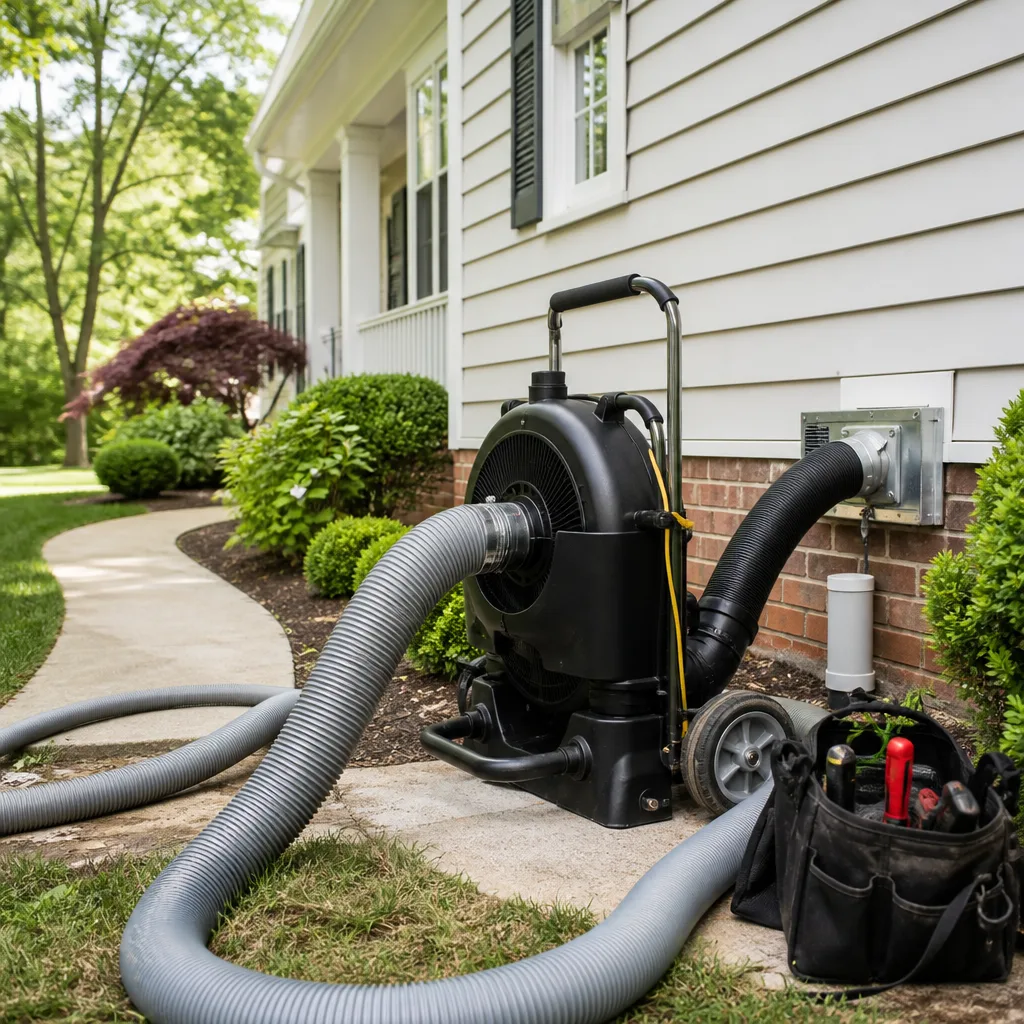 Whole-home duct cleaning
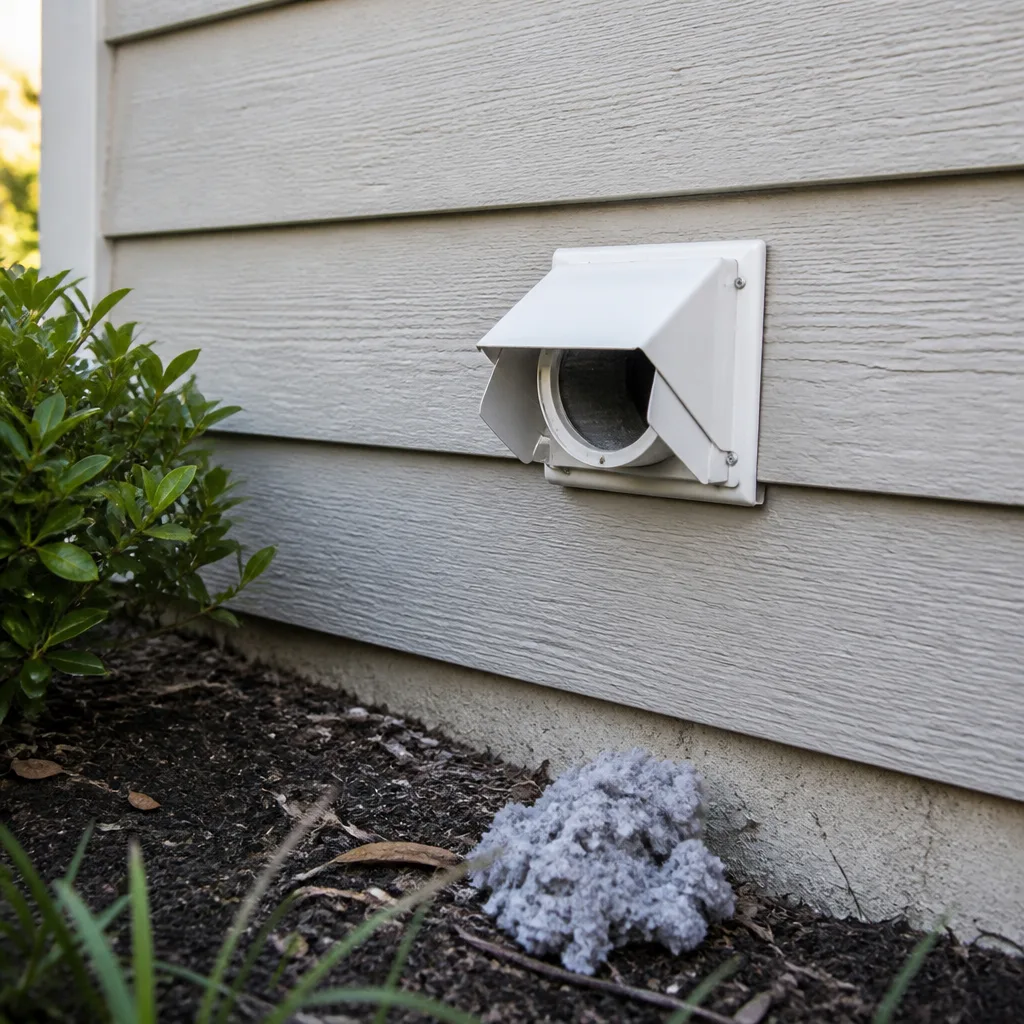 Dryer vent cleaning
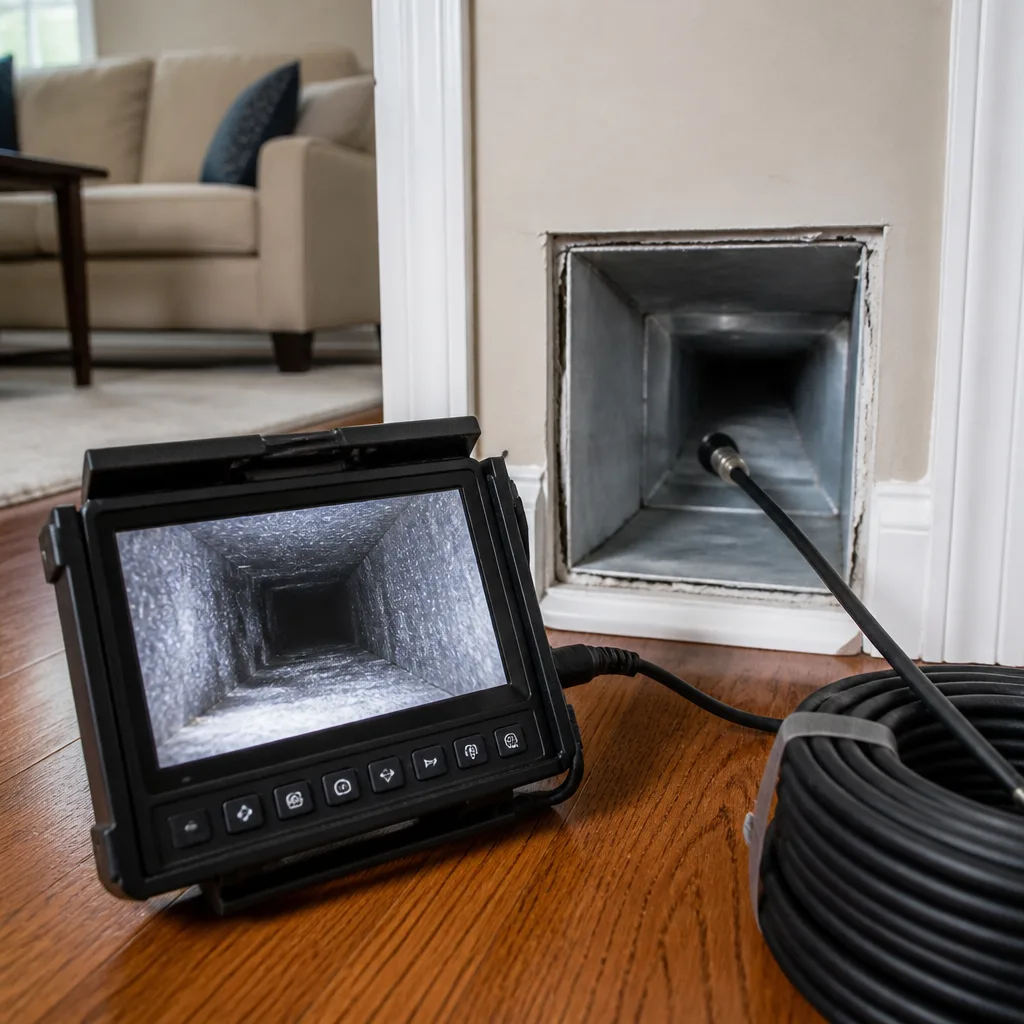 Camera inspection
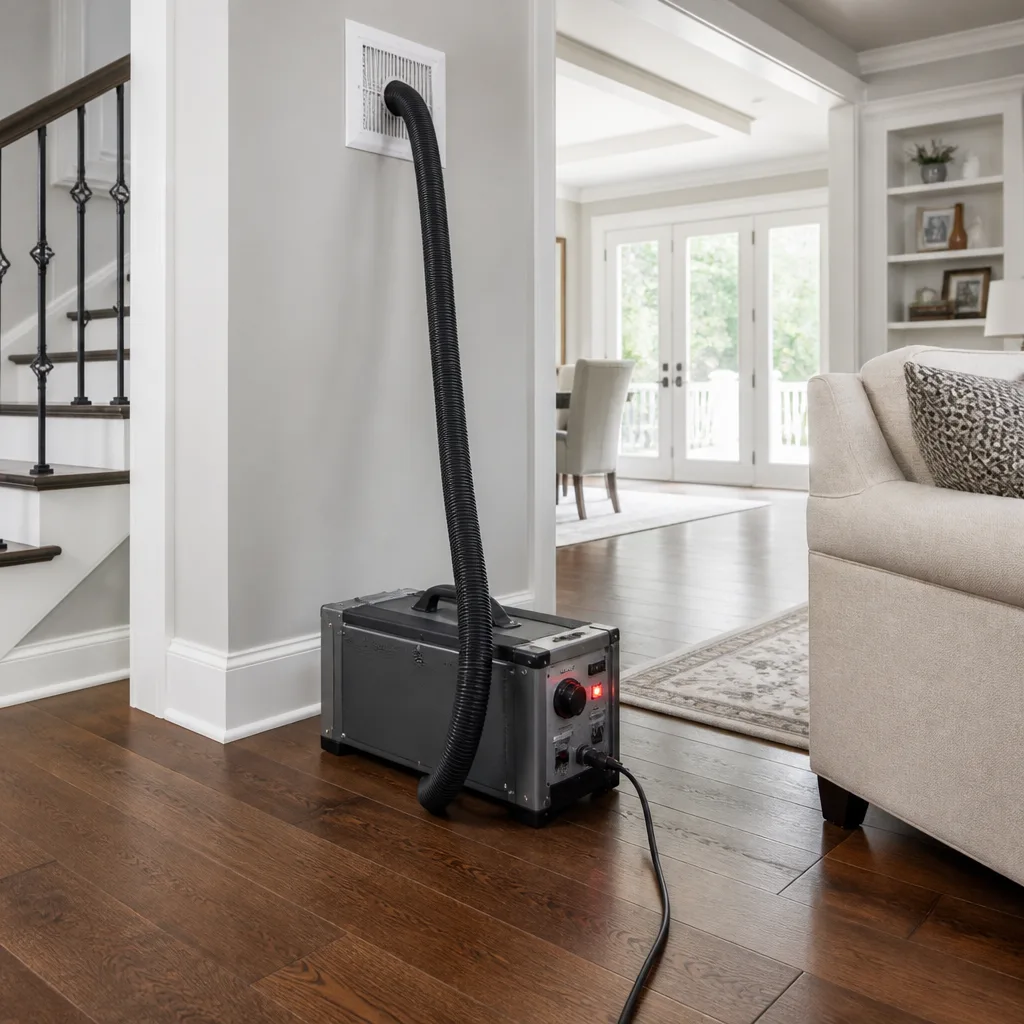 Sanitizing & deodorizing
Whole-system duct and dryer vent check with before-and-after photos - you see exactly what came out of your vents
That "$99 whole-house special" is a bait ad - the real number appears once they are in your hallway, or the "clean" is a shop-vac at the register. We photograph the inside of your ducts before and after instead.
Air Duct Cleaning Troubleshooting: Common Problems and How to Fix Them
If your home still smells musty two weeks after a professional duct cleaning, the cleaning almost certainly worked – but it revealed a problem the technician either missed or didn’t disclose. Odor return is a diagnostic signal, not evidence that cleaning is useless. In Santee, where summer heat pushes HVAC systems to run for months at a stretch and the dry, dusty climate coats duct interiors faster than coastal areas, we see this pattern constantly: homeowners pay for a second cleaning, get the same result, and conclude duct cleaning is a scam. The truth is more specific, and more fixable. This guide will teach you to distinguish between a cleaning problem and a duct-system problem before you spend another dollar on a service that can’t address the real cause. You’ll learn how to read symptoms, run simple diagnostics with household items, and know exactly when a repair must precede or accompany cleaning to produce lasting results.
Quick Answer
Most “air duct cleaning failed” complaints are not cleaning failures at all. They are symptoms of underlying structural problems – disconnected joints, collapsed flex duct, unsealed return plenums, or microbial growth – that no amount of cleaning can resolve. Before ordering another cleaning, identify whether you have a contamination problem or a duct-integrity problem. A camera inspection of the duct interior is the only objective way to know for certain.
Styles & brands we work with
- Whole-home duct cleaning
- Dryer vent cleaning
- Camera inspection
- Sanitizing & deodorizing
Table of Contents
- Symptom-to-Cause Matrix: What Your Ducts Are Telling You
- DIY Airflow and Pressure Diagnosis: The Incense Stick Test
- Cleaning Failure vs. System Failure: How to Tell the Difference
- Post-Cleaning Mistakes That Cause Symptom Rebound
- When Repair Must Precede or Accompany Cleaning
- Why a Camera Inspection Is the Only Objective Answer
- Santee-Specific Duct Problems: Climate and Construction Factors
Symptom-to-Cause Matrix: What Your Ducts Are Telling You
Every duct complaint maps to a specific mechanical or environmental cause. Here is the matrix we use when a Santee homeowner calls us about symptoms that persist after a cleaning. Match your symptom to the likely cause, then read the fix.
- Persistent musty odor after cleaning: The odor source is almost never loose dust. It is either microbial growth on the evaporator coil or in the duct liner, or a disconnected return duct pulling air from a crawlspace or attic. Cleaning removes the symptom temporarily; the source remains. In Santee homes with crawlspace foundations, a disconnected return pulling damp, organic-smelling air from the crawlspace is the most common cause we find.
- Uneven airflow by room: One bedroom gets strong airflow, another gets almost none. This is a volume problem, not a cleanliness problem. The usual causes are a collapsed flex duct run, a closed or broken volume damper inside the duct, or a disconnected branch line. Cleaning cannot restore airflow to a duct that is physically crushed or detached.
- Dust reappearing within weeks: If surfaces in your home show a fresh dust film two to three weeks after a full cleaning, you have a return-side leak. The return plenum or return ductwork is pulling unconditioned, unfiltered air from the attic, garage, or wall cavity. That air bypasses your HVAC filter entirely and blows directly into living spaces. No amount of supply-side cleaning fixes a return-side leak.
- Allergy symptoms unchanged after cleaning: The filter is not doing its job, or air is bypassing it. Common causes: a filter that is the wrong size (leaving gaps around the frame), a filter slot that is warped or damaged, or return duct leakage downstream of the filter. We have also found homes where the filter was installed backward, which does nothing for airflow quality.
- Long dryer cycles after dryer vent cleaning: The vent run is too long, has too many elbows, or has a section of crushed or sagging flex pipe. Cleaning removes the lint, but the underlying design flaw remains. In Santee, many laundry rooms are located on interior walls, which means vent runs of 15 to 25 feet with multiple turns – far beyond the 25-foot equivalent-length limit recommended by dryer manufacturers.
This matrix matters because it redirects your attention from “the ducts are dirty” to “the ducts are compromised.” The distinction determines everything about what happens next.
DIY Airflow and Pressure Diagnosis: The Incense Stick Test
Before you call anyone, you can gather objective data about your duct system in about 20 minutes. This is the same basic diagnostic logic professional technicians use, and it will tell you whether you are dealing with a cleaning issue or a structural issue. You will need one incense stick (or a single sheet of tissue paper) and a notepad.
- Set the HVAC fan to ON at the thermostat. Turn off heating and cooling modes. You want continuous fan operation so every duct run receives airflow during the test.
- Close all exterior doors and windows. You are testing the duct system’s internal pressure behavior, and open exterior openings will skew results.
- Go to each supply register, one at a time. Light the incense stick and hold it about two inches from the register opening. Watch the smoke. It should blow away from the register with visible force. Note the strength: strong, moderate, weak, or none. Repeat at every supply register in the house and write down what you observe.
- Repeat at every return grille. Hold the incense stick near each return. Smoke should pull toward the grille with steady, consistent suction. Note any return that has weak or no pull.
- Compare your notes. If every supply register shows roughly similar strength and every return pulls consistently, your duct system is likely functionally intact, and a cleaning issue is possible. If one or two rooms show dramatically weaker airflow than the rest, you have a structural or balancing problem – collapsed flex, a closed damper, or a disconnected branch line.
- Check the return while the system runs. Hold the incense stick near any gaps around the return plenum, the filter access door, or any visible duct joints in the attic or garage. If smoke pulls into a gap, you have found a return leak. That leak is pulling unfiltered air into your system.
This test does not replace professional diagnostics, but it gives you a factual baseline. When you call a duct company, you can say “the airflow in the back bedroom is about half what it is in the living room” instead of “the ducts are dirty.” That changes the conversation from a cleaning quote to a proper investigation, and it protects you from paying for a cleaning that cannot fix an airflow problem.
Cleaning Failure vs. System Failure: How to Tell the Difference
A cleaning failure means the cleaning was incomplete or poorly executed. A system failure means the duct network itself is compromised and no cleaning, however thorough, will produce lasting results. Here is how to tell which one you are dealing with.
Signs of a cleaning failure: The company showed up with a small portable vacuum and no rotating brush. They finished the entire house in under an hour. They did not access every register, or they sealed off vents instead of cleaning them. Debris was left behind in the register boxes, visible when you remove the covers. They did not provide before-and-after photos of the duct interior. These are process failures, and they are fixable with a proper cleaning from a company that uses professional-grade equipment – the kind of machinery commercial and restoration contractors rely on, not consumer-grade substitutes.
Signs of a system failure: The airflow imbalance existed before the cleaning and persisted after it. The odor returns within days. Dust accumulates in the same rooms regardless of filter changes. You can hear rattling or flapping when the fan cycles on, which suggests a disconnected or collapsed section. You can see dust streaks on the ceiling near return grilles, indicating return leakage pulling attic dust into the conditioned space. In Santee, where many homes are between 20 and 40 years old, the original flex duct runs are often nearing the end of their service life. Flex duct degrades over time – the inner liner tears, the insulation compresses, and the outer jacket becomes brittle. These failures happen inside the duct, invisible from the outside.
The only way to definitively distinguish between a cleaning failure and a system failure is to look inside the ducts with a camera. That leads us to the next point.
Why a Camera Inspection Is the Only Objective Answer
Ductwork is hidden by design. It runs through attics, crawlspaces, and wall cavities. You cannot see a collapsed flex run or a disconnected joint from your living room, and neither can a technician armed only with a vacuum and a brush. A camera inspection changes that.
During a proper camera inspection, a technician runs a high-resolution, pan-and-tilt camera through every main trunk line and every branch run that is accessible. The video shows the actual interior condition: the amount and type of debris, the integrity of every joint and connection, the presence of microbial growth, the condition of the flex duct liner, and whether the duct is seated properly at each register boot. The inspection is recorded, and you should receive access to that footage.
A camera inspection answers three questions that no other method can:
- Is this a cleaning problem or a repair problem? The footage shows contamination versus damage. You can see the difference.
- How extensive is the repair needed? If a section of flex duct is collapsed, the camera shows exactly where and how much. You are not relying on a technician’s verbal estimate; you are looking at the same evidence.
- Was the work actually done? Before-and-after camera footage is the standard of proof. After a cleaning, the interior surfaces should look visibly different on camera. After a repair, the new duct section or sealed joint should be visible.
In our experience, roughly half of the Santee homeowners who call us about a “cleaning that didn’t work” have never had a camera inspection. They paid for a cleaning, got a vague explanation that “it might take a few weeks to notice a difference,” and never saw the inside of their ducts. A camera inspection is the difference between guessing and knowing. Demand it before you pay for anything.
Post-Cleaning Mistakes That Cause Symptom Rebound
Even a well-executed cleaning can appear to fail if the homeowner makes certain mistakes in the days that follow. Here are the ones we see most often in Santee homes.
- Not replacing the HVAC filter on the same day as the cleaning. The cleaning loosens debris throughout the duct system. Your filter catches the last of it. If the filter is already loaded, it cannot do its job, and the loosened debris recirculates. Replace the filter the same day the cleaning is completed. Use a filter with a MERV rating appropriate for your system – MERV 8 to 11 is a practical range for most homes.
- Leaving old register covers in place. Register covers collect dust and lint on the back side, where it clings to the louvers. When the system cycles, that debris can break loose and blow back into the room. Remove every register cover after the cleaning, wash or vacuum them thoroughly, and reinstall them.
- Running the system on FAN ONLY immediately after cleaning. Some homeowners think running the fan continuously right after a cleaning helps clear things out. It actually does the opposite. During and immediately after cleaning, fine particulate is being extracted by the vacuum and settled out. Running the fan before the extraction is complete can pull loosened debris back into the air stream. Follow the cleaning company’s instructions for system restart, and give the system a few hours to settle.
- Skipping the dryer vent when cleaning HVAC ducts. They are separate systems, but they interact. A clogged dryer vent adds heat, humidity, and lint to the laundry area, which can be pulled into the return air stream if the laundry room is open to the house. If you are investing in indoor air quality, address the dryer vent in the same scope of work. Dryer Vent Cleaning in Santee is a distinct service with distinct equipment, and it should not be an afterthought.
- Using a filter with too high a MERV rating. Filters rated MERV 13 or higher can restrict airflow in residential systems that were not designed for them. That restriction reduces airflow, increases static pressure, and can actually pull more air through any existing return leaks. Match the filter to the system’s specifications, not to the highest number on the shelf.
None of these mistakes mean the cleaning failed. They mean the post-cleaning protocol was incomplete. A reputable duct company will tell you about these steps before they leave your driveway. If they don’t mention the filter, the register covers, or the settling period, that tells you something about the completeness of their process.
When Repair Must Precede or Accompany Cleaning
This is the section that separates a duct-cleaning-only company from a company that does Air Duct Repair in Santee as well. Cleaning removes contaminants. Repair restores the integrity of the duct system. If the integrity is compromised, cleaning is a temporary measure at best, and a waste of money at worst.
Here are the specific situations where repair must happen before or alongside cleaning, not after:
- Disconnected or separated joints. If a branch line has pulled away from the main trunk, or a register boot has separated from the floor or wall opening, that gap is pulling unconditioned air from the attic or crawlspace into your living space. Cleaning the connected ductwork does nothing to close the gap. The repair is the priority; cleaning happens after the system is sealed.
- Collapsed or crushed flex duct. Flex duct collapses when the inner liner separates from the insulation, when the duct was installed with too tight a bend radius, or when something heavy was placed on it in the attic. A collapsed duct cannot be cleaned – the cleaning tools cannot pass through it. The collapsed section must be replaced, then the rest of the system can be cleaned.
- Unsealed return plenum. Many residential return plenums are built from framing lumber and drywall, with seams that were never sealed. Over time, these seams open up and pull attic or garage air into the system. Sealing the plenum requires mastic and sometimes metal reinforcement, not a vacuum. The seal must happen before cleaning, or the cleaned system will immediately re-contaminate itself.
- Microbial growth on the evaporator coil or in the duct liner. Cleaning can remove surface growth, but if the underlying moisture problem persists – a condensation leak, poor drainage, or high humidity in the crawlspace – the growth will return. The moisture source must be identified and addressed, and in some cases the affected duct liner must be replaced. This is a repair problem with a cleaning component, not the other way around.
- Improperly sized or installed filter slot. If the filter slot is too large for the filter, air bypasses the filter entirely. The fix is a modification to the filter rack – a sheet metal repair – not a cleaning.
Here is the practical advice: when you request a quote, ask for an itemized scope that separates cleaning services from repair services. A legitimate company will tell you, in writing, “these sections need replacement, these joints need sealing, and these sections need cleaning.” If the quote bundles everything into one vague line item, you cannot verify what you paid for. We provide an itemized scope on every quote because it protects you and it protects us – you know exactly what is being done, and we are accountable for doing exactly that.
In Santee, where many homes have attic-mounted HVAC systems, the attic environment itself contributes to duct problems. Summer attic temperatures can exceed 140 degrees, which accelerates the degradation of flex duct and the drying-out of mastic seals. A duct system that was marginally sealed five years ago may be leaking significantly today, simply because of the thermal cycling it has endured. That is a Santee-specific fact of life, and it means repair needs here are often more extensive than in milder climates.
Santee-Specific Duct Problems: Climate and Construction Factors
Santee’s climate and housing stock create a distinct set of duct-system challenges. Understanding these helps you anticipate problems before they become expensive.
Climate. Santee sits in a semi-arid valley with hot summers and mild winters. The dry air means fine, powdery dust accumulates quickly inside ductwork – faster than in humid climates where dust clumps together and falls out of the air stream. That fine Santee dust is also more likely to pass through a standard filter and settle on the evaporator coil and duct walls. A system that would still be relatively clean after five years in San Diego’s coastal areas may be heavily loaded after three years in Santee.
Housing stock. The majority of Santee homes were built between 1970 and 2000. These homes typically have flex-duct systems installed in the attic. Flex duct has a design life of roughly 15 to 25 years, depending on quality and installation. Homes from the 1970s and 1980s that have never had duct replacement are almost certainly running on duct that is past its service life. The outer jacket is brittle, the inner liner is developing tears, and the connections at the boots and trunk lines are loosening. This is not a cleaning problem; it is a material-degradation problem.
Foundation types. A significant number of Santee homes are built on raised foundations with crawlspaces. Return ducts that run through the crawlspace are exposed to whatever is happening down there: moisture, rodent activity, mold. If the return duct develops a separation or tear, it pulls crawlspace air directly into the HVAC system. That air carries whatever is in the crawlspace – and in Santee, with older homes and seasonal changes, we find everything from musty soil smell to rodent droppings. A crawlspace return leak explains the persistent odor problem better than any amount of surface dust.
Renovation history. Santee has seen steady renovation activity over the past two decades. Renovations typically move walls, add rooms, and relocate registers. The problem is that renovation contractors are generalists – they are not duct specialists. We regularly find duct runs that were crushed during a remodel, disconnected and never reconnected, or rerouted with improper materials. If your home was renovated before you bought it, a camera inspection is the only way to know what the renovation left behind inside the walls and attic.
These are not hypotheticals. In our experience serving Santee homeowners, the pattern is consistent: homes with original 1980s flex duct, attic-mounted air handlers, and a renovation or two in the history are the ones most likely to show structural duct problems that cleaning alone cannot solve. If that describes your home, start with a camera inspection, not a cleaning quote.
Common Mistakes to Avoid
- Ordering a second cleaning before diagnosing the first one. If symptoms persist after a cleaning, the odds are high that the problem is structural. A second cleaning will produce the same result. Get a camera inspection first.
- Choosing a company based on a low per-vent price. Per-vent pricing is a red flag. Legitimate companies price by the system, not by the vent, because the scope of work depends on the duct configuration and condition. A suspiciously low price usually means the job will be rushed or incomplete.
- Skipping the before-and-after photos. If the company cannot show you the inside of your ducts before and after the service, you have no way to verify the work was done. Demand photographic or video evidence.
- Not asking whether the company does repairs. A cleaning-only company has no incentive to tell you the truth: that your ducts need repair, not just cleaning. A company that does Air Duct Repair in Santee can address whatever the camera finds, in one scope of work.
- Running the system normally immediately after cleaning. Give the system time to settle, replace the filter the same day, and clean the register covers before you run the fan. This is basic post-service protocol.
- Ignoring the dryer vent. Your dryer vent is part of your home’s air-quality ecosystem. A clogged vent adds heat and humidity to the laundry area and increases the load on your HVAC system. Dryer Vent Cleaning in Santee addresses a leading household fire risk, not just a comfort issue.
- Trusting a verbal diagnosis. “Looks fine to me” is not a diagnosis. Get the camera footage. If the technician will not show you the inside of your ducts, ask why.
See the difference
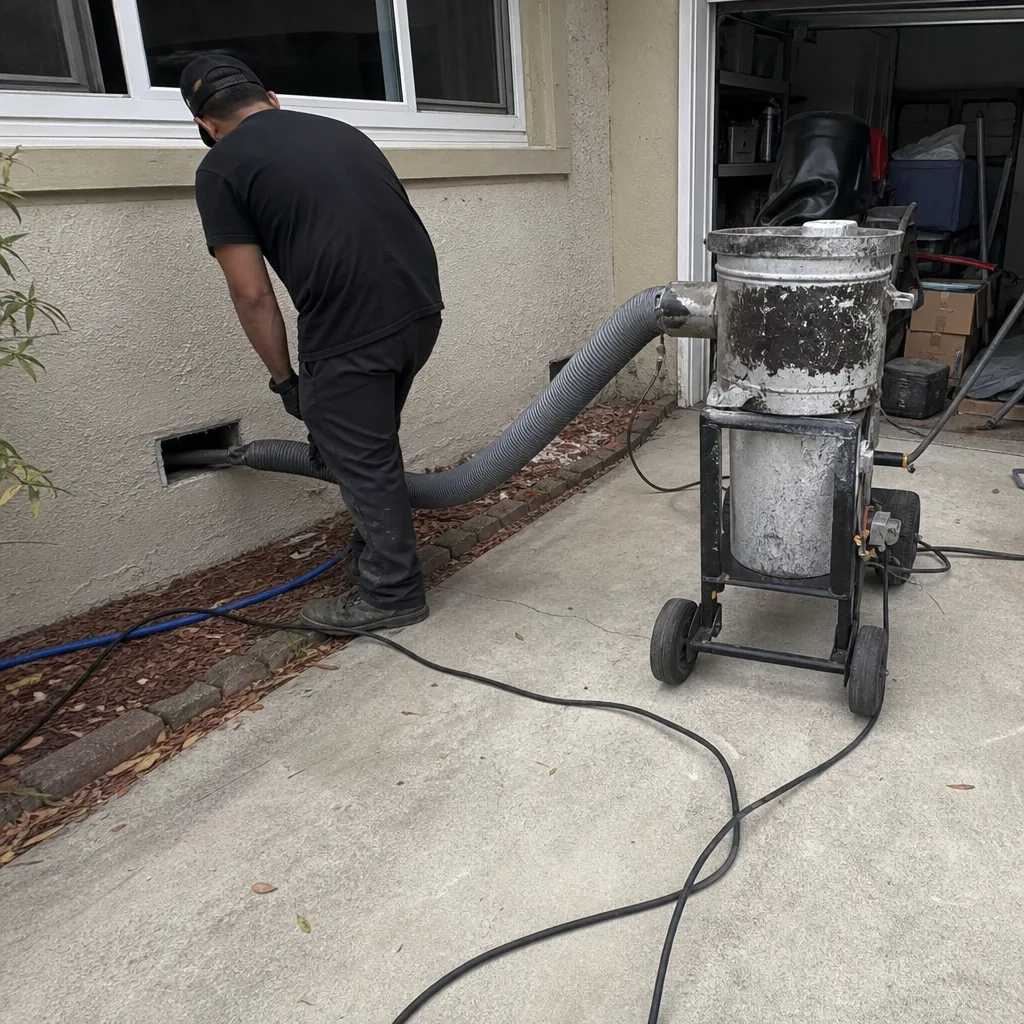 Before
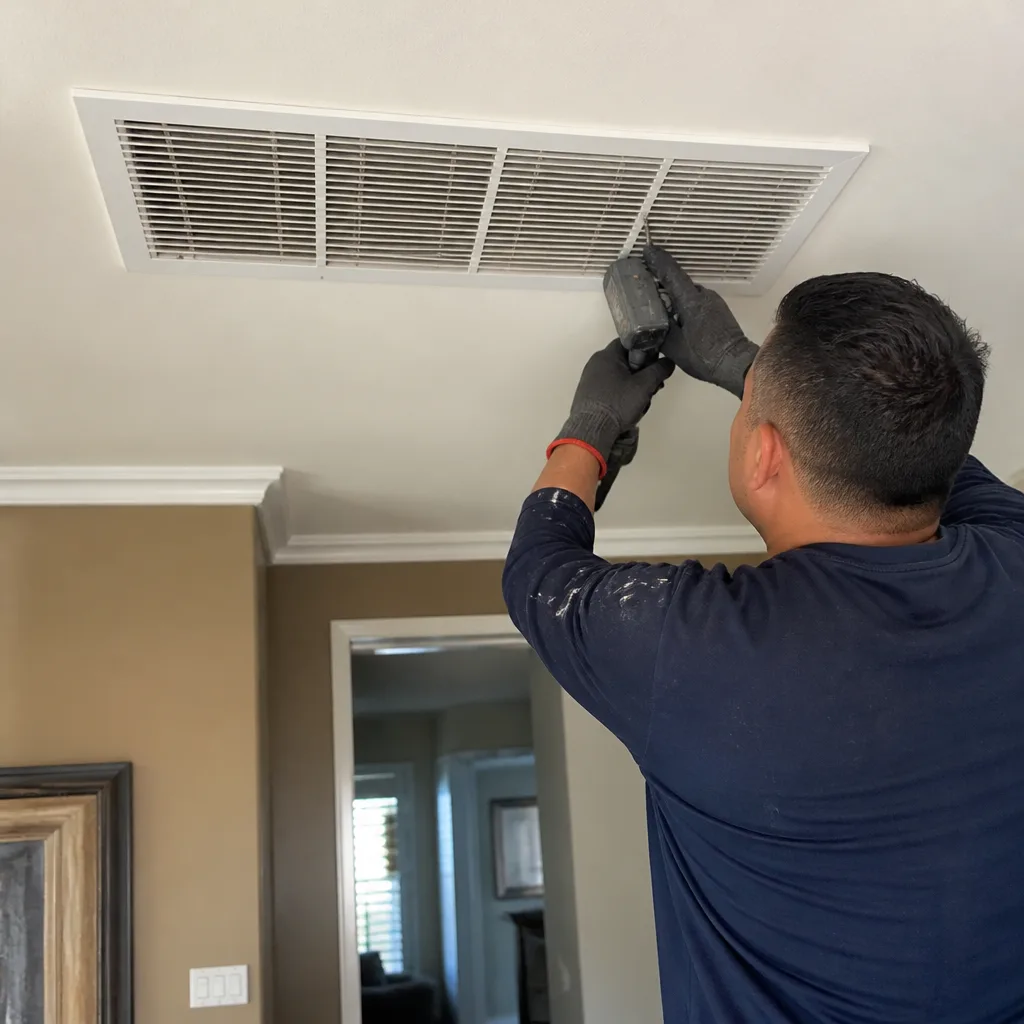 After
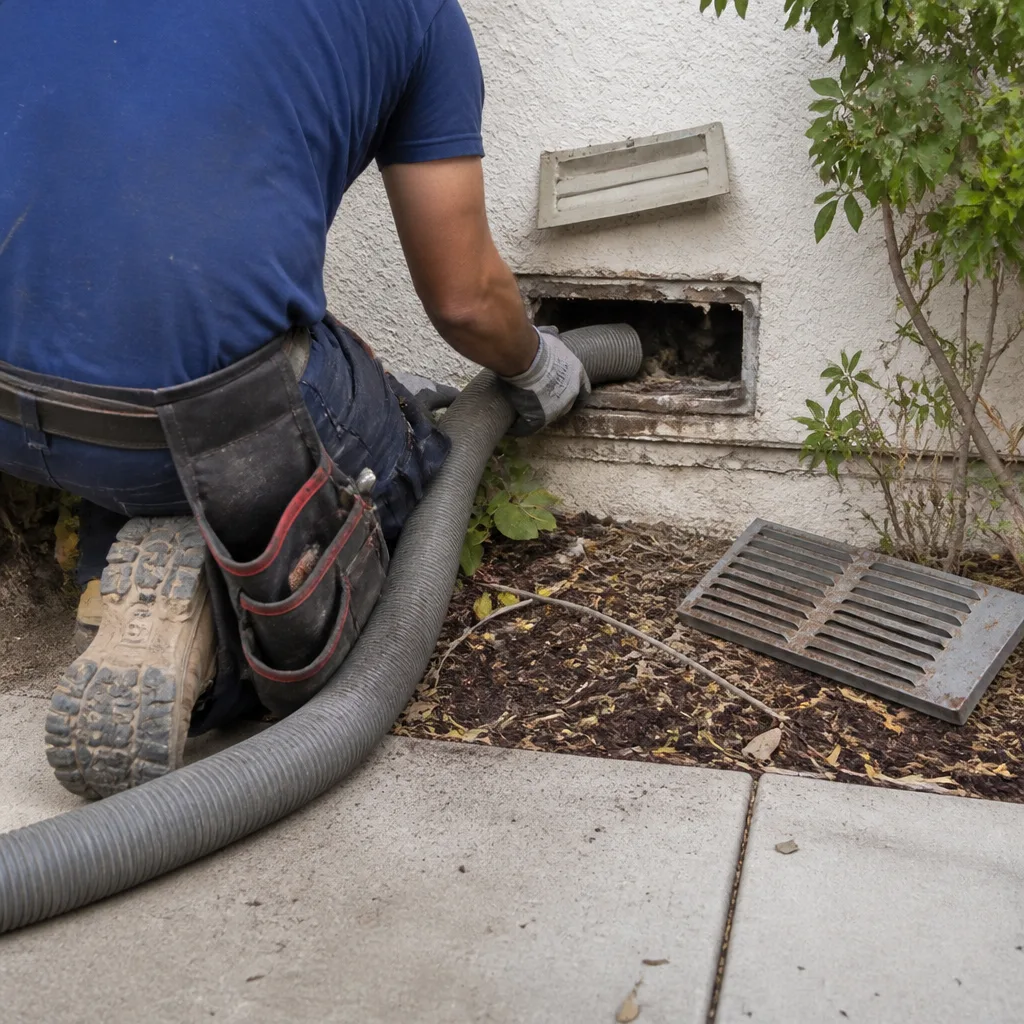 Before
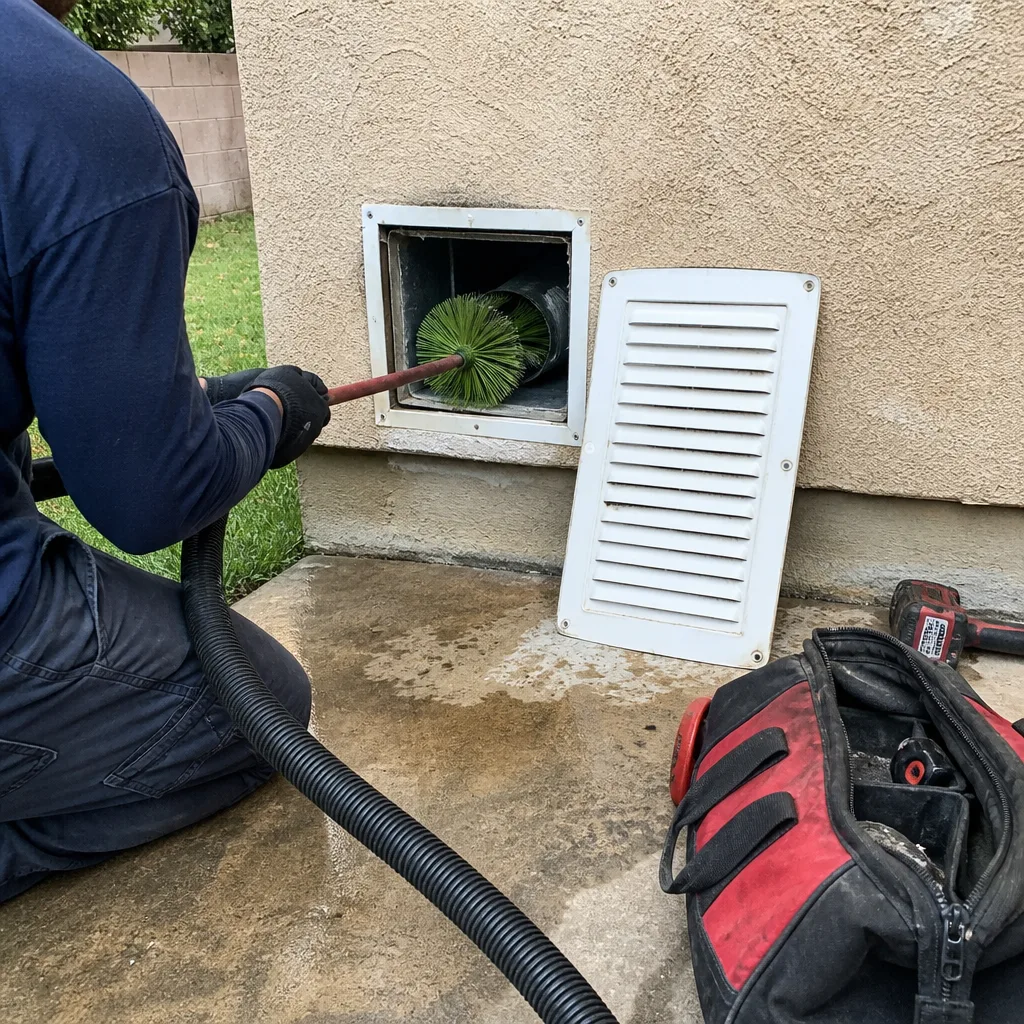 After
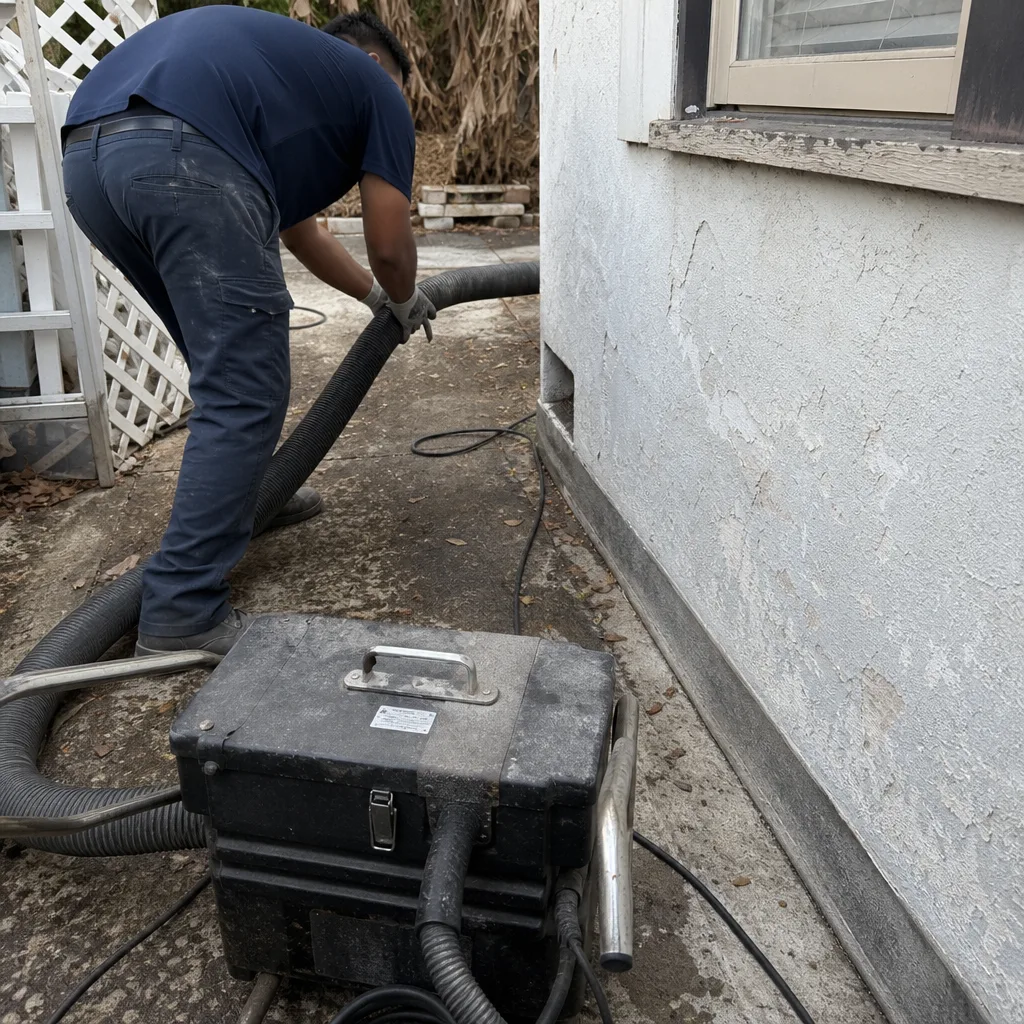 Before
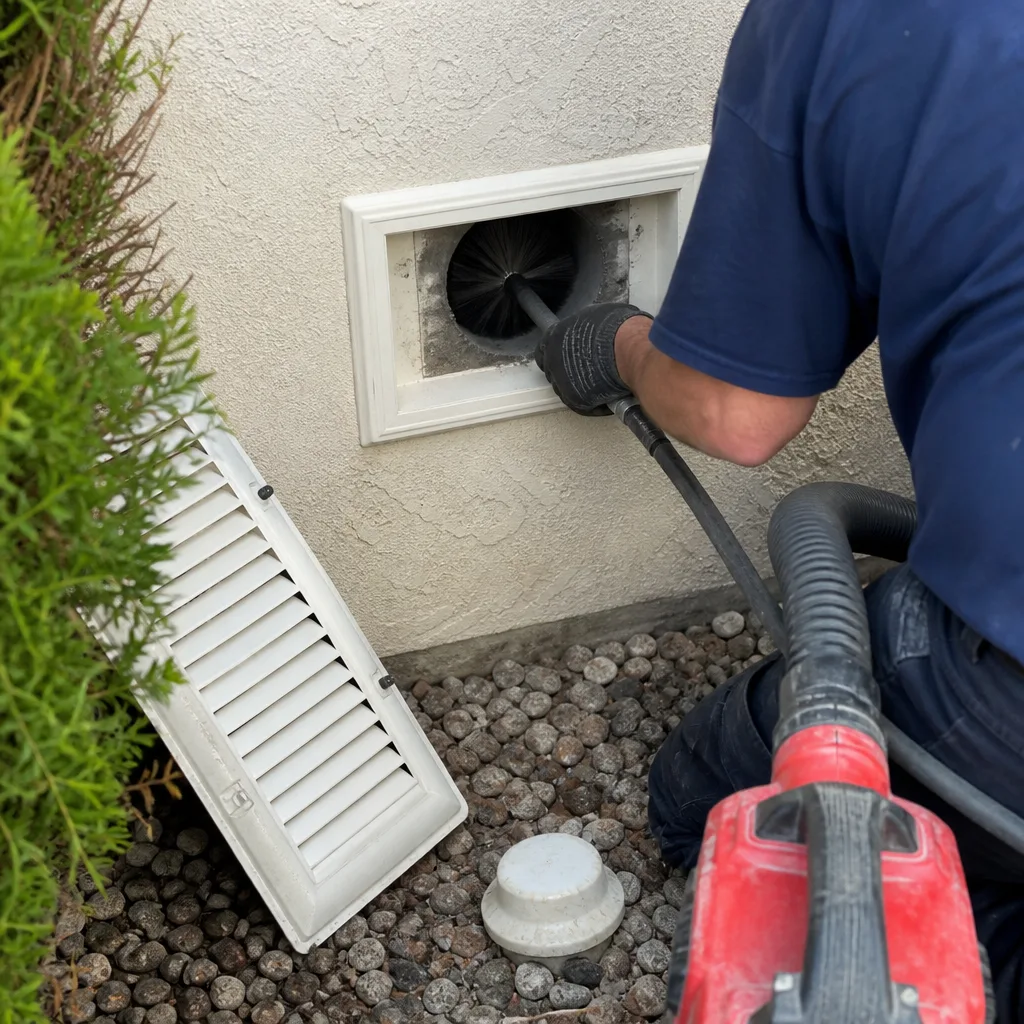 After
When to Call a Professional
You should call a duct professional when you have done the incense test and found significant airflow imbalances between rooms, when you can see dust streaks around return grilles, when a musty odor persists more than two weeks after a cleaning, or when your HVAC system is more than 15 years old and has never had a camera inspection. These are signs of structural duct problems that require diagnostic equipment and repair capability, not just another pass with a vacuum. Air Duct Cleaning in Santee combined with repair capability is the practical solution for most homeowners in this situation. Duct Cleaning Santee offers free estimates – call (833) 542-0752 to schedule a camera inspection and get an itemized scope of work.
Frequently Asked Questions
Air duct cleaning in Santee typically ranges from $350 to $650 for a full system, depending on the size of the home, the number of systems, and the accessibility of the ductwork. Homes with multiple HVAC systems or extensive flex duct runs fall on the higher end. Repair work is priced separately and itemized. Call (833) 542-0752 for an exact quote – estimates are free.
Cheaper quotes usually mean lighter equipment, shorter service times, and less thorough access. A professional-grade system, the kind used in commercial and restoration work, costs significantly more than a portable consumer unit, and the results differ accordingly. A company that finishes a full clean in under an hour is not doing the same job as one that spends two to three hours with commercial equipment. Ask what equipment will be used and how long the job will take before you compare prices.
Demand before-and-after camera footage of your duct interior. A legitimate company records the inspection and cleaning process and provides you access to the video. If the company cannot show you the inside of your ducts before and after, you have no way to verify the work. Call (833) 542-0752 to schedule a service with full photo documentation.
For most Santee homes, every 3 to 5 years is a practical interval. Homes with pets, recent renovations, smokers, or allergy sufferers may need cleaning more frequently. Homes in dusty, semi-arid climates like Santee tend to accumulate duct debris faster than homes in coastal or humid areas. If you are experiencing symptoms before the 3-year mark, investigate structural causes before scheduling a second cleaning.
Yes, in specific ways. Ducts do not generate allergens, but they transport them. If the return side of your system is leaking, it pulls unfiltered allergens – pollen, dust mites, mold spores – directly into the air stream and distributes them through every supply register. Duct leakage means your HVAC filter is not protecting you. Sealing the leaks and then cleaning the system addresses the root cause, not just the symptom.
Yes, and in Santee it is a safety issue, not just a maintenance recommendation. Lint accumulation is a leading cause of residential dryer fires, and the long vent runs common in Santee homes increase the accumulation rate. If your dryer takes more than one cycle to dry a load, or if the exterior vent flap does not open fully when the dryer runs, the vent needs cleaning. Dryer Vent Cleaning in Santee is a dedicated service, not an add-on.
The Bottom Line
Your ducts are a system, not a compartment. When that system has structural problems – disconnected joints, collapsed flex runs, unsealed return plenums – cleaning cannot fix them. It can only remove the debris that has accumulated around the damage. The homeowners who get lasting results are the ones who diagnose before they clean: they run a simple airflow test, get a camera inspection of the duct interior, and ask for an itemized scope that separates cleaning from repair. In Santee, where the climate and housing stock accelerate duct degradation, that sequence of steps matters more than anywhere else. Duct Cleaning Santee home covers the full duct-health lifecycle: clean, safe, and structurally sound. Call (833) 542-0752 for a free estimate and a camera inspection that gives you answers, not guesses.
Written by the team at Duct Cleaning Santee, serving Santee since 2017.