
Last updated November 2, 2026
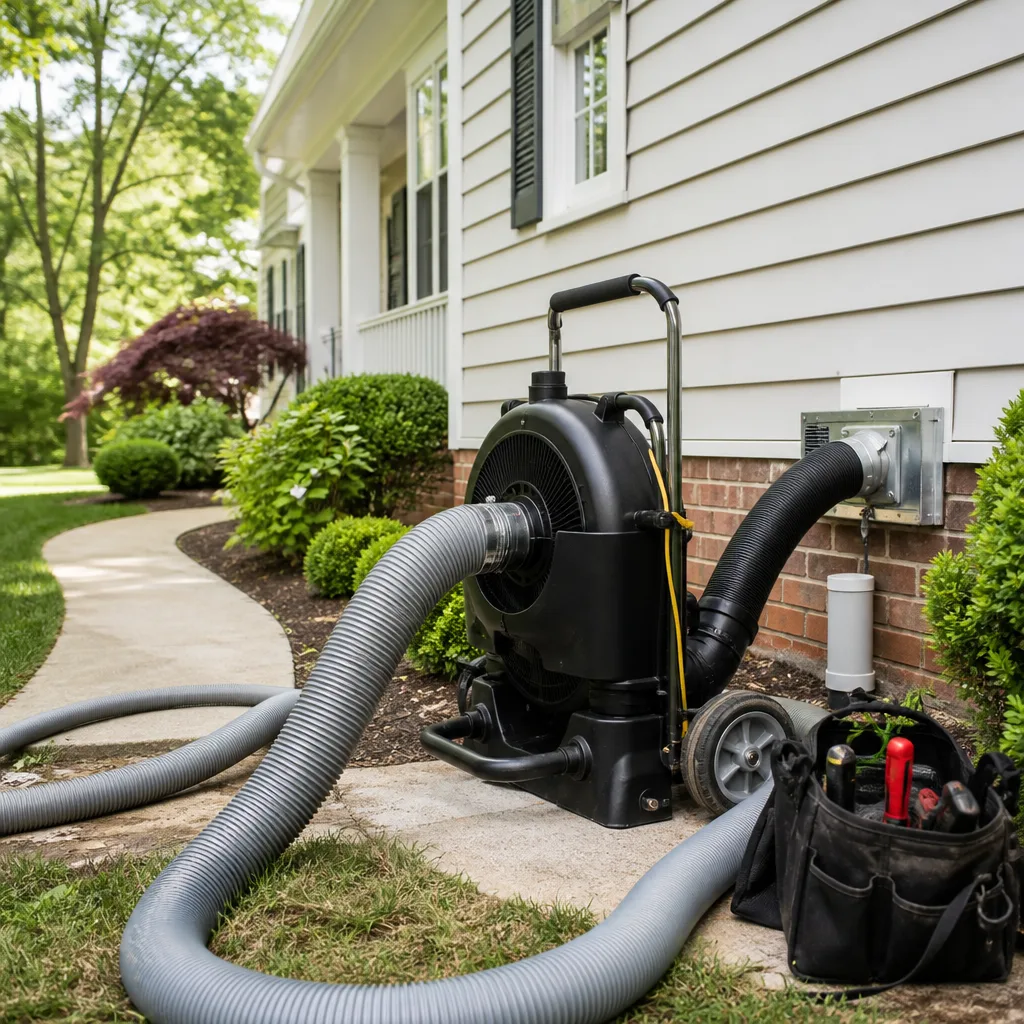 Whole-home duct cleaning
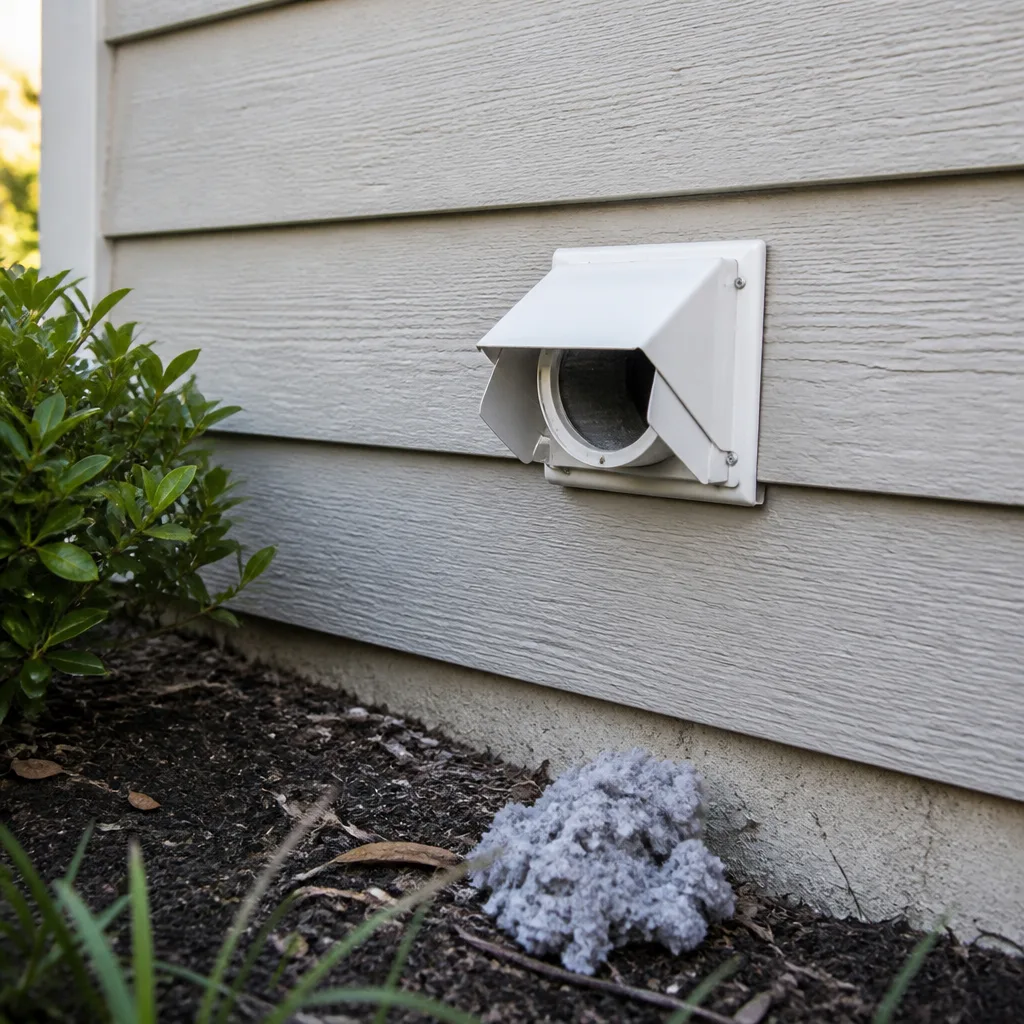 Dryer vent cleaning
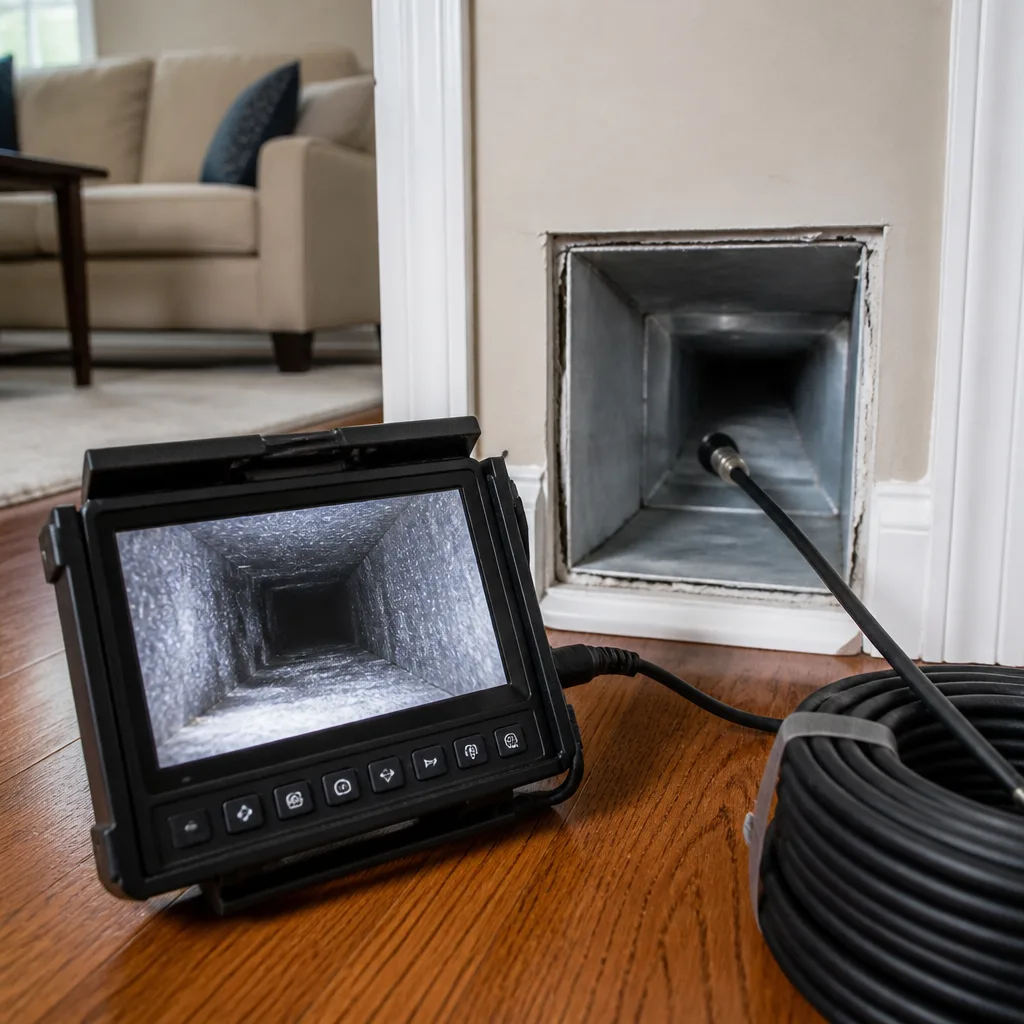 Camera inspection
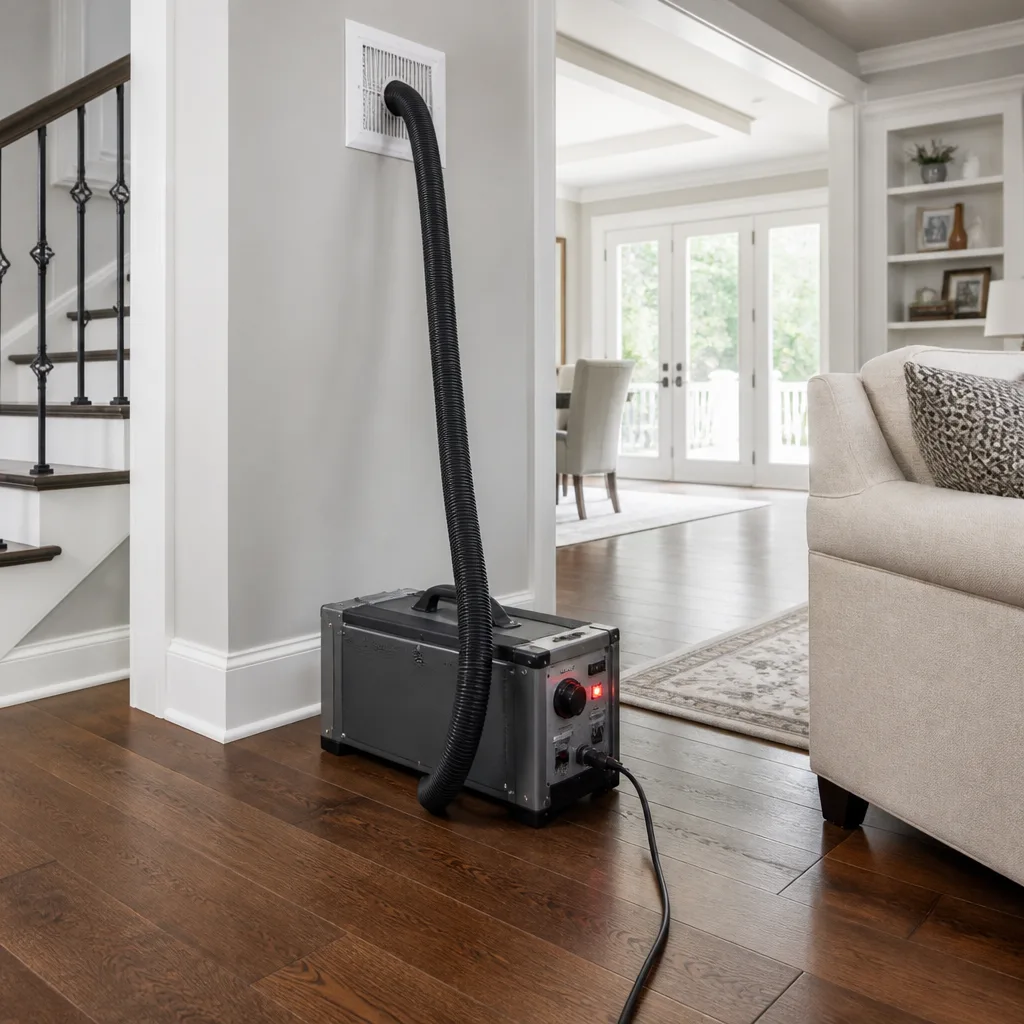 Sanitizing & deodorizing
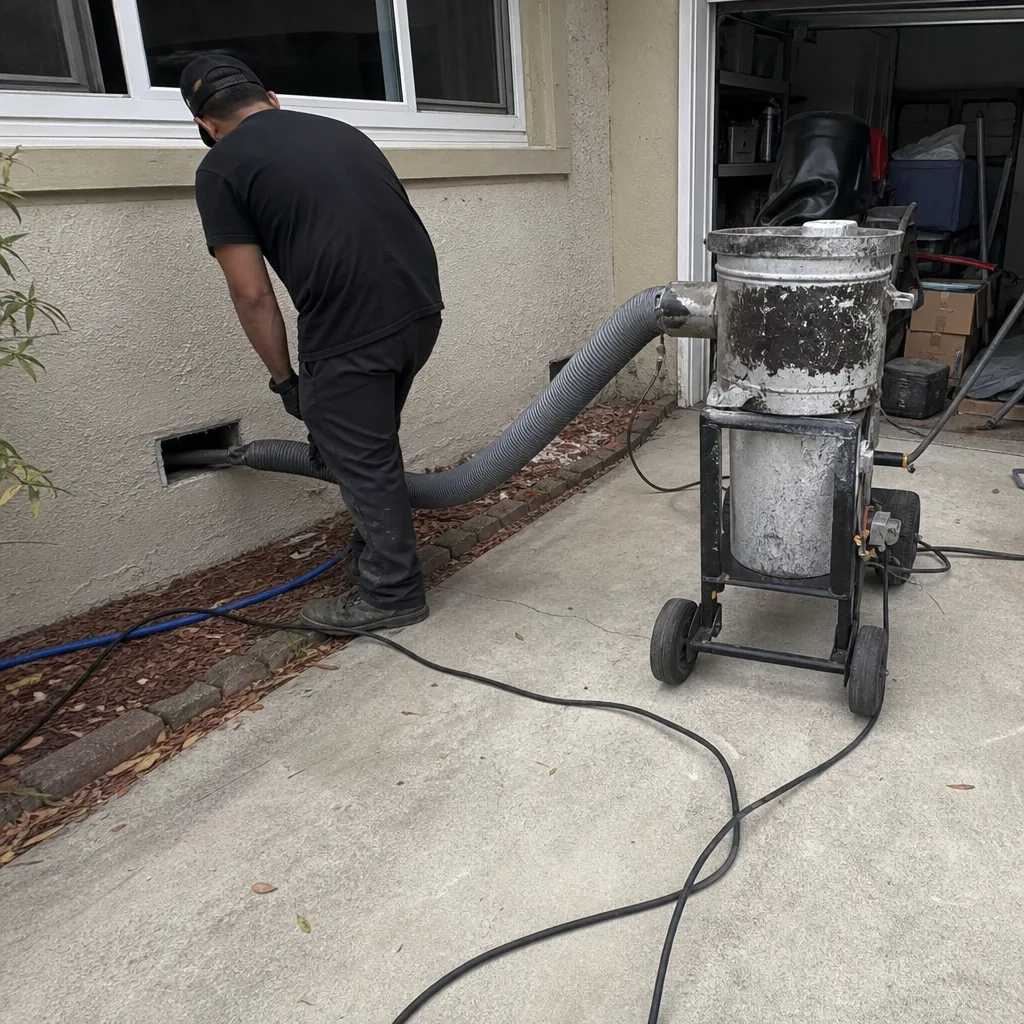
Whole-system duct and dryer vent check with before-and-after photos - you see exactly what came out of your vents
That "$99 whole-house special" is a bait ad - the real number appears once they are in your hallway, or the "clean" is a shop-vac at the register. We photograph the inside of your ducts before and after instead.
Air Duct Cleaning Warning Signs: A Santee Homeowner’s Reference Guide
Here’s a pattern we see repeatedly in Santee homes: a homeowner notices their summer cooling bill jumped about 15% compared to last year, assumes it’s just a hotter season, and adjusts the thermostat. What they’re actually seeing is airflow restriction. Ducts narrowed by years of accumulated debris force the system to run longer to hit the same temperature. Our Complete Air Duct Cleaning Guide for Santee Homeowners teaches you to read the signals your ductwork is already sending, so you can act when the fix is measured in hundreds of dollars, not thousands. You’ll learn which warning signs matter, what they mean, where the problem originates, and which ones you can safely investigate yourself.
Styles & brands we work with
- Whole-home duct cleaning
- Dryer vent cleaning
- Camera inspection
- Sanitizing & deodorizing
Quick Answer
The most common signs that your Santee home’s air ducts need cleaning are: rooms that stay warmer or cooler than others despite balanced vents, a visible film of dust on surfaces within days of cleaning, dark outlines around supply registers, musty or acrid odors that appear only when the HVAC runs, and utility bills that climb without a matching change in thermostat habits. Any combination of two or more of these signals warrants a professional inspection of the full duct system, not just a filter change.
Table of Contents
- Airflow Asymmetry: When Rooms Stop Cooperating
- The Odor Taxonomy: Three Smells That Mean Three Different Things
- Register Telltales: What Those Dark Outlines and Brown Streaks Reveal
- Santee-Specific Signals: Wildfire Smoke, Santa Ana Dust, and Allergy Spikes
- Utility Bills as Diagnostic Tools: Reading the Numbers
- The Bad Cleaning Warning Signs: When Symptoms Return Too Soon
- A Homeowner’s Visual Inspection Checklist
- Common Mistakes to Avoid
- When to Call a Professional
- Frequently Asked Questions
- The Bottom Line
Airflow Asymmetry: When Rooms Stop Cooperating
The most overlooked duct cleaning warning sign in Santee is airflow asymmetry. This is the room that’s always five degrees warmer in August or the hallway that never quite cools down, even though the original floor plan was balanced. When a home was built, the duct layout was designed to deliver roughly equal air volume to each room based on its square footage and window load. Over time, that balance degrades, and partial duct blockage is almost always the reason why.
Here’s what’s actually happening. Supply ducts accumulate debris unevenly. The runs closest to the air handler, especially in homes where the return path pulls air across carpeted areas, tend to collect more particulate because they carry the highest static pressure. As the internal diameter of a duct narrows, airflow drops disproportionately. A 20% reduction in duct diameter from debris buildup can reduce air delivery to that room by more than 35%, because airflow resistance follows the fourth power of the radius change. That’s physics working against you silently.
The tell is consistency. If a room is always the wrong temperature, regardless of the time of day or weather, the problem is the duct run serving that room, not the equipment. If it’s only uncomfortable during extreme heat, you may be looking at an insulation issue or a marginal capacity problem. But chronic, predictable asymmetry points to a restriction inside the duct itself.
What you’ll notice as a homeowner: you start closing doors to rooms you don’t use, or you run a portable fan in a bedroom every night. You adjust ceiling fan direction. You rationalize it as “that room just runs warm.” It doesn’t. It runs restricted. In our experience across Santee’s housing stock, from the newer developments along Mast Boulevard to the original 1970s and 1980s subdivisions near Town Center, the homes with the most dramatic room-to-room temperature swings are almost always the ones with the oldest unserviced duct systems.
How to Confirm It’s Ductwork, Not Equipment
- Check the filter first. A clogged filter restricts airflow through the entire system, not just one room. If replacing it doesn’t change the asymmetry within 48 hours, the restriction is downstream.
- Feel the supply register in the problem room versus one in an adjacent comfortable room. Compare the force of the airflow when the system is running. A noticeable difference in velocity is the single most reliable homeowner test.
- Look at the return path. If the problem room has a door that’s usually closed and no dedicated return duct in that room, the room can’t breathe properly. This is a design limitation, but debris in the central return makes it dramatically worse.
- Inspect what you can see. Remove the register cover in the problem room and look inside with a flashlight. If you can see visible debris, dust caking, or what looks like loose insulation inside the duct boot, the restriction is confirmed.
If you’ve done all four and the asymmetry persists, the restriction is likely deeper in the trunk line or branch run. That’s not a homeowner-level fix. Professional duct cleaning with high-pressure vacuum systems, like the Rotobrush and Nikro equipment we run on every job, addresses the full duct interior, not just the first few inches visible from the register. You can read more about how we approach this in Air Duct Cleaning in Santee.
The Odor Taxonomy: Three Smells That Mean Three Different Things
Odor is the warning sign that gets most often dismissed. Homeowners tend to describe any bad smell from their HVAC system as “musty” and move on. But the specific character of an odor tells you where in the system the problem lives. We group HVAC odors into three categories, and each one points to a different root cause.
Musty or “wet basement” smell. This is the classic biofilm odor. It appears when moisture has been present in a duct environment long enough for microbial growth to establish. That moisture can come from condensation on the outside of a duct running through an unconditioned attic, from a humidifier that was over-dispensing, or from water intrusion during a roof leak. The odor is strongest when the system first starts up, then fades as airflow dries the duct interior. It returns on the next cycle. In Santee, where coastal humidity can be surprisingly high in the early mornings, this odor pattern often shows up in homes where duct insulation has degraded and the metal underneath is exposed to temperature swings. The fix is not just cleaning. You have to find and correct the moisture source, then clean the affected duct sections. Otherwise the biofilm returns within months.
Dusty-chemical smell. This one is often described as “attic smell” or “like old drywall.” It’s the smell of fine particulate, construction debris, or degraded insulation being stirred up and blown through the living space. It appears almost immediately when the blower starts and is present year-round, not just seasonally. In Santee, this odor is especially common in homes that have been renovated. Drywall dust, sawdust, and loose fill insulation from attic work find their way into open duct runs during construction, and a standard renovation cleanup rarely includes the ducts. The dust then gets distributed through the entire home every time the HVAC cycles. If you had any work done in your attic or ceiling in the last few years and now smell dust every time the air kicks on, your ducts are serving as a particulate reservoir.
Acrid or sharp electrical smell. This is the one you should not wait on. An acrid, sometimes slightly sweet or metallic smell that appears only when the system runs can indicate pest intrusion, specifically rodents or rodents’ nesting materials near a duct run or heat source, or an early electrical issue in a component near the ductwork. Rodent urine and decomposition have a very specific sharp, ammonia-adjacent character that’s unlike any HVAC issue. Electrical overheating produces a hot plastic or ozone smell. Both are urgent. Turn the system off and investigate the area around the air handler and any accessible duct runs. If you see evidence of pests, dark droppings, nesting material, chewed insulation, the problem is not something duct cleaning alone solves. You’ll need pest remediation, then a full duct cleaning to remove the contaminated particulate, and potentially Air Duct Repair in Santee if the pests have chewed through flexible duct sections or disconnected joints. We’ve seen squirrel damage in Santee attic spaces that completely severed a flex duct run. The homeowners only found out because a bedroom stopped receiving any airflow at all.
Register Telltales: What Those Dark Outlines and Brown Streaks Reveal
Your registers and return grilles are diagnostic instruments. They show you, in visible form, where air is leaking past the filter and where debris-laden air is being pulled into the system. Two specific patterns are worth understanding because they tell you the problem is upstream of the cleaning itself.
Dark outlines around supply registers. Supply registers deliver conditioned air from the system into the room. When they develop dark gray or black outlines, like someone traced them with a pencil, what you’re seeing is fine particulate being blown around the edges of the register as air exits. This is filter bypass evidence. The filter in your system is not capturing this particulate, either because it’s the wrong size and air is going around it, because it’s been left in place too long, or because the filter rack itself has a gap. That unfiltered particulate is then being distributed through the entire supply side of your system. The dark outline is just the visual accumulation at the highest-velocity point, the narrow gap between the register and the drywall. The same particulate is being deposited inside every supply duct and blown into every room. When we open up supply boots in Santee homes that show this pattern, we consistently find the deepest debris accumulation right at the register throat, the exact spot where the airflow is fastest and deposits the most.
Brown streaking at return vents. Return grilles pull air from the living space back into the system. Brown streaking here, usually most visible on the wall or ceiling surface just outside the grille edge, tells you that the air being pulled in is carrying a significant particulate load. In Santee, the most common source is attic air infiltration. If the return duct has a loose joint, a disconnected section, or a puncture, the negative pressure inside the return line actively pulls in attic air, which carries fiberglass insulation particles, dust, and in wildfire season, smoke particulate. That contaminated air bypasses the filter entirely if the breach is downstream of the filter rack, and it gets distributed through the supply side on the next cycle. The brown streaking is the visual fingerprint of this bypass air being pulled across the grille surface. It’s a signal that your return ducting has a leak somewhere upstream, and that leak is delivering unfiltered attic air into your living space.
Both patterns share the same implication: your filter is not the last line of defense you think it is. When air bypasses the filter, either at the rack or through a duct breach, the entire system becomes a distribution network for whatever is in the attic or wall cavity. Cleaning the ducts without fixing the bypass means the problem returns. This is why duct inspection is part of any legitimate cleaning job, not an add-on. We use Abatement Technologies equipment on-site, which signals containment-level seriousness about exactly this kind of particulate control.
Santee-Specific Signals: Wildfire Smoke, Santa Ana Dust, and Allergy Spikes
Santee’s climate creates seasonal duct contamination patterns that homeowners in, say, coastal Carlsbad or Del Mar don’t experience to the same degree. Our inland valleys, the Santa Ana winds, and the wildfire seasons produce predictable particulate events that end up in duct systems. Knowing what these patterns look like helps you separate normal seasonal dust from a duct system that’s actively distributing contamination.
Post-Santa Ana particulate settlement. Santa Ana events push dry, dust-laden air across East County. The winds are strong enough to pull fine particulate into attic spaces through every vent, eave gap, and seam. What many Santee homeowners notice after a Santa Ana event is a fine layer of dust on horizontal surfaces that reappears within a day or two of cleaning. This isn’t normal settling. This is your HVAC system pulling attic air through a gap, crack, or loose joint in the return ducting, and distributing that dust through the supply vents. The dust on the furniture is the delivery confirmation. If this happens at your house, the problem is almost certainly a return-side leak. Cleaning the surfaces does nothing until the duct breach is sealed and the accumulated particulate is cleaned out of the system.
Wildfire smoke residue inside the home. When substantial smoke events affect Santee, the smoke particulate doesn’t stay outside. It gets pulled into attic spaces, then into duct systems, and it settles as a fine, sticky, soot-like film on the interior of supply ducts. That film doesn’t get fully removed by a filter change. It doesn’t even get fully removed by vacuuming the registers. It sits in the duct and off-gasses slightly, contributing to poor indoor air quality for months after the smoke clears. The visual tell is a grayish or dark film inside the supply register when you look in with a flashlight. If you can see it there, there’s more of it deeper in the system. Homes in Santee that went through the worst of the recent wildfire seasons without a professional duct cleaning afterward are still circulating trace smoke particulate every time the system runs.
Unexplained allergy symptom spikes. Here’s the pattern: allergy symptoms that worsen when you’re home and improve when you’re at work or out of the house for the day, with no obvious change in outdoor pollen counts. That’s indoor particulate. And since your HVAC system is the only thing actively moving air through the entire home volume, the duct system is the prime suspect. We hear this from Santee customers with young children, with allergy sufferers, and with anyone who’s recently renovated. The HVAC system becomes a particulate recirculation loop rather than a distribution system for clean, conditioned air. This is the strongest argument for addressing duct health as a component of family health, not as home maintenance. What your family is breathing is whatever is inside your ducts. If you’re interested in the broader indoor air quality conversation, we carry and service Honeywell and Aprilaire air-quality systems, which complement duct cleaning with active filtration and humidity management. The Duct Cleaning Santee home page has more on our overall approach.
Utility Bills as Diagnostic Tools: Reading the Numbers
Your monthly energy bill is a duct system diagnostic, but only if you know how to read it. The key is comparative analysis: same month, previous year, adjusted for thermostat behavior.
The opening hook of this guide referenced a 15% summer cooling bill increase with no change in thermostat habits. That number isn’t arbitrary. When a duct system restricts airflow, the HVAC unit’s efficiency drops significantly. The blower has to work harder against higher static pressure to move the same air volume. The compressor runs longer to reach the same setpoint because less conditioned air is reaching the living space relative to the energy consumed. The result is predictable: more kWh for the same comfort, which shows up as a bill increase with no corresponding behavior change.
Here’s the practical method:
- Pull your cooling-season bills for the last three years. Identify the months May through September, the peak cooling window in Santee.
- Compare each month against the same month in the previous year. Control for degree-days if you want to be precise: if this July was 10% hotter than last July by cooling degree-days, a 10% bill increase is explained by weather. If the bill increased 20% while degree-days increased 10%, the unexplained 10% is system efficiency loss.
- Rule out the easy explanations: thermostat settings changed, more people home during the day, new heat-generating appliances, a failed capacitor or aging compressor. Your HVAC tech can check the mechanical side quickly.
- If the mechanical equipment checks out and the unexplained efficiency loss persists, the restriction is in the airflow path. That means the duct system.
A duct cleaning won’t always restore every percentage point of efficiency loss. If the duct insulation is degraded or the system was oversized for the home, those are separate issues. But when the efficiency loss is caused by debris narrowing the airflow path, cleaning the full duct system typically produces a measurable improvement, often noticeable on the next billing cycle. This is a tangible outcome we can point to, and it’s why we encourage Santee homeowners to treat utility bills as diagnostic data, not just monthly annoyances.
The Bad Cleaning Warning Signs: When Symptoms Return Too Soon
One of the most frustrating patterns we encounter in Santee is what we call the six-month relapse. A homeowner pays for a duct cleaning, the symptoms improve briefly, and then within six to twelve months, the dust returns, the odors come back, and the rooms are uncomfortable again. They conclude that duct cleaning doesn’t work. The truth is more specific: their previous cleaning didn’t work.
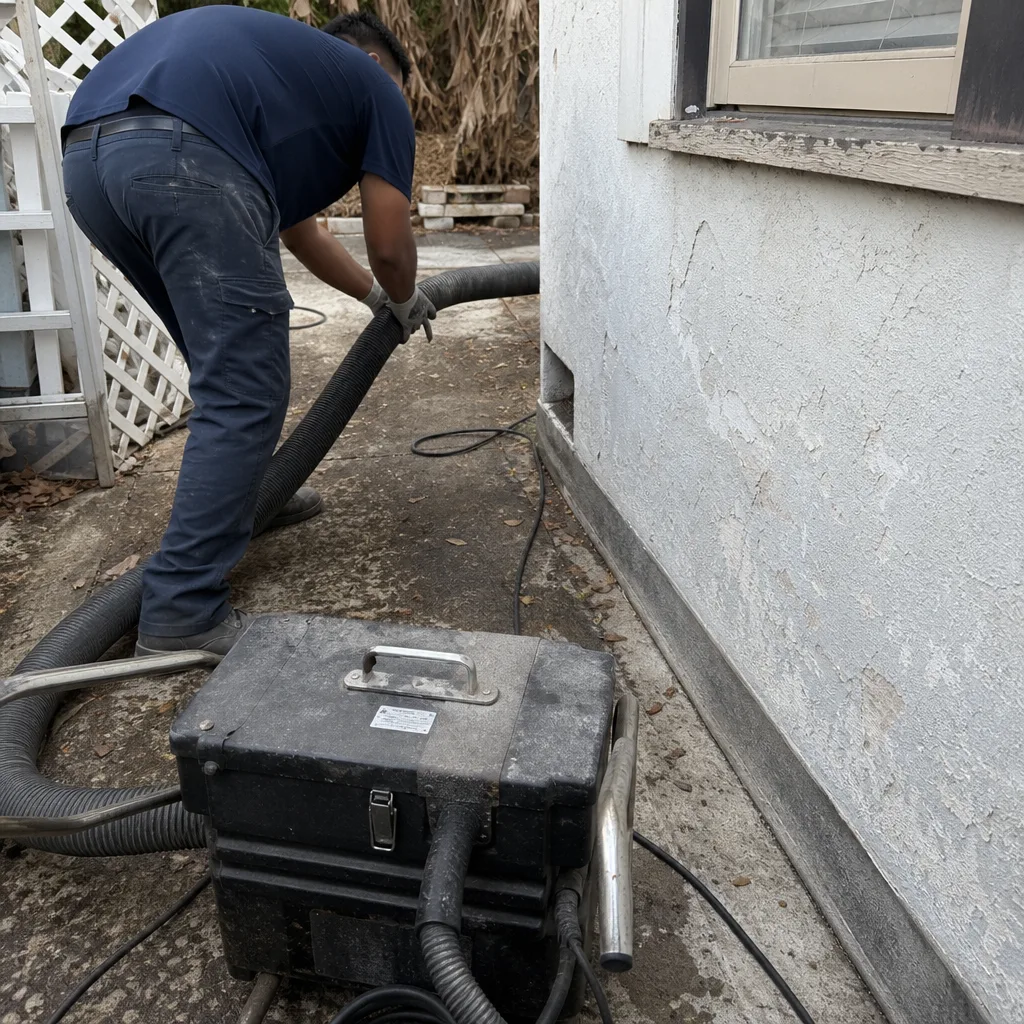
There’s a meaningful difference between the equipment professionals use and the equipment consumer-grade or generalist operations bring to the job. Professional duct cleaning uses high-cubic-feet-per-minute vacuum systems that create enough negative pressure to pull debris from the full length of the trunk line and branch runs, combined with high-torque agitation tools that mechanically dislodge debris bonded to the duct walls. Rotobrush and Nikro are the names you see in commercial and restoration environments because those contexts demand measurable results, not surface-level dust removal. When a “cleaning” is performed with a shop vac attached to a register, or with a spinning brush that has no supporting vacuum, the debris gets stirred up and partially removed from the visible boot, but the trunk line remains mostly intact. The symptoms return because the root problem was never addressed.
Here’s what to watch for after a professional cleaning:
- Dust accumulation on surfaces returns within two to four weeks. A properly cleaned system should show a noticeable reduction in surface dust for months. If it’s back that fast, the trunk line was never actually cleaned.
- The same odor returns within days. If the musty or dusty-chemical odor is back within a week of the cleaning, the debris that caused it is still in the system. It was stirred up, not removed.
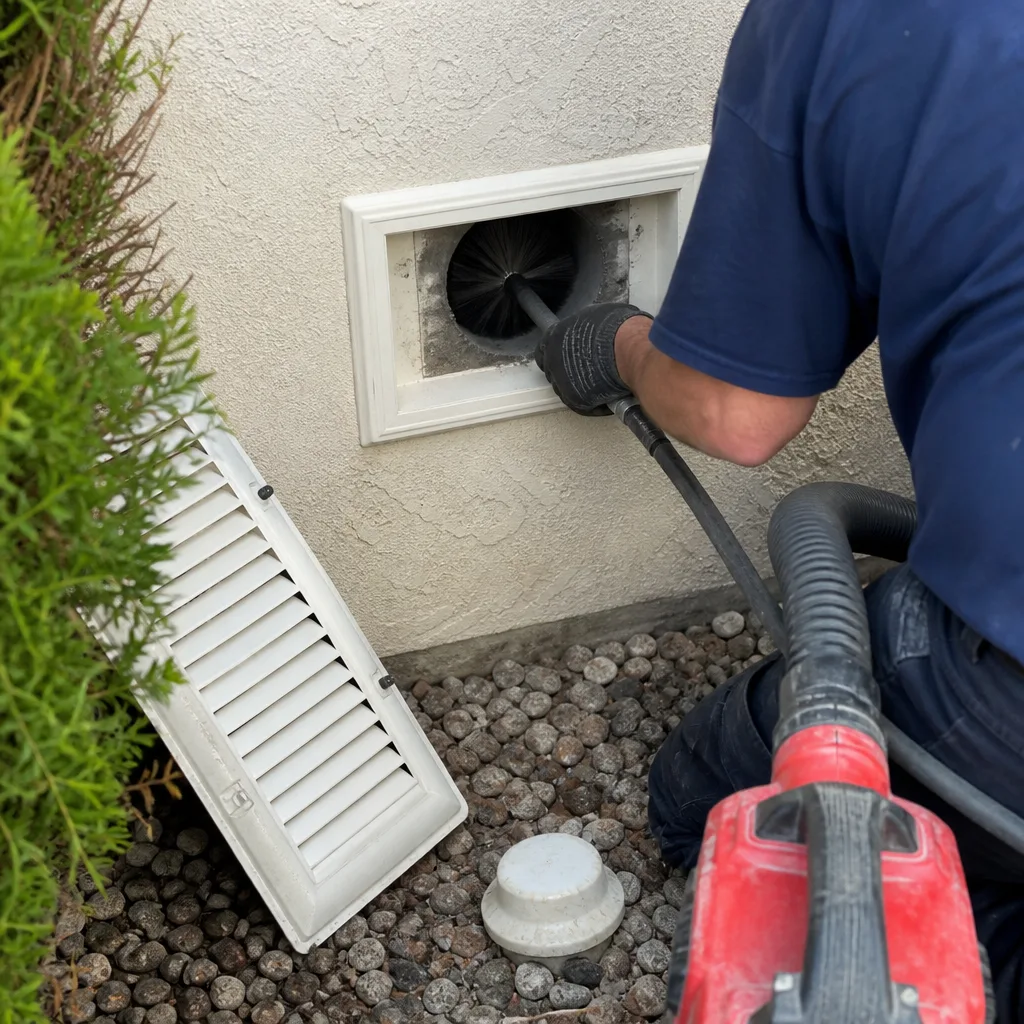
- No before-and-after photos were provided. Professional duct cleaning includes photo documentation of the duct interior. Without it, you have no verification that the trunk lines were accessed at all. We provide before-and-after photos as standard practice, because you should know what you paid for.
- The cleaning took less than two hours. A genuine full-system duct cleaning for a typical Santee home takes three to six hours. If the crew was in and out in ninety minutes, they ran a brush through a few boots and called it a day.
This is also where the repair conversation becomes relevant. A duct system can be perfectly clean and still underperform if there’s a disconnected joint, a crushed flex run, or a return leak pulling attic air. Cleaning-only operators can’t do anything about structural duct problems. That’s the gap Air Duct Repair in Santee exists to close. A proper diagnosis distinguishes between what needs cleaning and what needs repair, and a homeowner should never pay for a second cleaning when the real problem was a disconnected duct.
A Homeowner’s Visual Inspection Checklist
You can do a meaningful duct health assessment yourself in about twenty minutes. None of this requires tools beyond a flashlight and a step stool. Here’s the step-by-step method we recommend to Santee homeowners who want to establish a baseline before calling for a professional inspection.
- Check the filter. Pull it out, hold it up to a light. If you can’t see any light through it, it’s been in place too long. Note the date you installed it. A restrictive filter masks other symptoms by limiting airflow across the board.
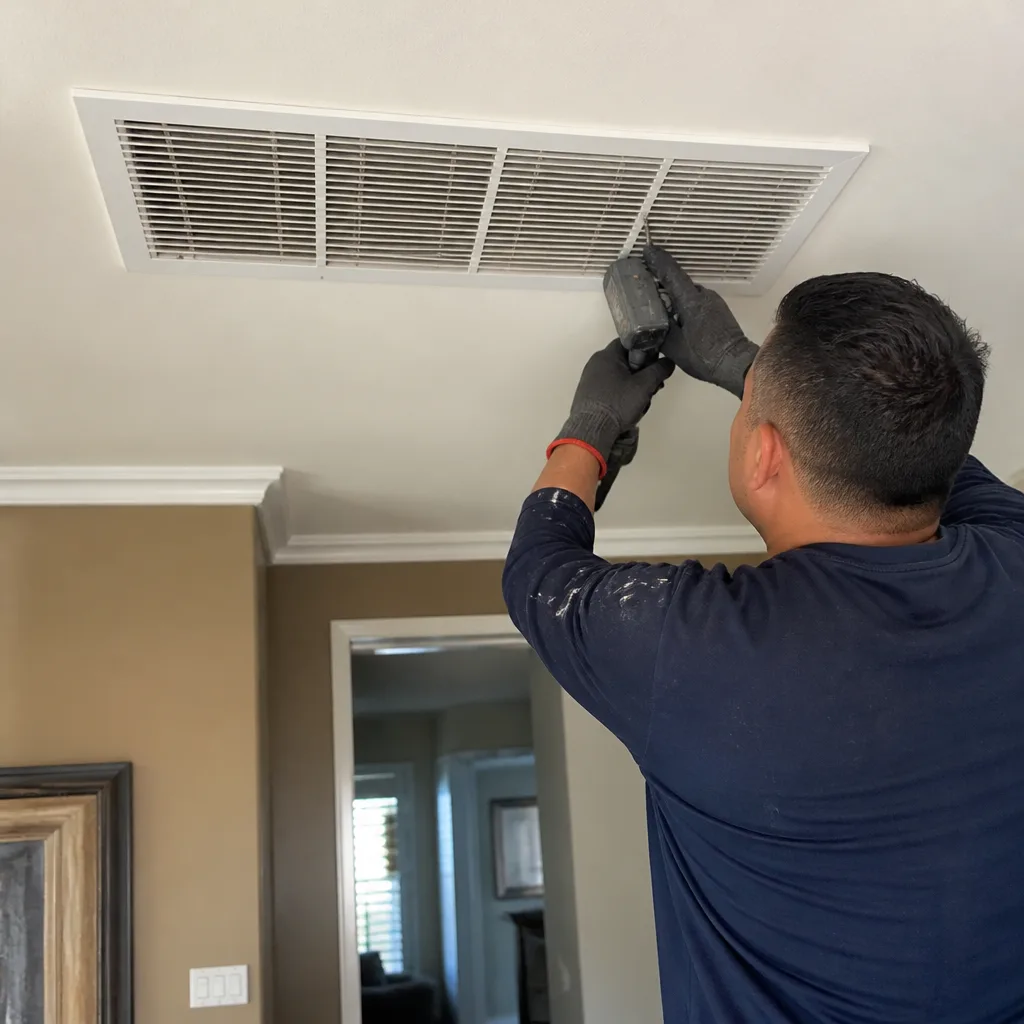
- Inspect every supply register visually. Remove the register cover and look into the boot with a flashlight. Look for debris accumulation, dark film, visible dust clumps, or what appears to be loose insulation inside. Note any dark outlines around the register opening.
- Inspect every return grille. Same process. Look for brown streaking on the surrounding surface, debris accumulation inside the return box, or any visible gap between the return duct and the drywall opening that might be pulling attic air.
- Survey airflow balance. On a day when the system is cooling, walk from room to room and feel the airflow at each supply register. Compare the force. Significant differences indicate restriction in the lower-flow runs.
- Look at the duct runs you can see. In the garage, the attic, or any exposed ceiling areas, look for crushed flex duct, disconnected joints, or tears in the outer jacket. These are structural, not cleaning issues, but they affect everything downstream.
- Smell the system at startup. Turn the system on and stand near a supply register for the first thirty seconds of airflow. Note any odor. Musty, dusty-chemical, or acrid. This tells you what’s being distributed through the home.
Any one of these findings on its own is not a crisis. Two or more findings across different categories suggest the duct system is actively degrading your indoor air quality and costing you efficiency. That’s the threshold we’d suggest for calling in a professional assessment.
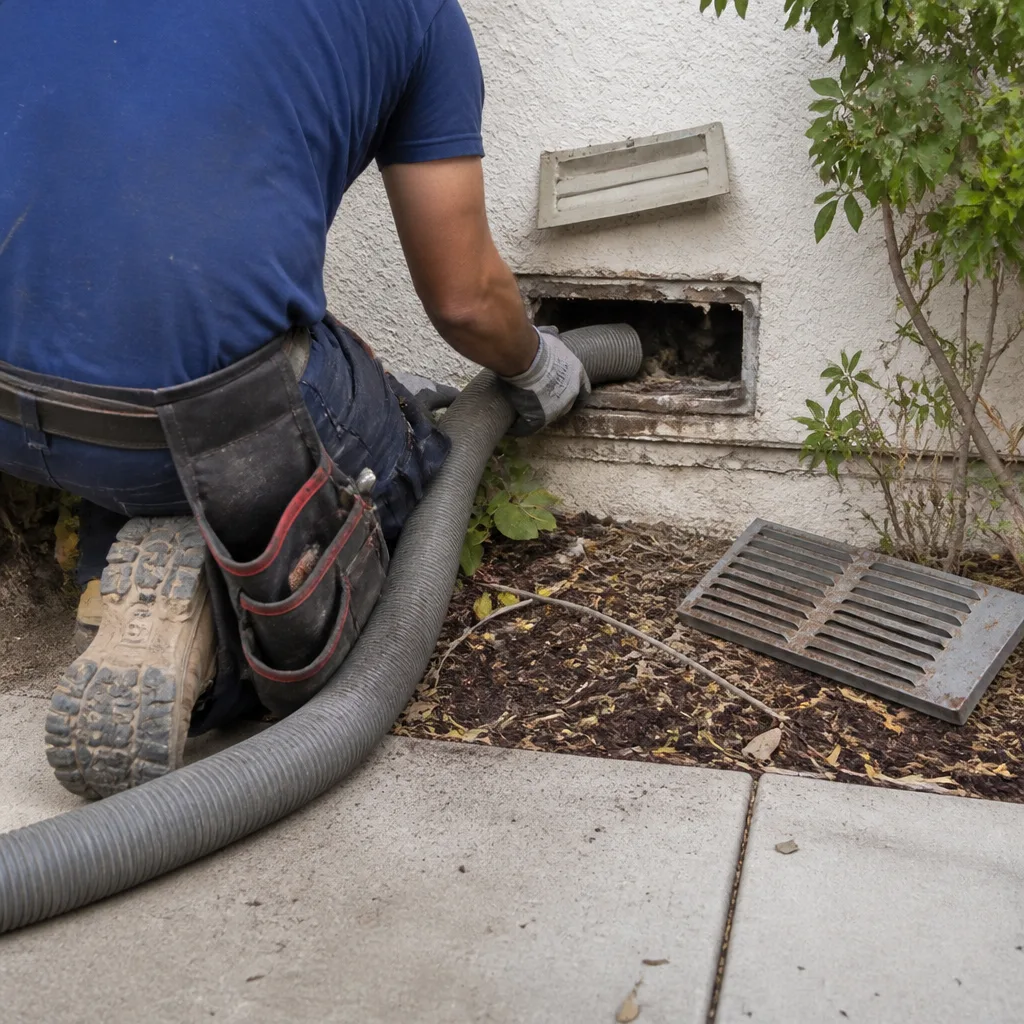
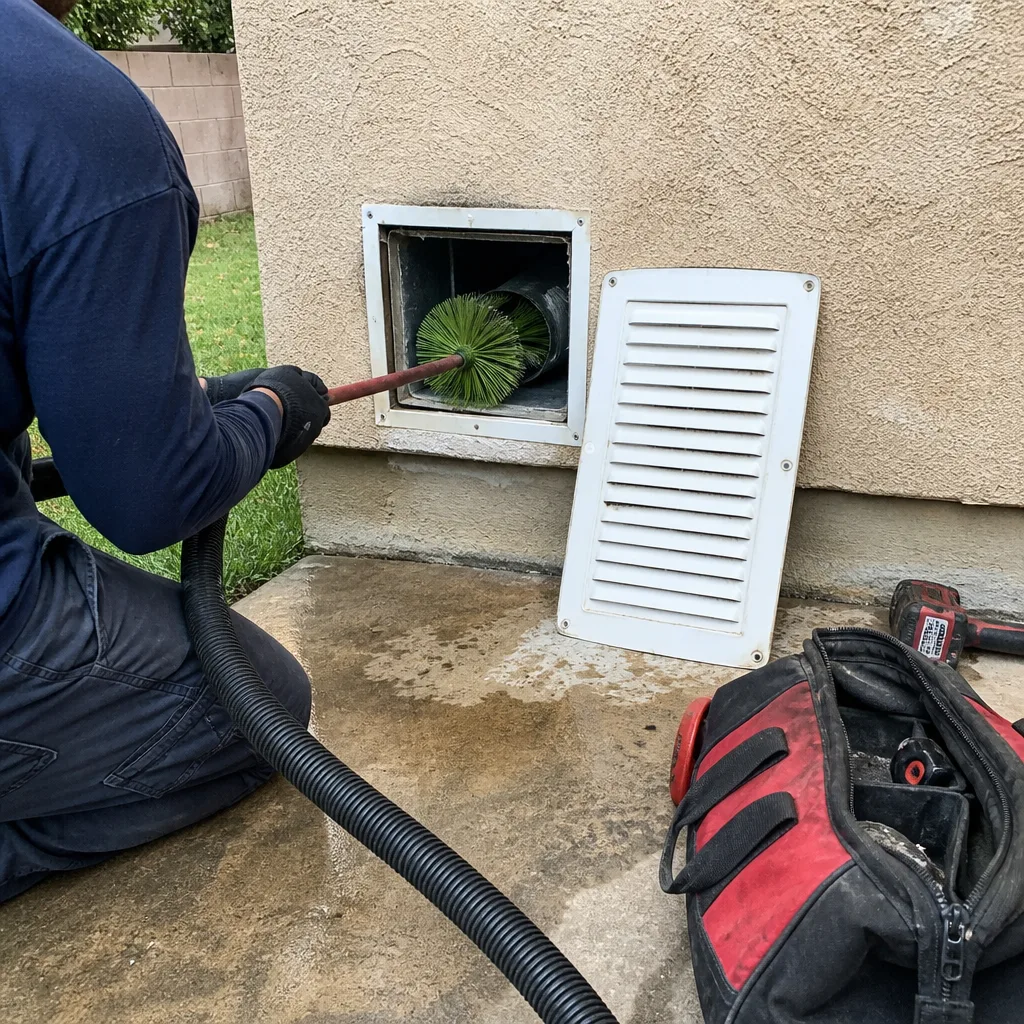
If your inspection turns up dryer vent concerns alongside the ducts, that’s worth addressing on the same visit. Dryer Vent Cleaning in Santee treats the dryer exhaust as a dedicated fire-risk pathway, not an afterthought. Long dryer cycles and lint accumulation are not a nuisance. They’re a measurable fire hazard, and they deserve the same attention as the main HVAC ducting.
Common Mistakes to Avoid
- Assuming the filter is enough. A filter captures some particulate on the return side. It does nothing for debris already inside the supply ducts, nothing for breaches in the return line, and nothing for debris that bypasses the filter rack. The filter is a good first line, not a solution.
- Cleaning registers and calling it done. Wiping the visible register surface does nothing about the duct interior. It’s cosmetic. The debris that matters is beyond the reach of a rag and household spray.
- Attributing every temperature imbalance to the equipment. When a single room is chronically uncomfortable while the rest of the home is fine, the HVAC unit is almost never the problem. Equipment issues affect the whole home. Room-specific problems are duct problems.
- Waiting until the symptoms are severe. By the time duct contamination is visible as black streaks on walls or the odor is present in every room, the system is heavily loaded. Early intervention is cheaper and the outcomes are more straightforward.
- Not verifying the previous cleaning. If you paid for a duct cleaning and can’t say what was actually cleaned, what equipment was used, or whether the trunk lines were accessed, assume it wasn’t done fully. Verification matters. Hold companies to photo documentation.
- Ignoring dryer vent warning signs. A dryer that takes more than one cycle to dry a normal load is telling you the exhaust path is restricted. That’s a lint accumulation issue and a documented fire risk. It should be addressed with the same seriousness as the HVAC ducts.
When to Call a Professional
Call a professional when you confirm airflow asymmetry between rooms, when you find visible debris inside the register boots, when odor is present at system startup, when your utility bills show unexplained efficiency loss, or when symptoms return within six months of a previous cleaning. Any one of these is sufficient. You don’t need to wait for a full combination of warning signs. Air Duct Cleaning services from Duct Cleaning Santee include free estimates in Santee, and we’ll tell you straight whether your system needs cleaning, repair, or neither. No scare tactics, no unnecessary work. Our only scope is duct and air-quality work, which means the assessment you get is specific to the system, not a lead-in to replacing your furnace. Call (833) 542-0752 to schedule an assessment.
Frequently Asked Questions
You likely need duct cleaning if you notice two or more of these: rooms that stay warmer or cooler than others, visible dust accumulation on surfaces within days of cleaning, dark outlines around supply registers, musty or dusty odors when the HVAC runs, or utility bills that increased without a corresponding change in thermostat habits. A professional inspection with photo documentation will confirm whether the trunk lines and branch runs are actually loaded with debris.
A single room that’s consistently warmer or cooler than the rest of the home usually indicates partial blockage in the duct run serving that room, which reduces the air volume reaching that register. The room-specific pattern excludes the HVAC equipment, which would affect the entire home. Calling (833) 542-0752 for a duct assessment can pinpoint whether the restriction is debris, a crushed flex run, or a disconnected joint.
An odor that appears only when the system runs is coming from inside the ductwork or the air handler, not from the room itself. Musty odors specifically suggest moisture has been present in a duct environment long enough for biofilm to establish, often from condensation, a humidifier issue, or a past water leak. The moisture source must be corrected along with the cleaning, or the odor will return.
Air duct cleaning for a typical Santee single-family home generally runs in the $450 to $900 range depending on home size, number of systems, and the condition of the ductwork. That’s a whole-system flat price, not a per-vent calculation. Avoid quotes that dangle a low introductory figure. Ask what the total price per system is before any work begins. Call (833) 542-0752 for an exact quote on your home, no obligation.
Cheaper duct cleaning quotes usually reflect less capable equipment and shorter time on the job. A meaningful full-system cleaning on a typical Santee home takes three to six hours with professional-grade vacuum and agitation equipment, and that labor time is built into the price. A two-hour visit with consumer-grade equipment isn’t delivering the same result. The price difference is the equipment, the thoroughness, and whether the trunk lines are actually accessed at all.
Most Santee homes benefit from professional duct cleaning every three to five years. Homes with allergy sufferers, pets, recent renovation work, or significant wildfire smoke exposure should consider cleaning more frequently, in the two- to three-year range. The most useful indicator is not the calendar, it’s the warning signs described in this guide. When they appear, that’s your schedule. Call (833) 542-0752 if you’re unsure whether your system is due.
The Bottom Line
Duct problems don’t announce themselves with a bang. They accumulate quietly, in the form of a warm bedroom, a dusty shelf, a smell you get used to, a bill that’s a little too high. The skill is learning to read those signals as data rather than background noise. Santee homeowners who catch duct issues early spend less, fix the root problem instead of the symptom, and end up with a system that delivers cleaner air at a lower operating cost. That’s the whole game. If any of the patterns in this guide match what you’re seeing at home, the next step is a proper assessment, not a filter change. Call (833) 542-0752 and we’ll take it from there.
Written by the team at Duct Cleaning Santee, serving Santee since 2017.
See the difference
 Before
 After
 Before
 After
 Before
 After