
Last updated November 2, 2026
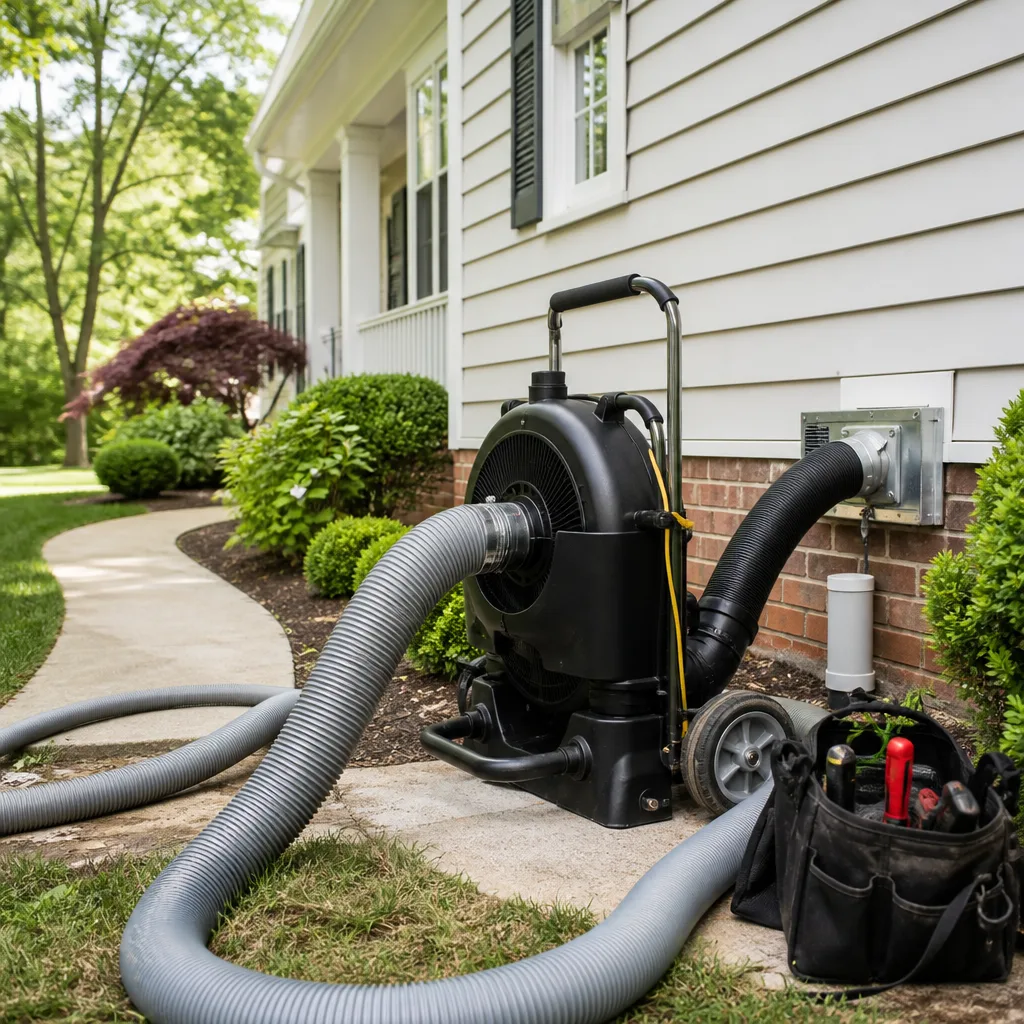 Whole-home duct cleaning
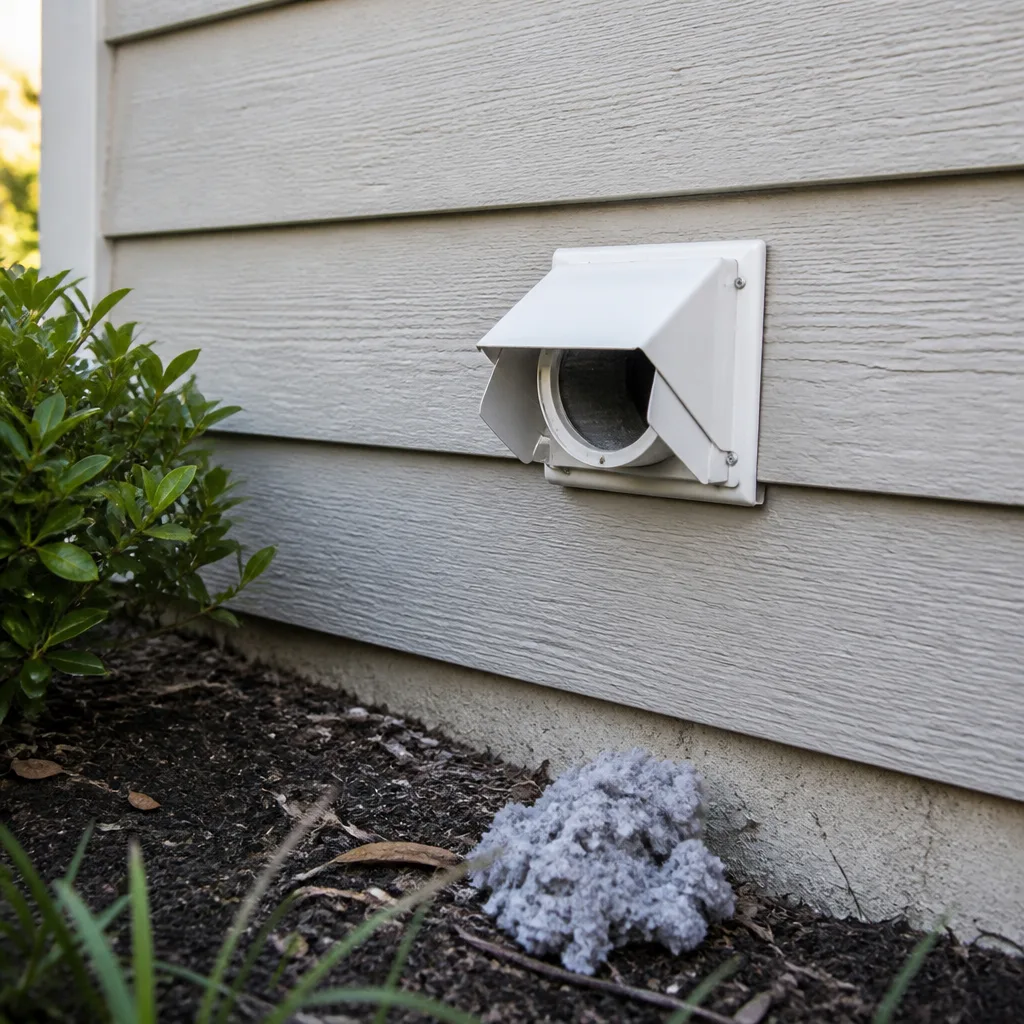 Dryer vent cleaning
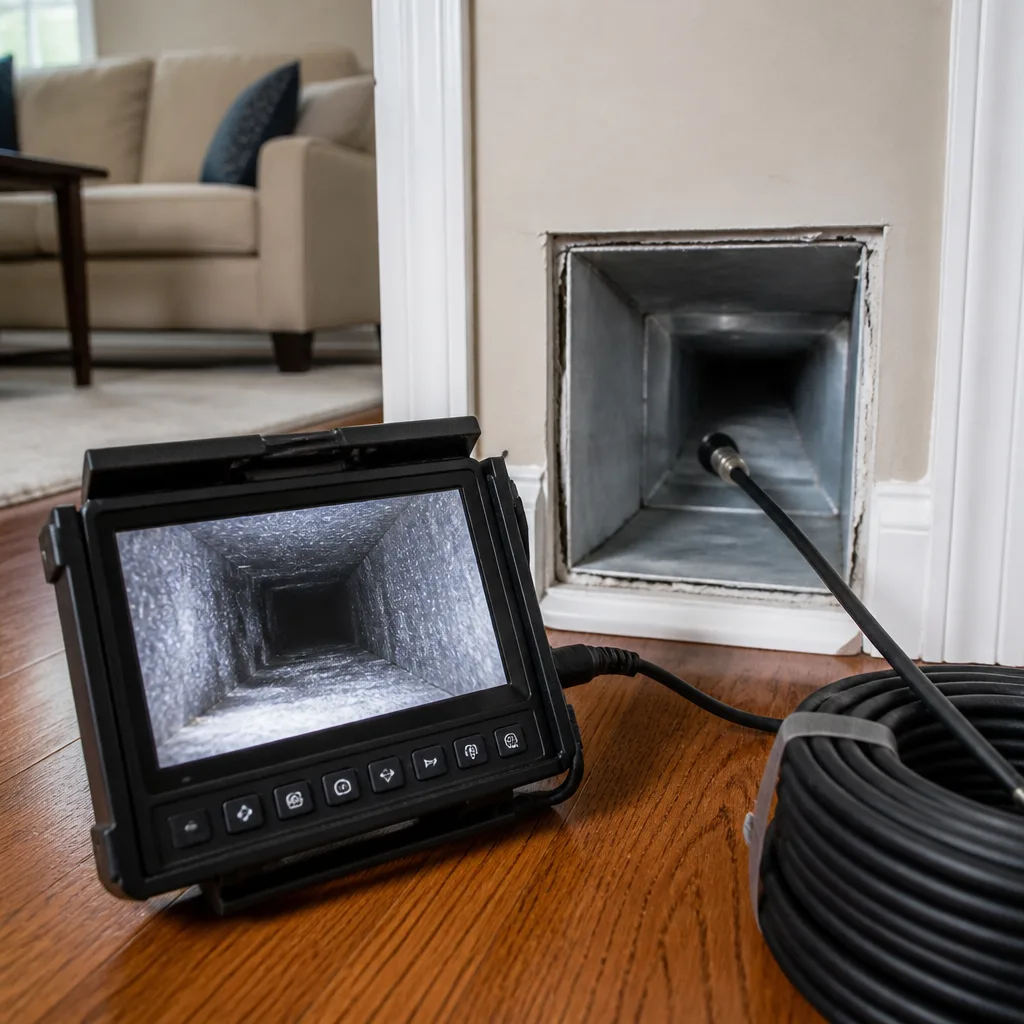 Camera inspection
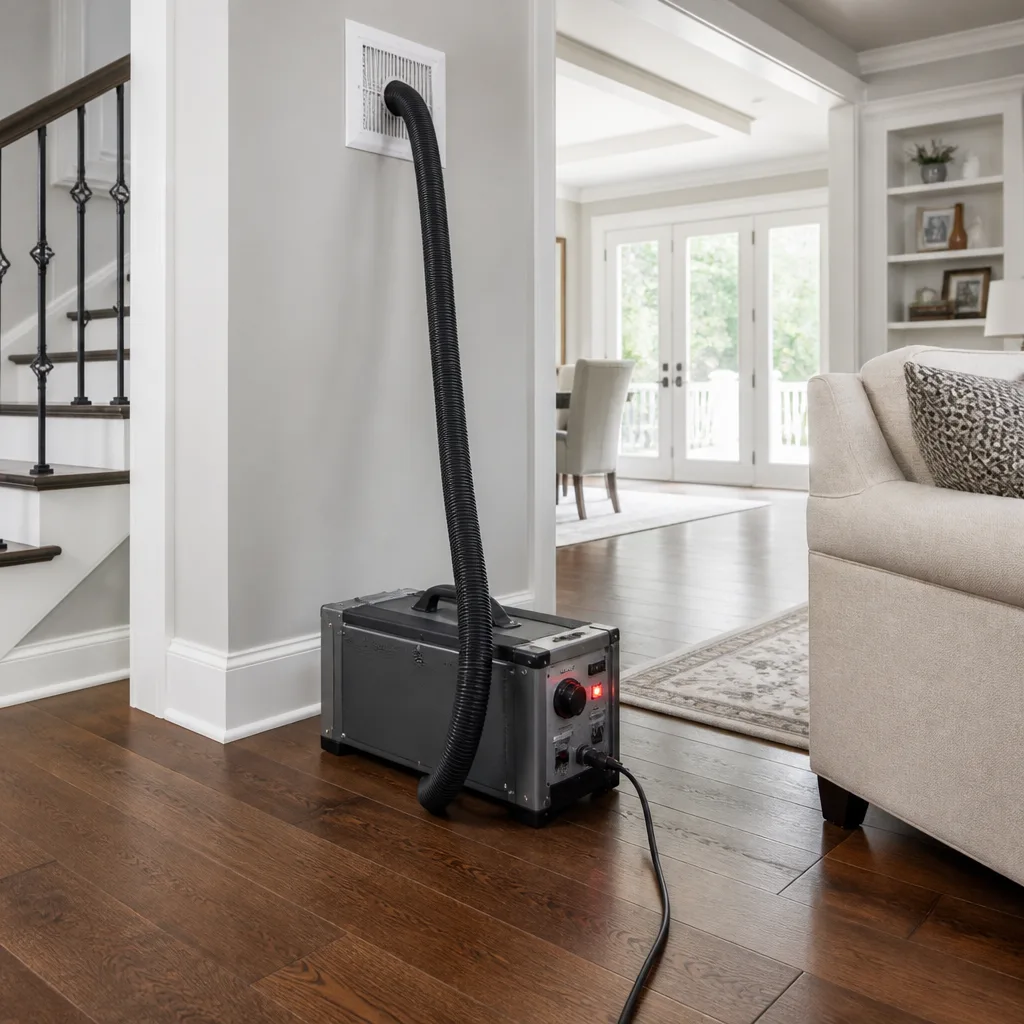 Sanitizing & deodorizing
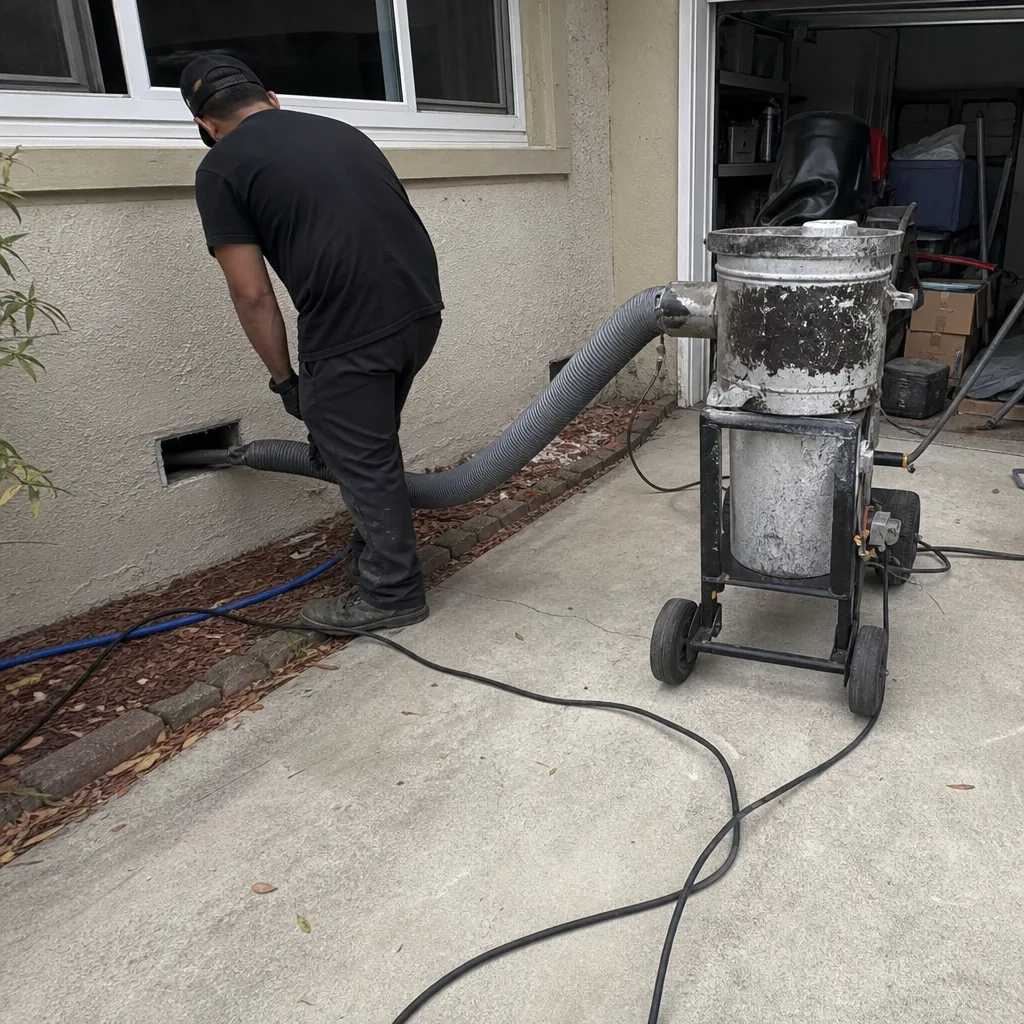
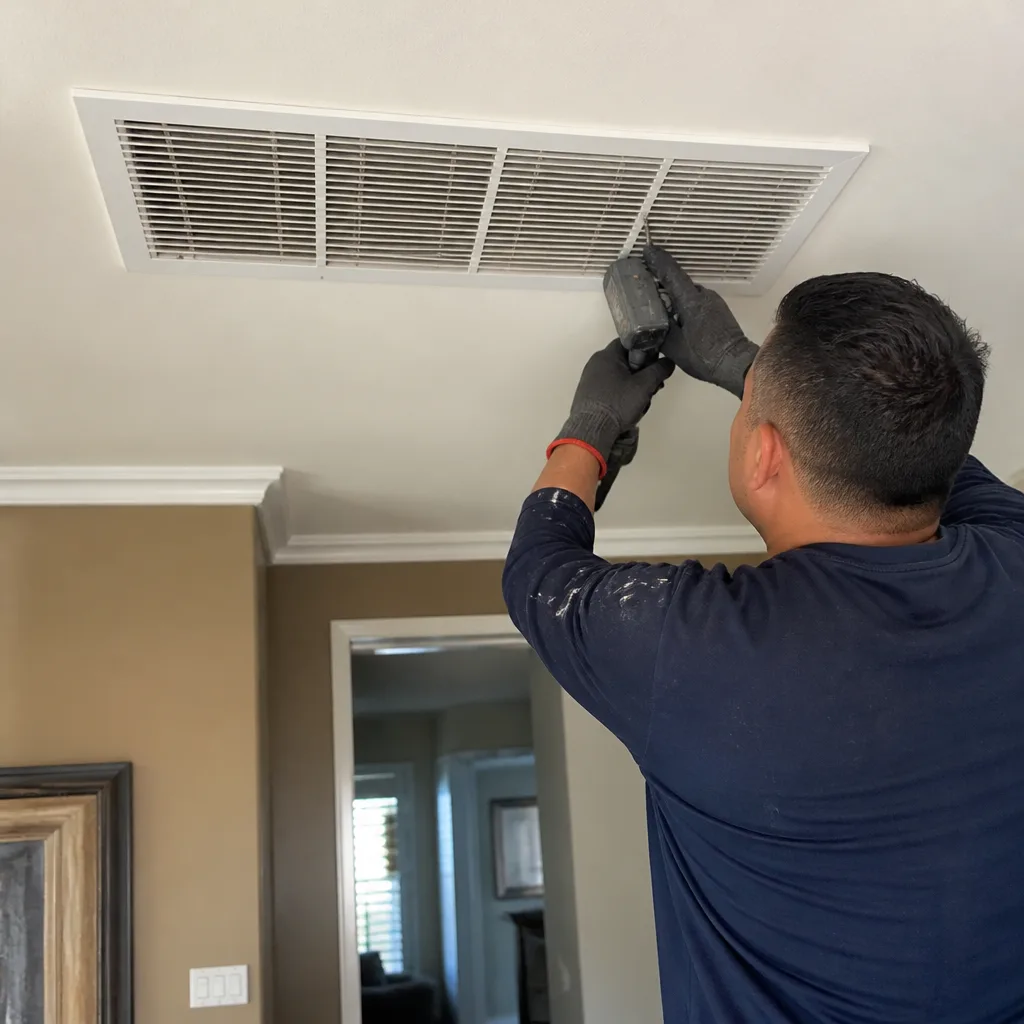
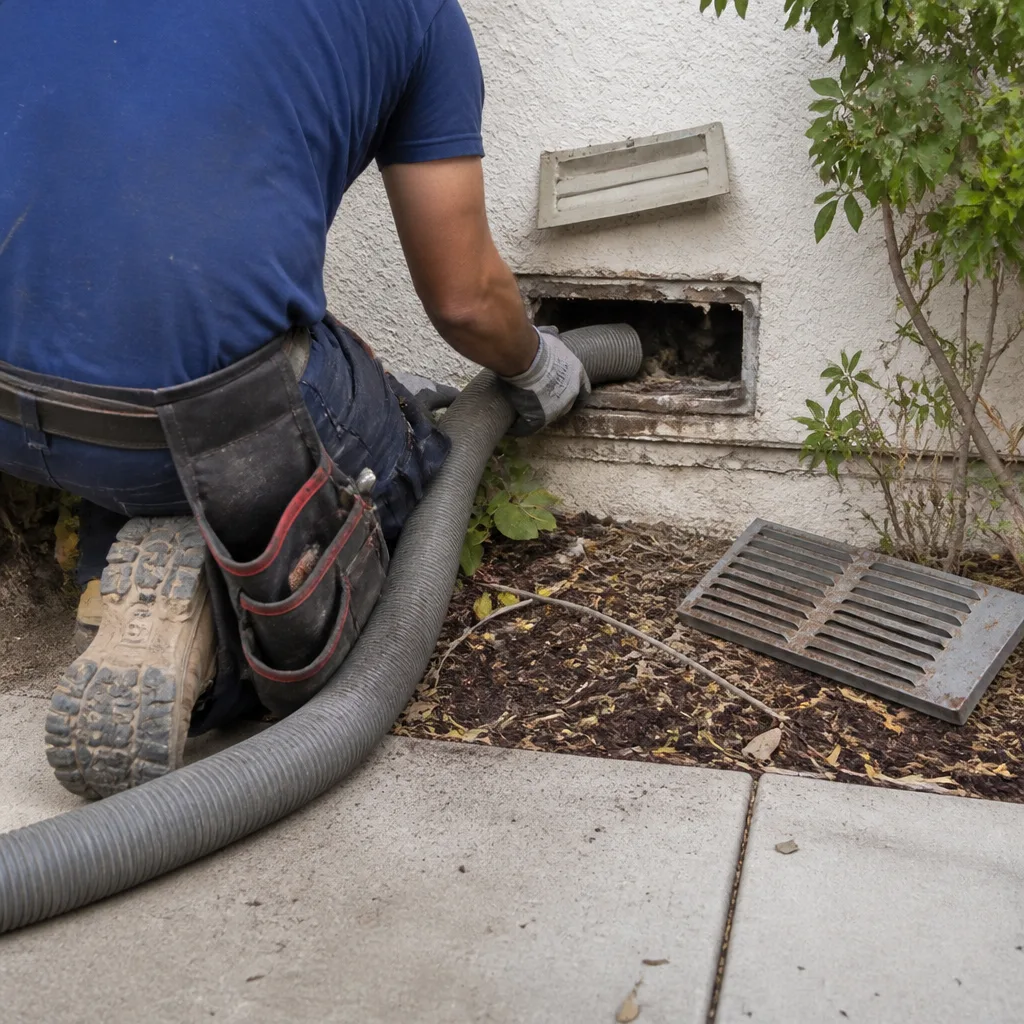
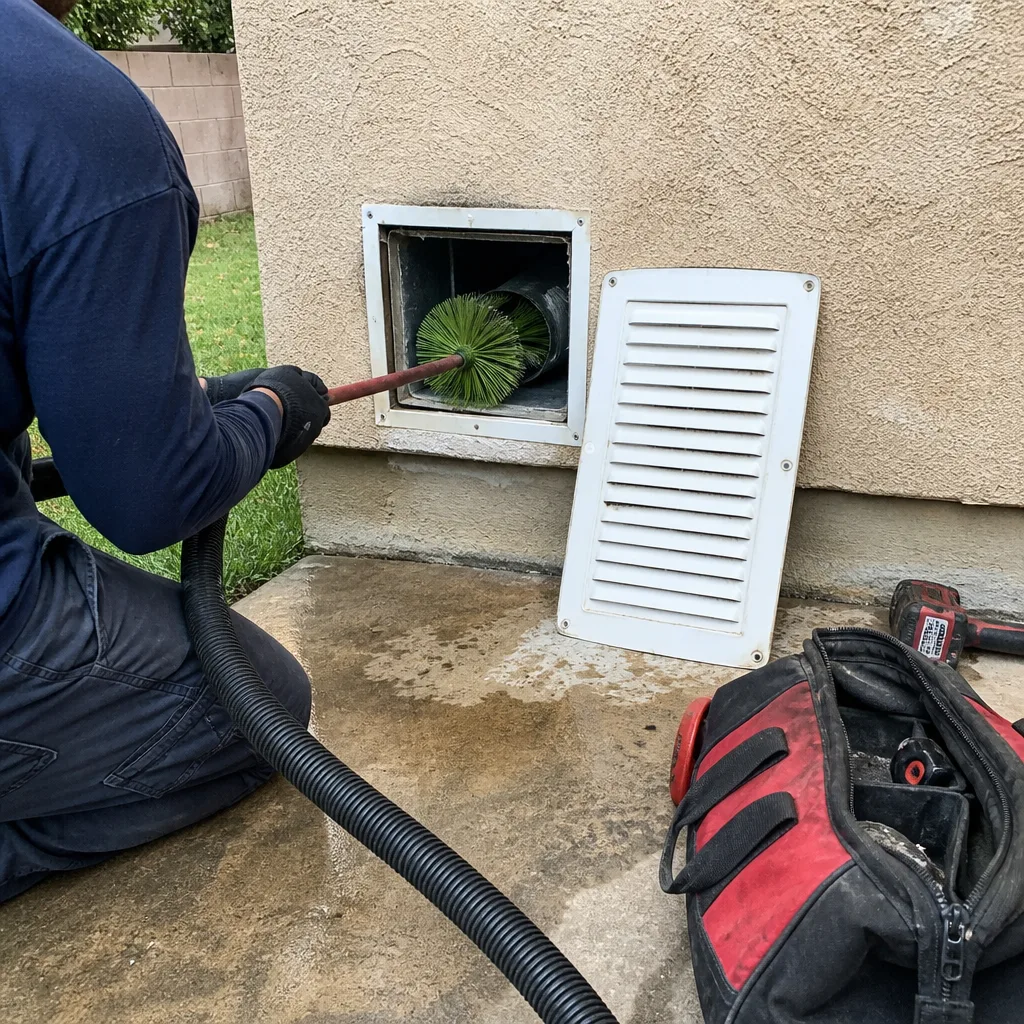
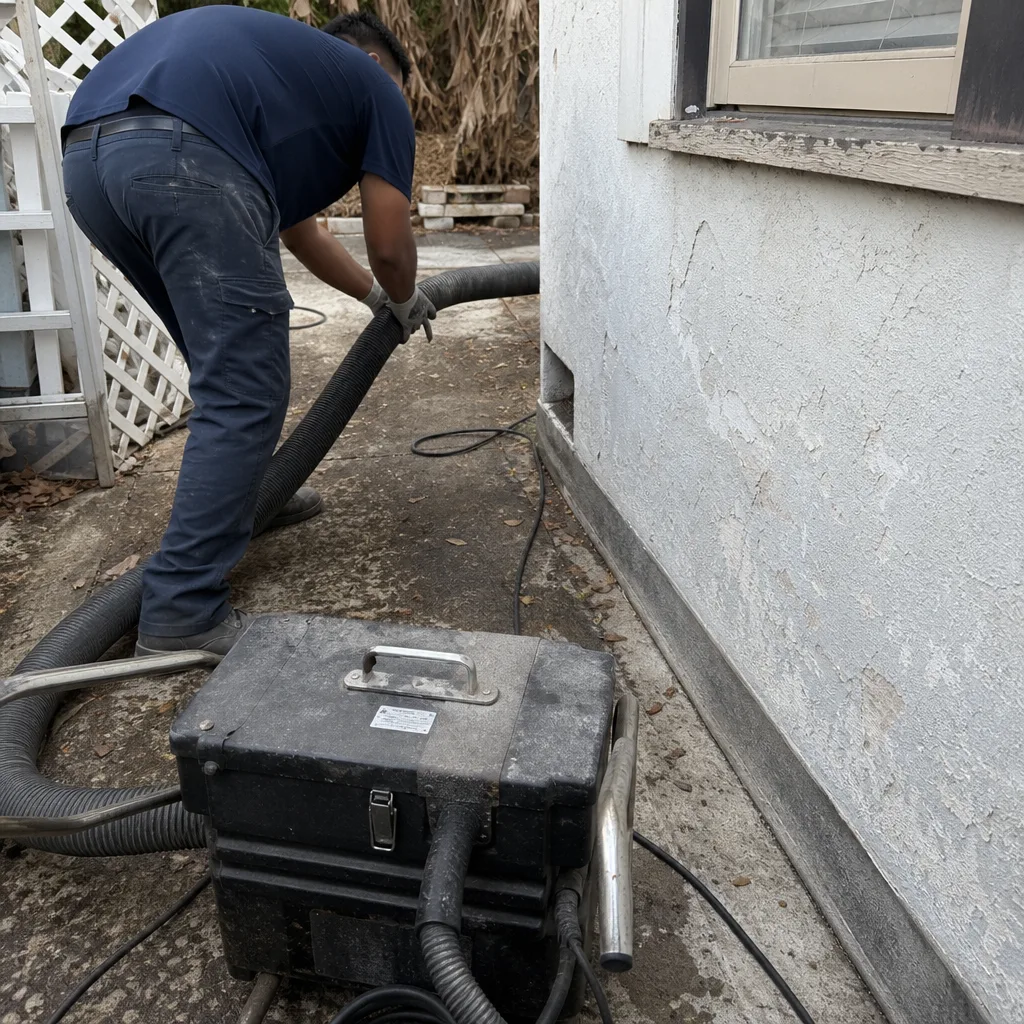
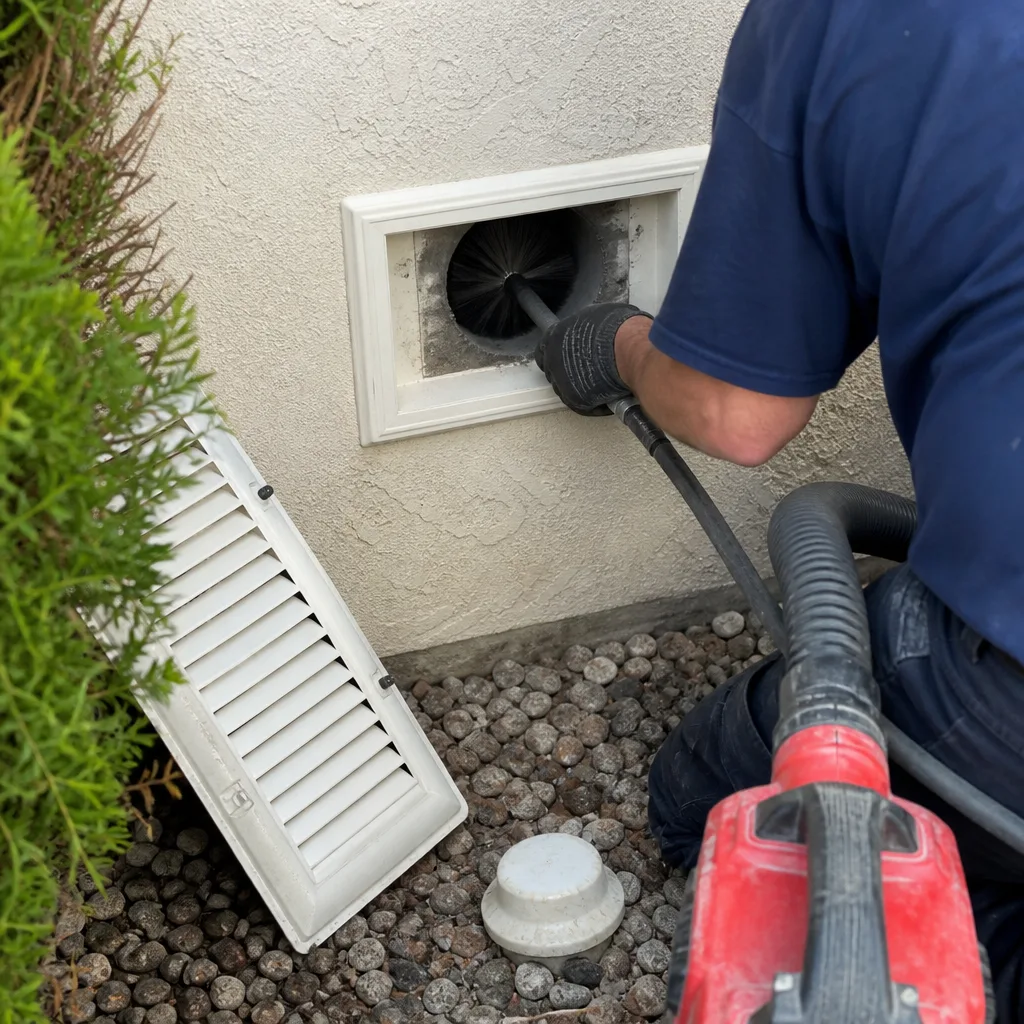
Whole-system duct and dryer vent check with before-and-after photos - you see exactly what came out of your vents
That "$99 whole-house special" is a bait ad - the real number appears once they are in your hallway, or the "clean" is a shop-vac at the register. We photograph the inside of your ducts before and after instead.
Air Duct Cleaning Permits, Codes & Inspections in CA: What You Need to Know
In California, replacing more than ten linear feet of flex duct without a permit can void your homeowner’s insurance claim if that repair is ever cited as a contributing factor in a fire or HVAC failure. That’s a fact almost no Air Duct Cleaning services provider volunteers, and it’s the reason we wrote this guide. Most Santee homeowners assume duct work is a regulatory no-man’s land. The truth is more specific: cleaning, sealing, and repairing each sit in different legal categories, and the line between them determines whether you need a permit, an inspection, or just a receipt. This guide draws that line precisely, using California Mechanical Code standards as they apply in San Diego County.
Styles & brands we work with
- Whole-home duct cleaning
- Dryer vent cleaning
- Camera inspection
- Sanitizing & deodorizing
Quick Answer
Standard air duct cleaning in California requires no permit and falls outside the scope of the California Mechanical Code. However, the moment a technician replaces duct sections, modifies the duct system’s structure, or performs repairs that alter airflow characteristics, a permit is triggered under CMC Chapter 1 and San Diego County requirements. Sealing ducts with mastic or approved tape sits in a gray zone depending on the jurisdiction and the scope of the sealing work. If you’re only having ducts cleaned, you’re in the clear. If duct sections are being cut out and replaced, you need a permit pulled by a licensed contractor.
Table of Contents
- Cleaning vs. Repair: Where the Permit Line Actually Falls
- What the California Mechanical Code Actually Says About Ducts
- How San Diego County Permits Work for Duct Work in Santee
- The Sealing Gray Zone: Mastic, Tape, and When Jurisdictions Care
- Duct Sanitizing Chemicals and CARB Compliance in California
- Documentation You Should Demand Before and After the Job
- Common Mistakes to Avoid
- When to Call a Professional
- Frequently Asked Questions
- The Bottom Line
Cleaning vs. Repair: Where the Permit Line Actually Falls
A standard air duct cleaning in Santee involves negative-pressure extraction, agitation brushes, and sometimes video inspection. No duct sections are removed, no structural changes are made, and the system’s airflow characteristics remain exactly as they were. Under California Mechanical Code Section 101.2, this work falls outside the code’s scope because the code governs installation, alteration, repair, and replacement of mechanical systems – not maintenance. Cleaning is maintenance. The code treats it the same way it treats changing a furnace filter or cleaning a condenser coil.
Repair is a different category entirely. When a technician cuts out a crushed flex duct run and replaces it, that’s an alteration to the system. When they install a new duct collar at the plenum, that’s a modification. When they re-support sagging duct with new strapping and re-seal joints that have separated, the code views this as repair work that must meet current standards. The trigger isn’t the word “repair” itself. The trigger is whether the work changes the physical configuration of the duct system or replaces components that affect system performance. In our experience, a technician who can clean the existing duct and leave it in place has done maintenance. A technician who cuts, removes, or installs duct sections has done work that requires a permit in San Diego County.
The ten-linear-foot threshold is the practical rule most county inspectors apply. Replace one short connector, say a three-foot section between the plenum and a register boot, and many jurisdictions will treat it as minor repair outside permit requirements. Replace a twelve-foot trunk run, and you’ve crossed into territory where a permit is expected. This matters for insurance. If a fire investigator determines that unpermitted duct replacement contributed to smoke spread or structural damage, your insurer has grounds to deny the claim. It’s not theoretical. Insurers look for unpermitted work after every major loss.
What the California Mechanical Code Actually Says About Ducts
The California Mechanical Code, based on the Uniform Mechanical Code with state amendments, contains specific provisions that govern duct materials, installation standards, and sealing requirements. These sections matter because any repair work done in Santee must comply with them whether or not a permit is pulled. A contractor doing unpermitted repair still has to meet code. If they don’t, the liability lands on the homeowner.
CMC Chapter 6 governs duct systems. It specifies that ducts must be constructed of approved materials: galvanized steel, aluminum, or listed flexible duct rated for the application. Flexible duct, which is common in Santee’s attic spaces, has specific installation requirements under CMC Section 603. It must be supported at intervals no greater than four feet, cannot exceed the manufacturer’s listed maximum length, and cannot be installed in a way that compresses or kinks the inner liner. Santee’s summer attic temperatures routinely exceed 140 degrees, which accelerates degradation of improperly supported flex duct. Code-compliant support matters more here than in coastal communities.
Sealing requirements appear in CMC Section 604 and California’s Title 24 energy standards. All duct joints, seams, and connections must be sealed with mastic, UL-listed foil tape, or an approved aerosol sealant. Duct tape – the gray cloth tape from the hardware store – is explicitly not an approved material. Title 24 also requires duct leakage testing for new or modified systems in most residential applications when the ducts are located outside conditioned space. A repair that opens a duct joint and re-seals it with approved mastic is, at minimum, expected to meet these standards. The code doesn’t care whether you pulled a permit. The work still has to be right.
For Santee homeowners, the practical takeaway is that duct materials and sealing methods are not optional preferences. They’re legal requirements. When we perform air duct repair in Santee, the repair sections are replaced with code-compliant materials and sealed with mastic or UL-listed tape because that’s what the CMC demands. A repair done with home-center flex duct and fabric tape might hold for a season, but it violates code, and if it fails and causes damage, the homeowner is exposed.
How San Diego County Permits Work for Duct Work in Santee
Santee falls under San Diego County’s building jurisdiction, which means permits for duct repair or replacement flow through the County’s Planning & Development Services department. The process is more involved than many homeowners expect, and understanding it upfront prevents surprises when a repair estimate suddenly includes a line item for permit fees and inspection scheduling.
The contractor performing the repair pulls the permit. This is not optional for work that triggers the permit requirement. A contractor who offers to do the work without a permit is either unaware of the requirement – which is a competence red flag – or is deliberately avoiding the cost and delay of the inspection process, which is a legal red flag. The permit fee for minor mechanical work in San Diego County typically runs in the low hundreds of dollars, though exact figures vary by valuation of the work. The inspection itself usually occurs within one to two weeks of the permit being issued, depending on county workload.
The inspection verifies that the work meets CMC standards: correct duct materials, proper support, sealed joints, and appropriate connections at the plenum and register boots. The inspector will look at the work before the ducts are enclosed or insulated, which means the repair sequence matters. A contractor who buries new duct under insulation before the inspection is doing it wrong. In practice, this means a duct repair job that includes permitting has a built-in pause point. The repair is completed, the inspection happens, and only then does insulation go back in place. It adds time to the job, but it’s the process that keeps the work legal and insurable.
For homeowners in Santee’s older housing stock, particularly homes built before Title 24 duct sealing requirements took effect, a permitted repair can trigger additional requirements. If the inspector determines that the existing duct system has significant leakage or non-compliant connections, they may require additional sealing or repair work before signing off. This is not the contractor padding the bill. This is the county applying current code to work that’s being touched. It’s worth knowing before you open up a wall or attic.
The Sealing Gray Zone: Mastic, Tape, and When Jurisdictions Care
Sealing duct joints is the murkiest category in the entire duct work landscape, and it’s where homeowners get genuinely contradictory information. A technician who cleans ducts and notices a separated joint at the plenum can do one of two things. They can apply a bead of mastic and re-tape the connection, which is a repair action. Or they can document the finding and flag it for a separate repair visit. Most homeowners, understandably, just want it sealed so they stop losing conditioned air into the attic.
The gray zone exists because sealing an existing joint doesn’t change the duct configuration. No sections are replaced, no runs are altered, and the system’s fundamental design remains untouched. Many jurisdictions classify this as minor maintenance work that doesn’t require a permit. Other inspectors take the position that any application of mastic or tape to a duct joint is a repair action that should have gone through a permit. San Diego County, in practice, tends toward the former for isolated joint sealing and the latter when the sealing is part of a larger duct modification project.
The practical advice we give Santee homeowners is straightforward. If the work is limited to re-sealing a few joints that have separated, the risk is minimal and the county is unlikely to pursue a permit. If the sealing work involves accessing multiple duct runs, opening up portions of the system, or is being done because the ducts failed a Title 24 leakage test, a permit is the safer course. Aerosol sealing, where a fog of sealant particles is blown through the duct system and bonds to leak points from the inside, sits in its own category. Title 24 recognizes it as a valid sealing method, but it’s a specialized process that should be done by a contractor who understands the equipment and the code implications.
The separator we use internally at Duct Cleaning Santee is whether the sealing work is preserving the existing system or changing it. Preserving it means treating separated joints, re-taping connections, and sealing the gaps that have developed over years of thermal cycling. That’s maintenance-adjacent work. Changing the system means resealing because ducts are being replaced, reconfigured, or repaired. That’s governed work. And when governed work happens, we treat it as such.
Duct Sanitizing Chemicals and CARB Compliance in California
California regulates the chemicals that can be used in residential air handling systems through the California Air Resources Board, or CARB. Any sanitizer, disinfectant, or antimicrobial product applied inside duct work must be registered with CARB for that specific use. This matters because duct sanitizing has become a popular add-on service, often marketed as a “fogging” treatment, and not every product being sprayed into California ducts is legally registered for that application.
A CARB-registered product has been evaluated for volatile organic compound content and for safety in enclosed air-handling environments. The registration is specific to the application. A product registered for use on hard surfaces in commercial kitchens is not automatically legal for use inside residential duct work. When a technician claims a fogging treatment kills mold or bacteria, the homeowner should ask for the product name and verify its CARB registration. A legitimate operator will provide this information without hesitation. A contractor who can’t name the product or who dismisses the question is a risk signal.
The deeper issue is that “fogging” as a standalone treatment has limited verified efficacy. Blowing a fog of sanitizer through a duct system deposits chemical on interior surfaces, but duct interiors are not smooth, accessible surfaces. They have seams, joints, internal insulation, and accumulated debris that can shield contaminants from contact with the sanitizer. The National Air Duct Cleaners Association does not recommend sanitizing as a routine part of duct cleaning. The EPA’s guidance on duct cleaning similarly declines to recommend routine chemical sanitizers. Our position at Duct Cleaning Santee is that mechanical cleaning with professional-grade equipment is the primary intervention. Sanitizing, when requested, should be done with CARB-registered products applied by someone who understands both the chemistry and the limitation.
For Santee homeowners, the practical question is whether the duct cleaning company they hire carries products that are legal in California. This isn’t a hypothetical concern. Unregistered sanitizers have shown up in residential duct work in Southern California, and the homeowner is the one left with chemical residue in their air stream and no recourse against a contractor who used a product that wasn’t legal for that application. Ask for the product name. Ask for the CARB registration. If the answer isn’t immediate and specific, reconsider the contractor.
Documentation You Should Demand Before and After the Job
The difference between a duct project that protects you and one that exposes you is paperwork. Specific, written documentation of what was done, in which category, with which materials. Most homeowners settle for an invoice that says “duct cleaning” or “duct repair” and nothing more. That’s not enough when you’re trying to prove to an insurer, a future buyer, or a code inspector that the work was legitimate.
Before work begins, request written confirmation of which category the job falls into: cleaning only, sealing only, or repair/replacement. This should be in the estimate or the work order, and it should match what actually happens on the job. If a “cleaning” turns into a repair mid-job because the technician discovered a crushed duct run, the paperwork should be updated before the repair proceeds. A contractor who did cleaning and repair under a cleaning-only work order has created a documentation gap that the homeowner inherits.
If a permit is required, verify it’s been pulled before work starts. San Diego County permits can be verified through the County’s online permit lookup system using the permit number. Ask for the permit number in writing. A contractor who is doing permitted work will provide it. The inspection result should also be documented, either in the county’s system or through a sign-off record. Keep both. If you sell your home and the buyer asks whether the duct repair was permitted, you should be able to answer with a number, not a vague recollection.
After the job, request documentation of what was done and with what materials. A legitimate duct company can provide a summary of what was cleaned, what was sealed, what was replaced, and what products or materials were used. For cleaning work, before-and-after photos of the duct interior are increasingly standard, captured with the same inspection cameras used to scope the system. At Duct Cleaning Santee, we document every job with camera footage because it’s verifiable evidence that the work happened. It protects the homeowner and it protects us. A contractor who won’t show you what they did inside your ducts is asking you to take the most important thing in the transaction on faith.
Common Mistakes to Avoid
- Assuming all duct work is permit-free. Cleaning is, but repair and replacement are not. Every homeowner should know the line before scheduling work. The ten-linear-foot rule for flex duct replacement is a practical benchmark that triggers permit requirements in San Diego County.
- Accepting a low-ball quote without asking about the work category. A quote that’s suspiciously cheap is often cheap because it doesn’t include permit fees, inspection scheduling, or code-compliant materials. You pay for those either way: upfront through a legitimate quote, or later through liability exposure.
- Letting a “cleaning” become a “repair” without updated paperwork. If the scope changes during the job, the documentation should change with it. A cleaning-only work order that ended with duct replacement is a legal gap that lands on you.
- Not asking what sanitizing product will be used. California’s CARB regulations are specific. A product that’s not registered for residential duct application shouldn’t be sprayed into your air stream. Ask for the name and the registration.
- Accepting cloth duct tape as a sealing solution. CMC Section 604 and Title 24 require mastic or UL-listed foil tape. Gray cloth duct tape is a code violation. If you see it on your ducts, someone did the work wrong.
- Skipping the documentation because the job “looked fine.” Future buyers, insurers, and code inspectors don’t care how it looked. They care what the paperwork says. Insist on a written work summary and camera documentation of the duct interior.
- Hiring a generalist for work that a duct specialist should do. A general HVAC company that also does plumbing and electrical work may not carry the specialized equipment or the specific code knowledge for duct work. The niche matters when code compliance is on the line.
When to Call a Professional
If you’ve noticed dust accumulation around your registers, inconsistent airflow between rooms, or dryer cycles that now run twice as long as they used to, the duct system is trying to tell you something. Professional assessment isn’t a luxury at that point; it’s the difference between addressing a minor issue and discovering a code violation after a fire or an insurance claim. Watch for Air Duct Cleaning Warning Signs: A Santee Homeowner’s Reference Guide to catch problems early. Duct systems buried in Santee attics don’t announce their failures. They degrade quietly until the attic gets hot, the energy bill climbs, and a register that used to blow strong now whispers.
Call a professional when you suspect crushed or disconnected duct runs, when you see visible dust streaks at register grilles, when rooms in your home are chronically uncomfortable, or when you’re buying or selling a home and want documentation of duct condition before the transaction closes. The team at Duct Cleaning Santee offers free estimates in Santee for air duct cleaning, dryer vent cleaning, and duct repair work. Call (833) 542-0752 to schedule a duct system assessment with someone who does this one thing and nothing else.
Frequently Asked Questions
No. Standard air duct cleaning is maintenance work, not installation or repair, and falls outside the scope of the California Mechanical Code. No permit is required for cleaning that leaves the duct system configuration unchanged. If you’re only having ducts cleaned, the only documentation you need is a receipt and ideally camera footage of the work.
Whole-system air duct cleaning in Santee typically ranges from $350 to $700 for a standard single-family home, with larger homes or systems with significant contamination running higher. The range varies by system size, number of returns, accessibility, and the level of contamination. Beware of quotes that advertise a teaser price for a limited number of vents; legitimate duct cleaning is priced for the whole system, not per vent. Call (833) 542-0752 for an exact quote for your home.
Low-price duct cleaning quotes usually come from companies using consumer-grade equipment, pricing per vent with a teaser rate, or skipping the documentation and verification steps that legitimate companies include. The equipment matters. A Rotobrush or Nikro system costs tens of thousands of dollars to acquire and maintain; a portable shop vac and a brush do not deliver the same result. The industry’s reputation problem stems from the bait-and-switch model: a low advertised price that becomes a much larger invoice once the technician is in the home. At Duct Cleaning Santee, the price quoted is the price you pay, and it’s for the whole system, not a selected number of vents.
Ask for camera documentation of the duct interior before and after the work. Professional duct companies in Santee use inspection cameras to scope the system before cleaning and to verify results afterward. If a company can’t show you the interior of your own ducts before and after, you have no way to verify that anything meaningful happened. We document every job because verifiable work is the only work that matters.
Most single-family homes in Santee benefit from air duct cleaning every 3 to 5 years, though homes with pets, high dust, recent construction, or occupants with allergies may need it more frequently. The EPA does not set a universal recommended interval; the answer depends on the conditions in your specific home. If you’re seeing visible dust accumulation at registers, experiencing unexplained allergy symptoms, or finding that surfaces dust up quickly after cleaning, the ducts are overdue.
No. Dryer vent cleaning in Santee is maintenance work on the exhaust system, not governed by the California Mechanical Code’s permit requirements. What it is: a direct response to a documented fire risk. Lint accumulation in dryer exhaust ducts is one of the leading causes of residential house fires, and regular cleaning is the single most effective prevention step a homeowner can take.
The Bottom Line
The line between legal and exposed in California duct work is not complicated once you know where it is. Cleaning requires no permit and no code compliance because it’s maintenance. Sealing existing joints sits in a gray zone that most San Diego County jurisdictions treat as maintenance-adjacent, but the moment sealing becomes part of a modification, the rules change. Repair and replacement, especially beyond ten linear feet of flex duct, requires a permit pulled by a licensed contractor and an inspection by San Diego County. Sanitizing chemicals must be CARB-registered for residential duct use. Documentation should match the work category and capture what happened inside the ducts. Get these things right and your duct project is an investment in your home’s air quality. Get them wrong and you’ve handed your insurer a reason to deny your next claim. For Santee homeowners, the recommendation is simple: know the line, demand the paperwork, and hire a contractor who treats duct work as a regulated trade rather than a side gig. The team at Duct Cleaning Santee is available at (833) 542-0752 for free estimates on cleaning, dryer vent safety, and code-compliant duct repair.
Written by the team at Duct Cleaning Santee, serving Santee since 2017. Explore more guides & resources on our blog.
See the difference
 Before
 After
 Before
 After
 Before
 After