
Last updated November 2, 2026
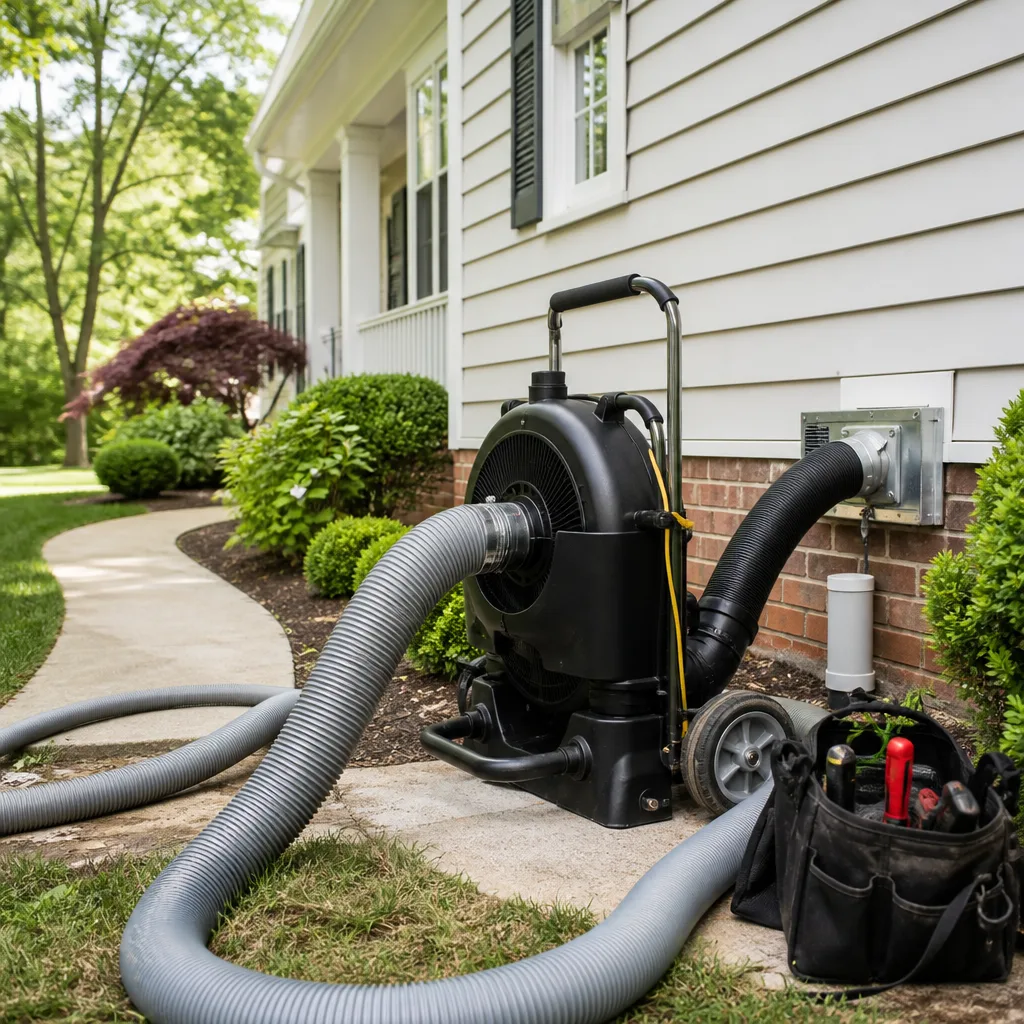 Whole-home duct cleaning
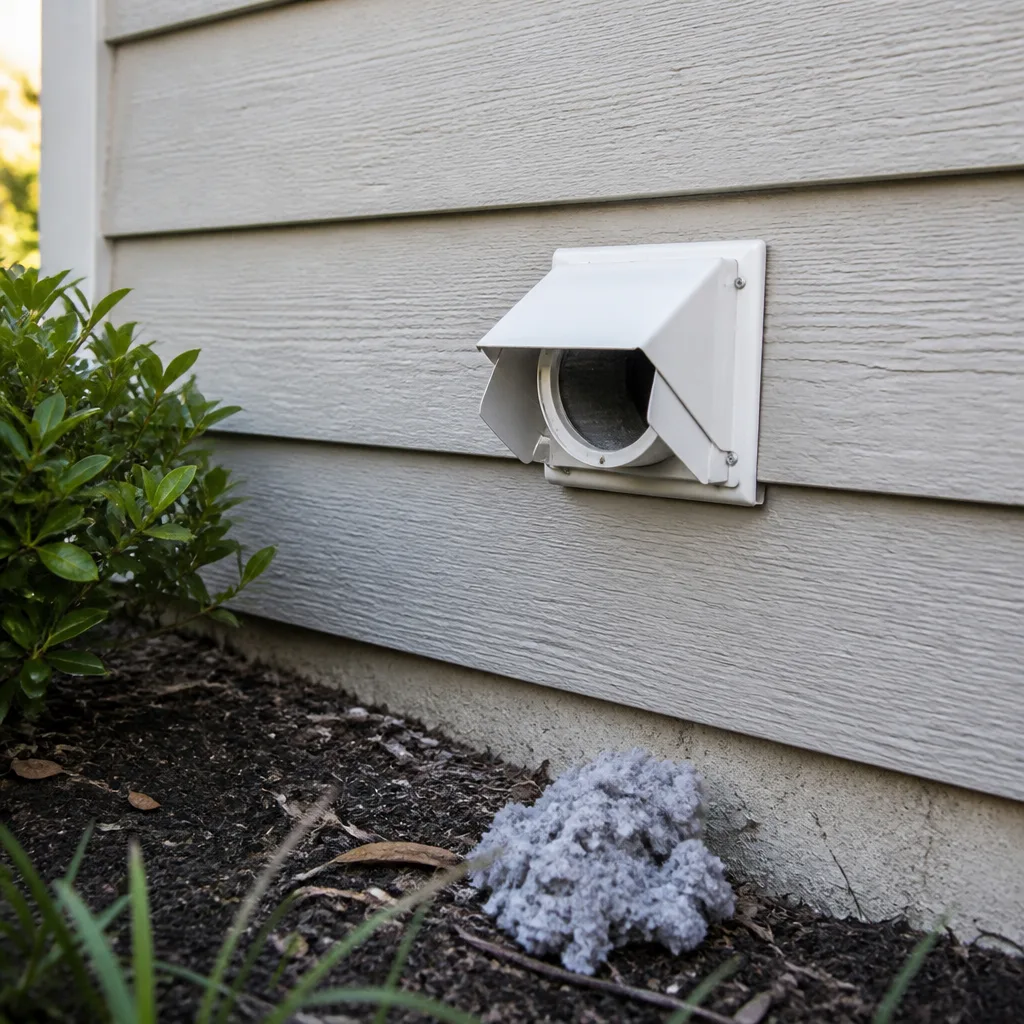 Dryer vent cleaning
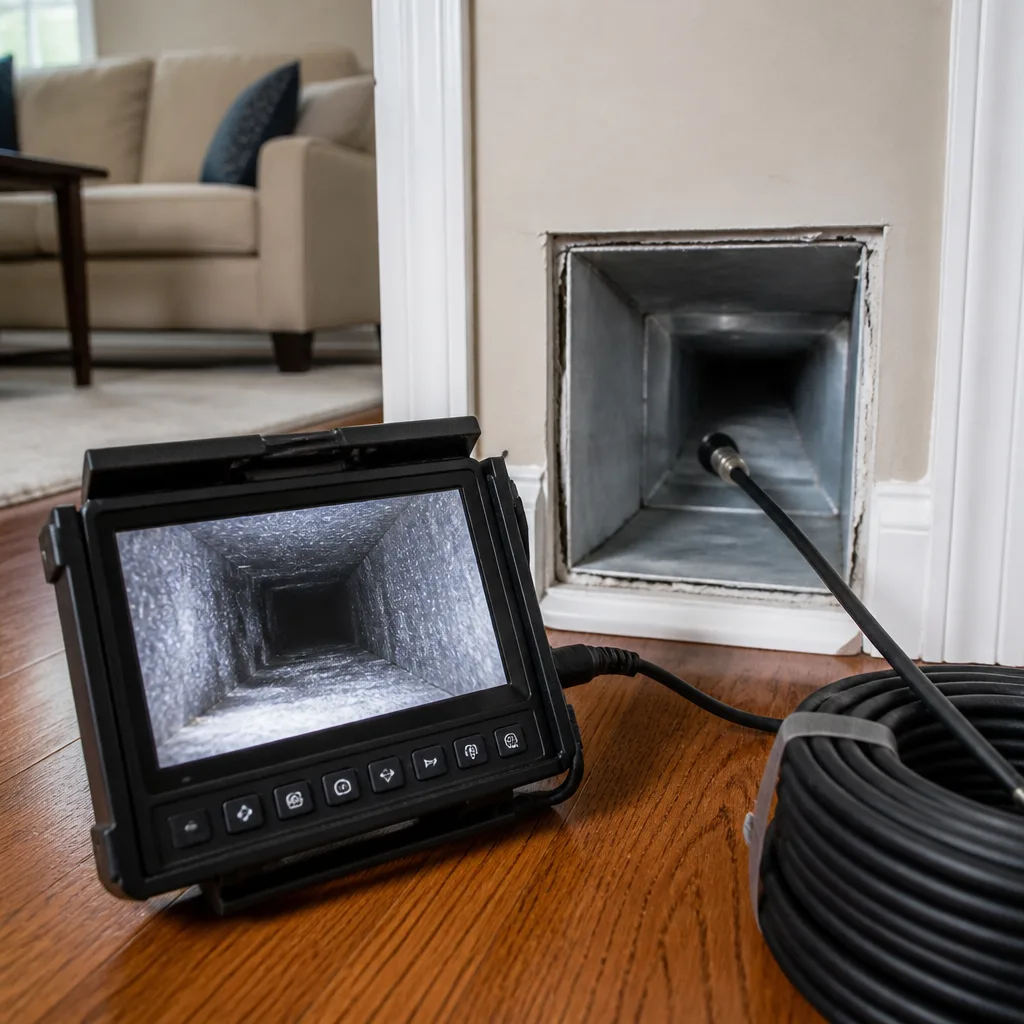 Camera inspection
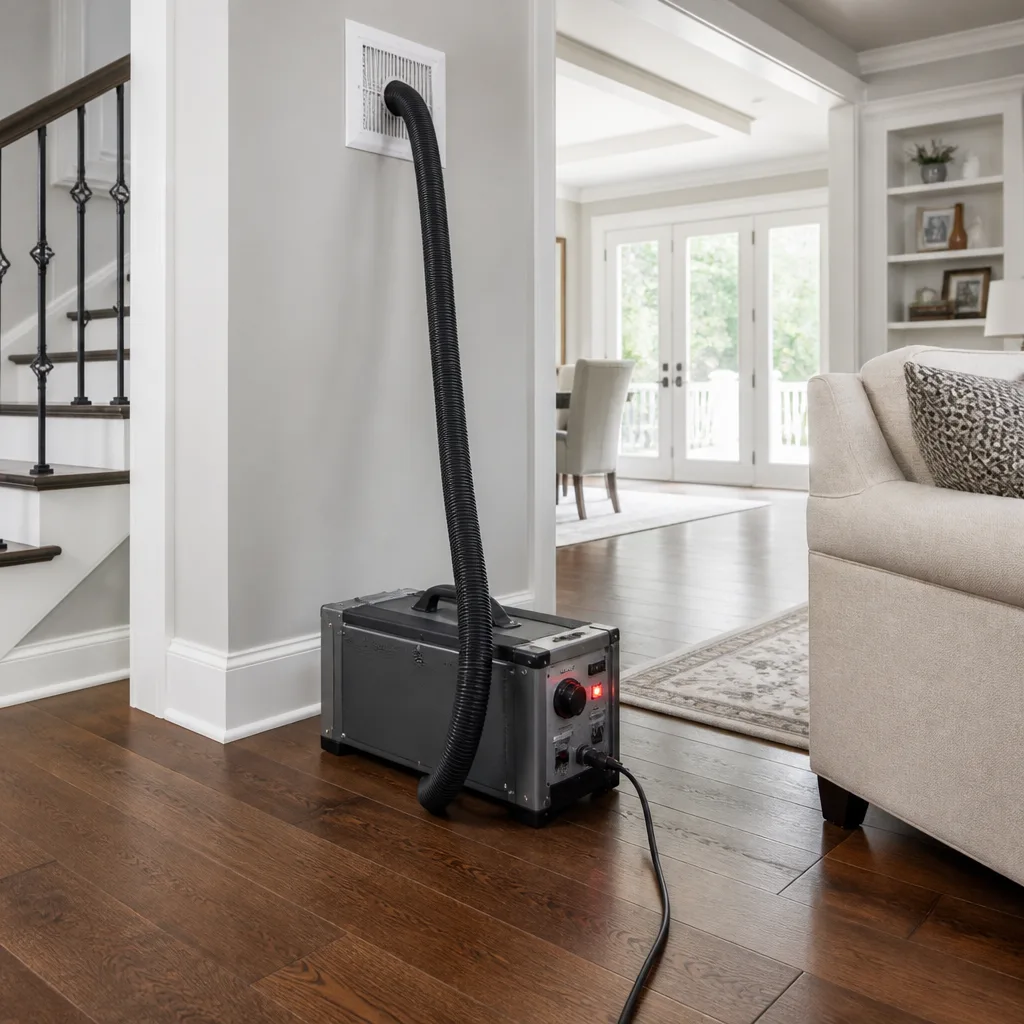 Sanitizing & deodorizing
Whole-system duct and dryer vent check with before-and-after photos - you see exactly what came out of your vents
That "$99 whole-house special" is a bait ad - the real number appears once they are in your hallway, or the "clean" is a shop-vac at the register. We photograph the inside of your ducts before and after instead.
Air Duct Cleaning Maintenance Checklist for Santee Homeowners
In Santee, your HVAC system works harder than you might think. Unlike coastal San Diego neighborhoods that enjoy morning marine layers and afternoon ocean breezes, Santee sits inland against the foothills where summers push temperatures into the 90s and 100s for weeks at a time. That means your blower motor cycles air through your ducts nearly every month of the year. Here’s what that continuous runtime actually means: particulate buildup accelerates, sometimes two to three times faster than in homes with a true off-season. This guide walks through a maintenance checklist built specifically for Santee’s dusty inland air, not a generic national template that ignores how our climate actually behaves.
Styles & brands we work with
- Whole-home duct cleaning
- Dryer vent cleaning
- Camera inspection
- Sanitizing & deodorizing
Quick Answer
An air duct maintenance checklist for Santee homeowners should include monthly filter inspections using a MERV 8-11 rating suited to inland particulate load, quarterly register and return grille checks for dust streaking or odor, an annual dryer vent inspection especially for homes with extended duct runs from garage conversions, and our Air Duct Cleaning services after wildfire smoke events, remodels, or adding a pet. Keep a simple dated log of every inspection and service so you can track buildup patterns and avoid paying for work that isn’t yet needed.
Table of Contents
- Monthly Tasks: Filter Inspection and Replacement
- Quarterly Tasks: Register Inspection and Airflow Check
- Annual Tasks: Dryer Vent and Termination Cap Inspection
- Trigger-Based Tasks: When to Inspect Immediately
- Documentation: Building a Service Log That Works
- How Professional Cleaning Fits the Schedule
- Common Mistakes to Avoid
- When to Call a Professional
- Frequently Asked Questions
- The Bottom Line
Monthly Tasks: Filter Inspection and Replacement
The single highest-impact maintenance task in any Santee home is also the one most often skipped: checking the HVAC filter. In a climate where the system runs constantly, a filter that would last three months in a mild coastal climate can load up in four to six weeks here. When a filter saturates, two things happen. Airflow drops, which forces the blower to work harder and raises energy use. And dirty air starts bypassing the filter entirely, carrying particulate straight into the ductwork.
What to do each month:
- Locate the return grille or filter slot. In many Santee homes this is in a hallway ceiling, a wall return, or inside the air handler itself.
- Remove the filter and hold it up to a light source. If you cannot see light through the filter media, it is loaded and needs replacement regardless of how many days it has been in place.
- Check for visible dust caking or pet hair accumulation on the intake side.
- Note the filter’s MERV rating before buying a replacement. Do not blindly upgrade to the highest number available.
On that last point: MERV rating selection matters more in Santee than most homeowners realize. A MERV 13 or higher filter sounds like an upgrade, but the dense media restricts airflow. If your system was not designed for high-efficiency filtration, a MERV 13 can starve the blower, reduce cooling capacity during July and August, and shorten equipment life. In our experience working on air duct cleaning in Santee, we see far more problems from over-restrictive filters than from filters rated too low. For most inland San Diego homes, MERV 8 to MERV 11 strikes the right balance between capturing the fine dust that blows in from surrounding terrain and keeping airflow within factory spec. Homes with allergy sufferers in the household may justify the upper end of that range or a step higher, but only if the system is checked for static pressure first.
If you find that a new filter looks dirty within three weeks, that is not a sign to buy a denser filter. It is a sign that your ducts are carrying a heavier particulate load than they should. The filter is doing its job, but the source of the dust needs attention. That points toward either duct leakage pulling in attic or crawlspace air, or accumulated debris inside the duct runs themselves.
Quarterly Tasks: Register Inspection and Airflow Check
Four times a year, take fifteen minutes to examine every supply register and return grille in the house. This is a visual inspection that reveals what is happening inside the ducts without opening any walls. What you are looking for is streaking, discoloration, and odor.
Step-by-step quarterly register check:
- Walk to each supply register in the home. In Santee ranch homes and two-story builds alike, these are usually on walls or ceilings.
- Look at the wall or ceiling surface immediately surrounding the register. Gray or black streaking radiating outward is not normal dust. It indicates particulate is being blown out of the register and depositing on surfaces, often a sign of duct contamination or a leaking return drawing in unfiltered air.
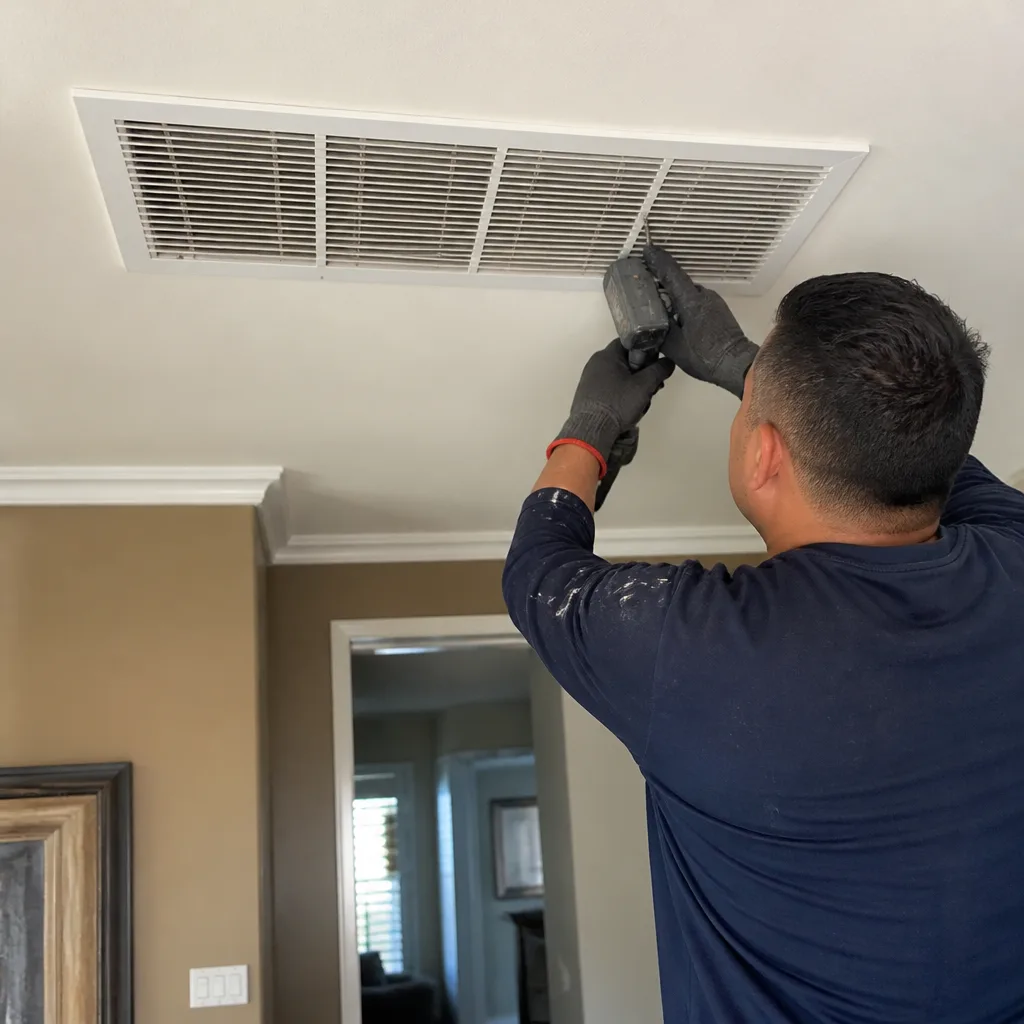
- Remove the register cover and wipe the inside of the register boot with a clean white cloth. Check what comes off. Fine gray dust is expected and manageable. Oily residue, visible mold-like growth, or a musty odor is not.
- Feel the airflow at each register. It should be noticeably moving air at a consistent velocity. A register that feels weak compared to its neighbors often points to a disconnected duct run, a crushed flex duct, or a damper that has worked itself closed.
- Smell the air at the return grille. Odors that appear when the system starts up are frequently organic material accumulating inside the return side of the system. In Santee’s warm climate, condensation inside ducts during humid periods can create conditions where microbial growth takes hold faster than in drier inland areas.
For Santee specifically, we call out odor and discoloration for a reason. Our inland climate produces fine airborne particulate from surrounding undeveloped terrain. This dust is small enough to remain suspended and travel deep into duct runs before settling. Over time it builds a fine film on interior duct surfaces. When humidity spikes, even briefly, that film becomes a substrate for microbial growth. A quarterly check catches the early indicators: a register that stains the drywall around it, or a smell that only appears during the first ten seconds of a cooling cycle. Both are earlier signs of the same underlying condition, and both are cheaper to address before they become a full-system contamination issue.
Annual Tasks: Dryer Vent and Termination Cap Inspection
Once a year, inspect the entire dryer exhaust path from the back of the dryer to the exterior termination cap. In Santee, this annual check deserves more weight than it gets on national checklists because of how common extended duct runs are here. Look at where laundry rooms sit in Santee homes. A significant number of homes have converted garages with laundry hookups placed along the back wall or side wall. The dryer duct then travels fifteen, twenty, sometimes twenty-five feet through the wall cavity or attic before it reaches the exterior. Every foot of that run is surface area where lint can accumulate, and every bend in the run is a point where airflow slows and lint drops out.
Annual dryer vent inspection steps:
- Pull the dryer away from the wall and disconnect the transition duct.
- Look inside the transition duct and the wall connection point. If you can pinch a visible layer of lint between your fingers, the vent needs cleaning, not just the trap.
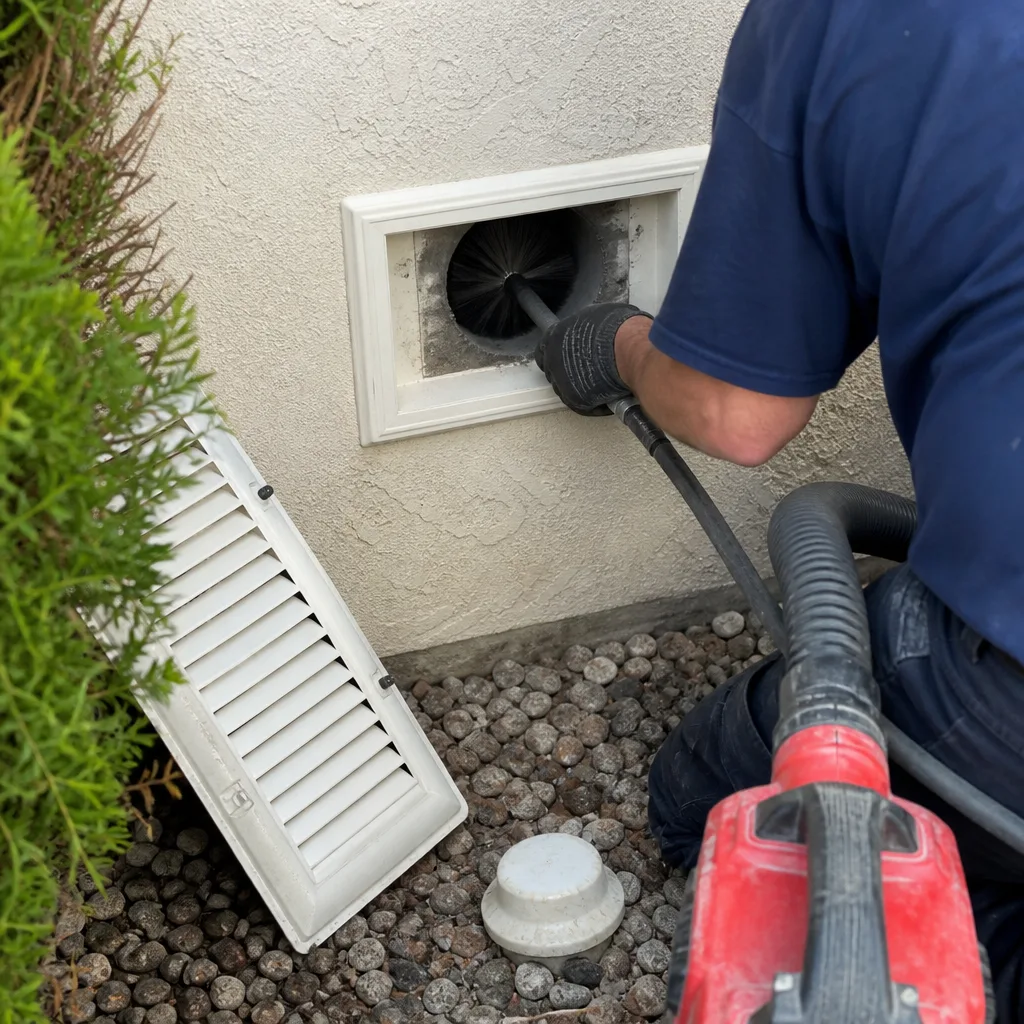
- Go outside to the termination cap. The cap should open fully when the dryer is running and close when it stops. A cap that stays partially open is often jammed with accumulated lint.
- Check the airflow. The exhaust stream should feel strong and warm. A weak stream from a dryer that used to blow hard is a late-stage indicator of a heavily restricted vent.
- Look for any signs the termination cap is not sealing. Birds and rodents enter dryer vents in Santee neighborhoods regularly, and a partially open cap is an invitation.
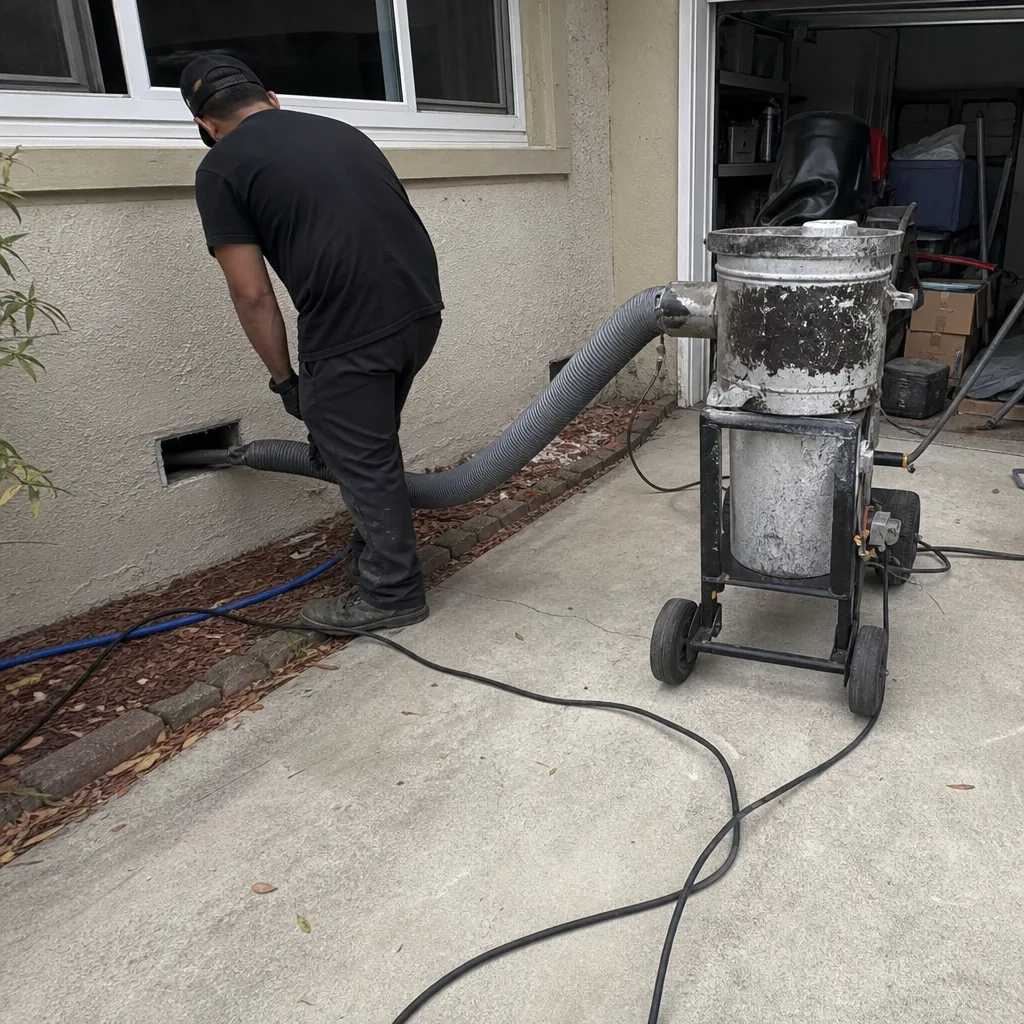
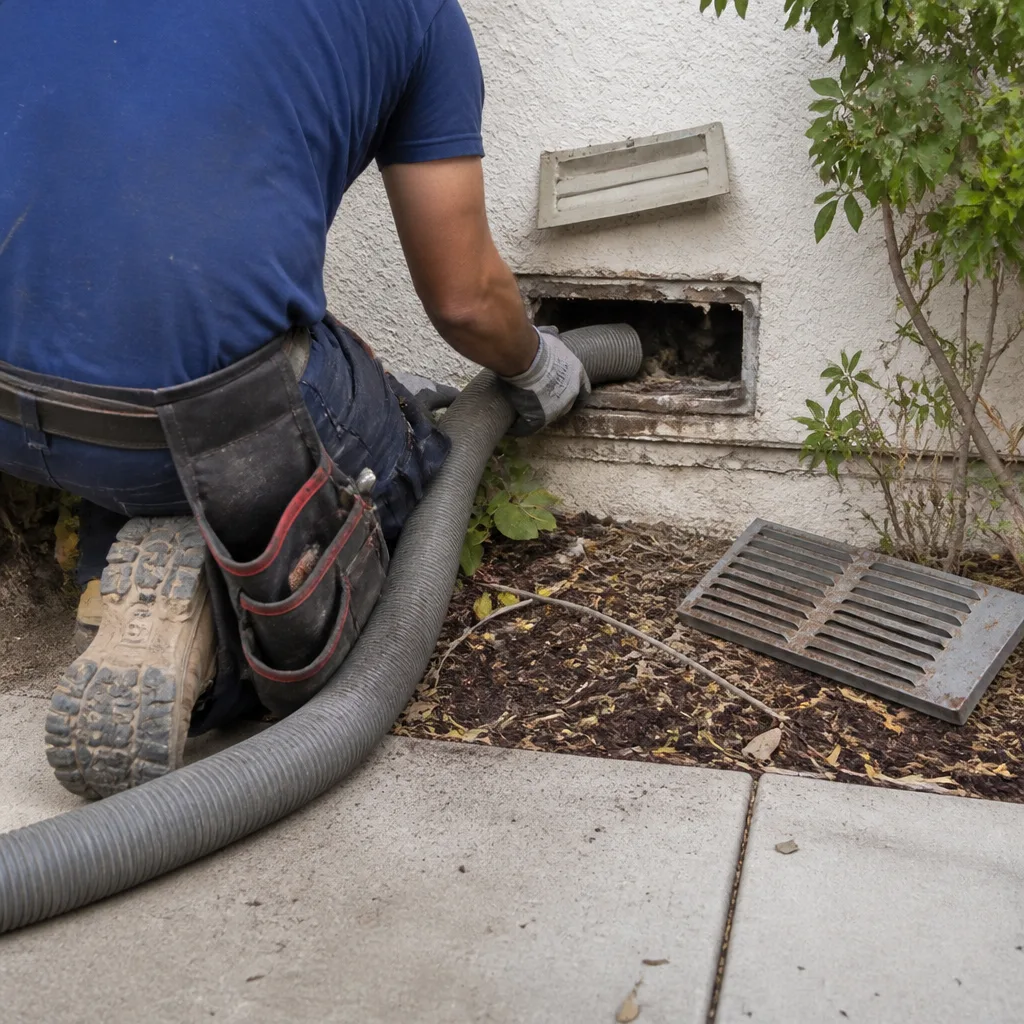
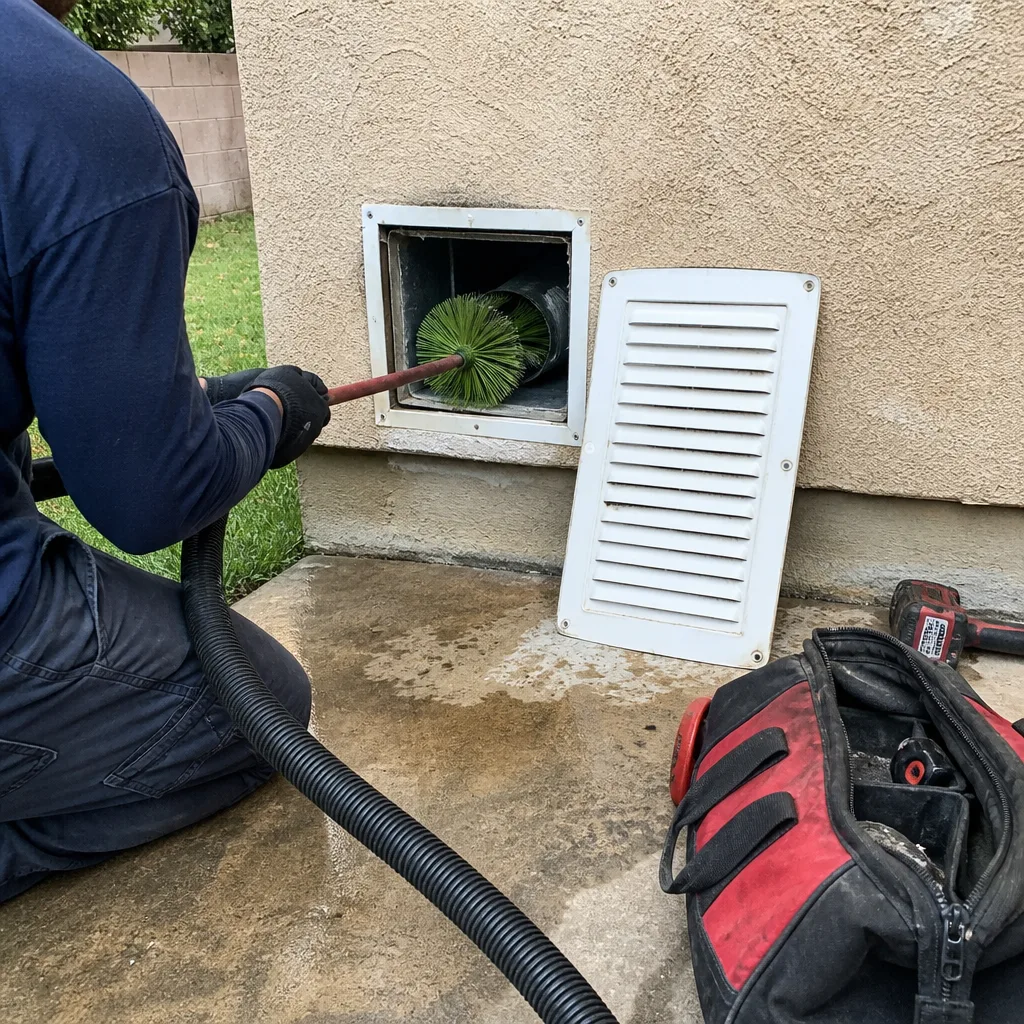
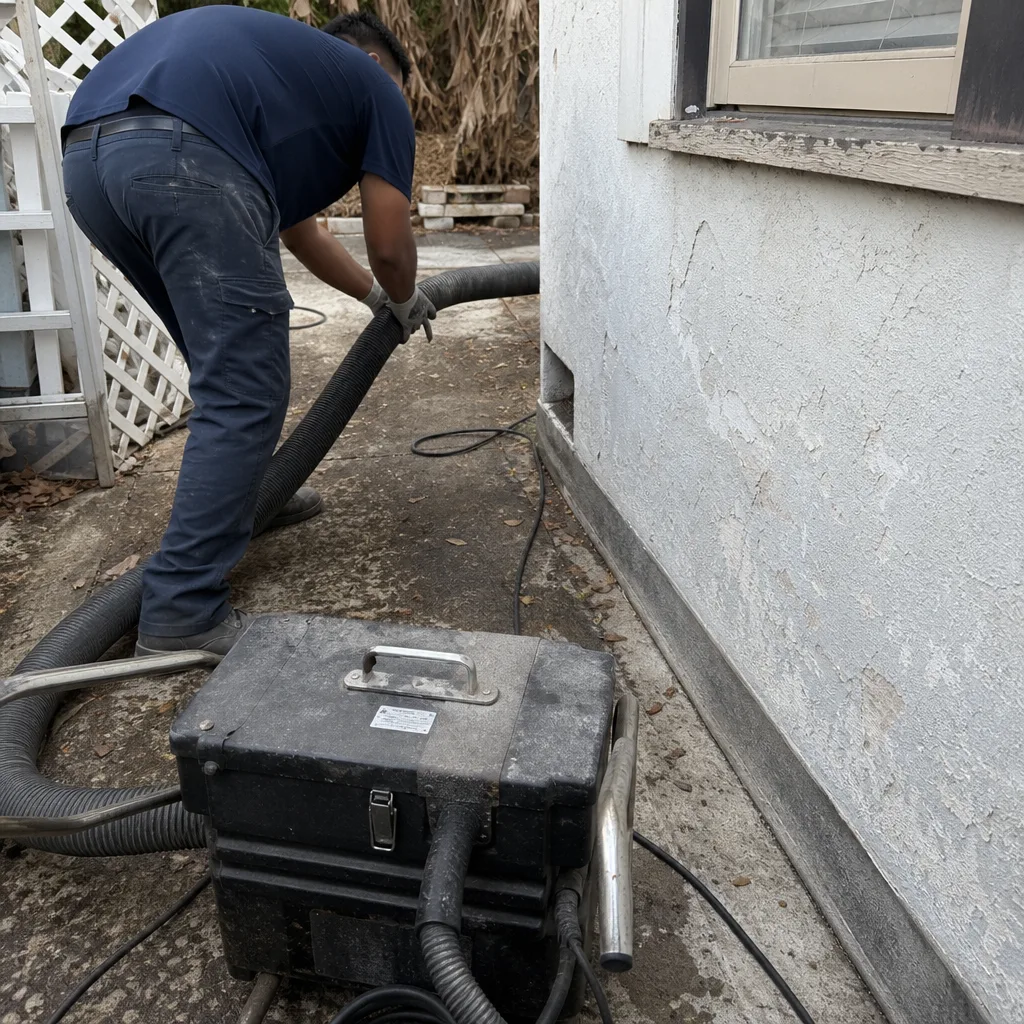
Dryer lint is combustible and accumulates in the interior wall cavities of homes with long duct runs. The transition duct behind the dryer collects first, but the wall-penetration duct and the long run through the attic or wall are where deep clogs form, especially in garage-conversion layouts common in older Santee neighborhoods. A professional dryer vent cleaning in Santee uses rotating brushes and high-flow vacuum equipment to pull compacted lint from the full run. A homeowner with a shop vac can only reach the first few feet behind the dryer. For extended runs, that leaves most of the accumulation untouched.
We treat dryer vents as a fire-safety specialty rather than an add-on to duct cleaning. The physics are straightforward: lint is fuel, and restricted airflow raises dryer temperatures. The National Fire Protection Association has identified dryer vent fires as one of the leading causes of residential house fires. In Santee’s year-round warm climate, dryers run frequently, and the accumulated lint in a twenty-foot garage-conversion duct run is a genuine hazard. This is one maintenance item where an annual inspection should be non-negotiable.
Trigger-Based Tasks: When to Inspect Immediately
A calendar schedule cannot catch everything. Certain events demand unscheduled inspection and, often, cleaning regardless of when the last service happened. In Santee, three triggers matter more than anywhere else in San Diego County: wildfire events, remodels, and new pets.
After a Wildfire Event
Santee sits close to fire-prone terrain in the East County. When smoke settles over the city, your HVAC system pulls some of that particulate inside. The filter catches some of it. The rest passes through and deposits inside the ductwork. If you can smell smoke inside your home during a fire event, assume your ducts have taken on particulate. A professional Duct Cleaning Santee home duct inspection after a significant smoke event should check for soot accumulation on interior duct surfaces, not just filter replacement. Smoke particulate is fine enough to evade standard filters and works its way deep into flex duct fabric. It does not just sit there: it re-enters the airstream whenever the system cycles, which in Santee is nearly every day.
After a Remodel or Drywall Work
Drywall dust is a duct system’s worst common enemy. It is fine, alkaline, and abrasive. If any drywall sanding, texture work, or flooring removal happened while your HVAC system was running, that dust has been pulled into the return side and distributed through the entire duct network. Even homes where the system was shut off still have dust settling onto registers and falling down into boots. This is a trigger for inspection. If drywall dust has entered the interior of the duct runs, cleaning should happen before the system resumes regular use. Drywall dust combines with normal indoor humidity to form a paste inside ducts that bakes onto surfaces and becomes difficult to remove.
After Adding a New Pet
A new dog or cat changes the indoor particulate profile of a home dramatically. Pet dander is smaller and lighter than human skin cells, which makes it more likely to remain suspended and travel through the return system. If someone in the household has allergy sensitivity, the introduction of a new pet is a valid trigger for a duct assessment. The same logic applies to a long-term guest or a new family member with respiratory sensitivities. You are not managing the pet; you are managing the air.
Documentation: Building a Service Log That Works
Write things down. A maintenance log does three jobs. It tells you when tasks were actually done. It reveals buildup patterns over time. And it protects you from paying for work that is not yet justified.
What to record, minimum:
- Date of every filter change, with the filter’s MERV rating and brand
- Date and findings of each quarterly register inspection
- Date of dryer vent inspection, with notes on lint volume found
- Any unusual observations: odors, streaks, airflow changes
- Any service performed, the company name, and what was done
Keep this log in a simple notebook or a notes app. The format matters less than the consistency. When you call a duct company for an estimate, being able to say “I changed to a MERV 11 filter in March and the registers started streaking in June” gives the technician real diagnostic data. It also signals that you are not a homeowner who will accept a vague upsell. You have a record. The company has to explain what they are proposing in terms that match your documented observations.
We hear from homeowners who have been told their ducts need cleaning every year, or every two years, without any reference to the actual condition of their system. For Air Duct Cleaning Permits, Codes & Inspections in CA: What You Need to Know, check our guide before hiring. A log is the antidote. If your own records show no streaking, no odor, no airflow loss, and a filter that lasts a normal amount of time, you have specific evidence to challenge a cleaning recommendation. If your records show a filter loading in two weeks, streaking around three registers, and a dryer taking two cycles to dry, you have specific evidence that a cleaning is overdue. Either way, the log converts vague guesswork into a defensible maintenance decision.
How Professional Cleaning Fits the Schedule
Professional duct cleaning is not an annual maintenance task for most Santee homes. National duct cleaning franchises push an every-two-years schedule, but blanket recommendations ignore the actual variables. A home with no pets, a good filter maintenance habit, and no recent remodel might not need cleaning for five years or more. A home with two dogs, a wildfire smoke season, and a remodel in the same span might legitimately need it twice in three years.
The honest signal that professional air duct cleaning in Santee is warranted comes from the checklist observations you are already making: filter loading time, register streaking, persistent odors, visible debris in the register boots. When those indicators accumulate, cleaning is justified. When they are absent, save your money.
What a professional cleaning actually involves in Santee homes: a vacuum system connected at the air handler or furnace plenum that places the entire duct network under negative pressure, while agitation tools travel through each supply and return run to dislodge adhered particulate. The equipment matters. We run Rotobrush and Nikro systems, both of which are built for this specific work. The Rotobrush system combines brushing and direct vacuuming at the point of contact inside each duct run. Nikro systems are common in commercial and restoration environments because they move enough air to hold containment. On jobs where we are dealing with post-fire particulate or heavy contamination, we run Abatement Technologies equipment that is designed for restoration-level containment. The machine on the truck is not a shop vac with a long hose; it is the difference between agitating dust and extracting it.
For Santee homeowners, one practical note: if you have flex duct (and most homes here do), the cleaning method matters. Rigid metal duct can tolerate aggressive brushing. Flex duct requires lower-contact agitation and correct vacuum pressure. Too much aggression tears the inner liner. Too little leaves the dust in place. The equipment brand is less important than the technician knowing what the duct material can handle. We see flex duct in the majority of Santee homes, and wear patterns corresponding to summer heat stress are common. High attic temperatures in July and August accelerate aging of flex duct plastic. A cleaning that is too aggressive on heat-stressed flex duct can create tears that then leak conditioned air. That is why air duct repair in Santee is part of what we do. A duct-cleaning-only operator who finds a split flex run can tell you about it but cannot fix it. We can repair on the same visit. Duct system health includes cleaning, safety, and structural integrity. They are not separate services in practice when the actual system is aging in a hot attic.
Common Mistakes to Avoid
- Upgrading to a MERV 13 filter without checking system airflow. High-MERV filters restrict airflow and can reduce cooling capacity during Santee’s summer heat waves. Match the filter to the system’s static pressure, not to the highest number on the shelf.
- Assuming a dry-looking register means the ducts are clean. Most duct contamination is on interior surfaces you cannot see from the room. Register inspection catches late-stage indicators, not the full picture.
- Cleaning only the lint trap and calling it dryer vent maintenance. The trap catches a fraction of what the dryer generates. The duct run behind the wall and through the attic is where fires start, especially in Santee homes with extended garage-conversion duct runs.
- Cleaning ducts on a calendar schedule instead of on observed condition. Every home’s dust load is different. A schedule that ignores your own filter loading time and register condition will either under-clean or over-charge.
- Running the HVAC system during a remodel. Drywall dust pulled into a running system distributes through every duct run in the house. Shut the system down and seal the returns before any dust-generating work starts.
- Using a shop vac to clean a dryer vent from inside the house. This reaches a few feet at most and often compacts lint further down the run. It creates a false sense of completion.
- Treating all flex duct as if it is indestructible. Santee’s attic heat ages flex duct faster than many homeowners expect. Aggressive cleaning methods or DIY brushing can tear aged duct and turn a cleaning job into a repair job.
When to Call a Professional
You have a service log, you have been doing the monthly and quarterly checks, and you are still seeing something that does not look right. That is when to call. Specific triggers: persistent musty odor from the registers that returns after filter changes; visible dust streaking that returns within weeks of cleaning the registers; a dryer that takes multiple cycles to dry despite a clean lint trap and a clear termination cap; or a known smoke event, remodel, or contamination event that happened while the system was running. You should also call if you find evidence of pest activity, torn flex duct during an inspection, or any duct that has become disconnected in the attic or crawlspace. Duct Cleaning Santee offers free estimates in Santee – call (833) 542-0752 to talk through what you are seeing.
Frequently Asked Questions
There is no fixed interval that applies to every Santee home. The right schedule is based on your own observations: filter loading time, register streaking, odors, and known contamination events. A home with no pets, good filter habits, and no recent remodel might go five years or more between cleanings. A home with pets, a smoke season, and drywall work might need cleaning within two years. The checklist in this guide is designed to give you the data to make that decision without guessing. If you need a professional assessment, call (833) 542-0752 for a free estimate.
It can, but only if your system is designed to handle the airflow restriction. A MERV 13 filter captures more fine particulate than a MERV 8, which means less dust reaching your ducts. But the denser media also reduces airflow. In a Santee summer, that can mean longer cooling cycles, higher energy use, and extra strain on the blower motor. For most homes in this area, MERV 8 to 11 is the practical range, and a MERV 11 with good filter-change discipline is a solid position. Higher ratings should only be used if the system’s static pressure has been checked.
The duct cleaning industry has a documented pattern of low sticker prices that become much larger invoices once the technician is inside the home. A very low quote often reflects a bait price for a partial job that will be upsold at the time of service. What you are actually buying with duct cleaning is the equipment, the technician’s time, and the thoroughness of the work. Our service runs one flat price per system, agreed before the work starts. We do not price per vent. If you want an honest assessment of what your system actually needs, call (833) 542-0752.
Ask for before-and-after photos of the inside of your ducts, not just the register openings. A legitimate operator will be able to show you the interior surfaces of the main trunk line and at least several branch runs. You should also notice a measurable difference in your own observations after cleaning: filter loading time lengthens, register streaking stops, and persistent odors disappear. If none of those observable changes occur, the cleaning may not have been done thoroughly. The service log you keep is the tool for verifying this.
Yes, and it has to do with both runtime and particulate source. A Santee HVAC system runs more days per year than a coastal system because inland temperatures swing wider. More runtime means more air volume passing through the ducts, which means more particulate deposition. Santee also sits against undeveloped, fire-prone terrain. The fine dust that blows in from the surrounding hills is smaller and more persistent than typical household dust. The combination of heavy runtime and fine particulate means Santee ducts load faster than comparable homes in coastal neighborhoods.
You should at minimum inspect them, and in most cases yes, cleaning is justified. Wildfire smoke particulate is extremely fine and passes through standard HVAC filters. It deposits on interior duct surfaces and re-enters the air stream on every subsequent cycle. If you could smell smoke in the house during the event, assume the ducts have taken on particulate. A professional inspection will determine the extent of the deposition. Call (833) 542-0752 to schedule an assessment after a significant smoke event.
The Bottom Line
Santee’s climate punishes HVAC systems that are maintained on a generic schedule. The continuous runtime, the fine particulate from surrounding terrain, and the heat stress in attics all mean your duct system needs attention that a colder-climate checklist never accounts for. The maintenance approach that actually works here is observational, not calendar-based. Check the filter monthly and note how fast it loads. Inspect the registers quarterly for streaking and odor. Inspect the dryer vent annually, especially with a long garage-conversion duct run. Act on triggers like wildfire smoke, remodels, and new pets. And keep a written log. With those habits, you will know exactly when a professional cleaning is justified and when it is not. When that time comes, call (833) 542-0752 for a free estimate.
Written by the team at Duct Cleaning Santee, serving Santee since 2017. Explore more guides & resources on our blog.
See the difference
 Before
 After
 Before
 After
 Before
 After