
Last updated November 2, 2026
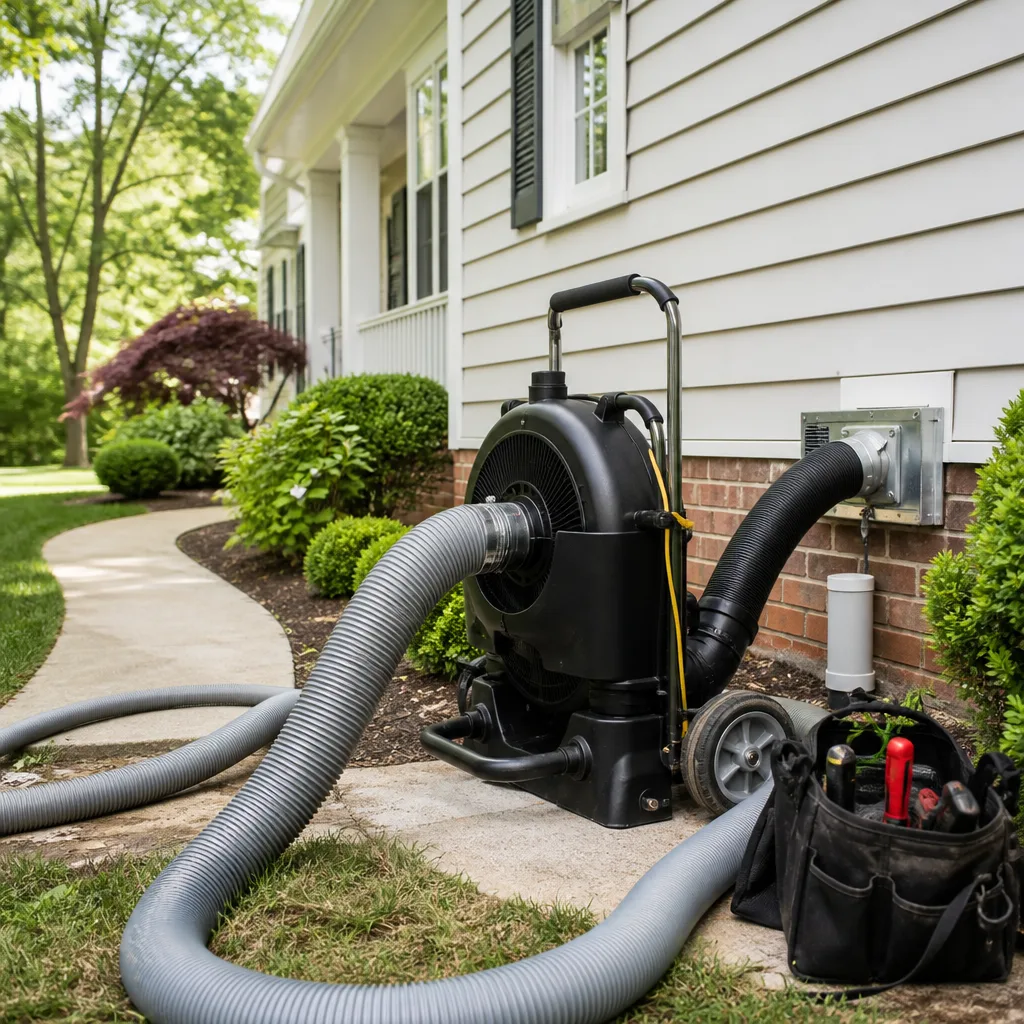 Whole-home duct cleaning
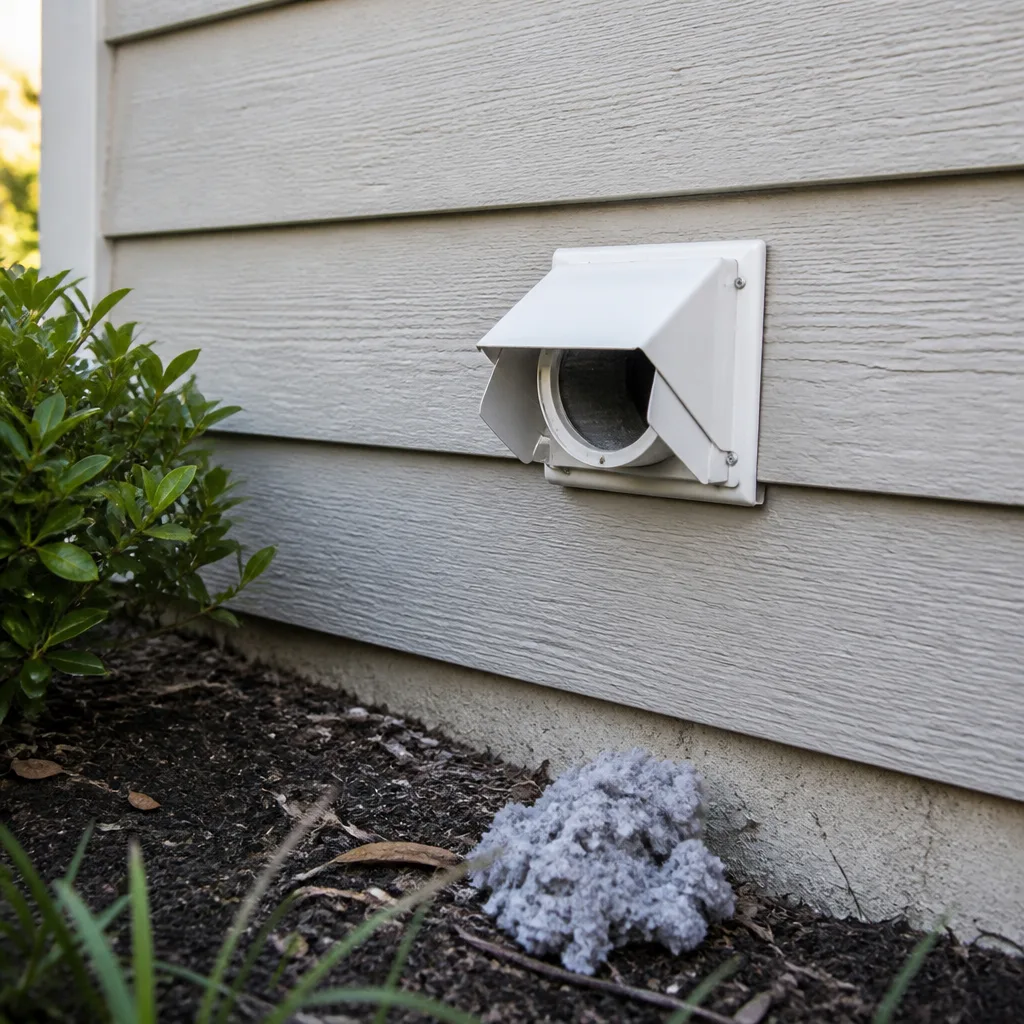 Dryer vent cleaning
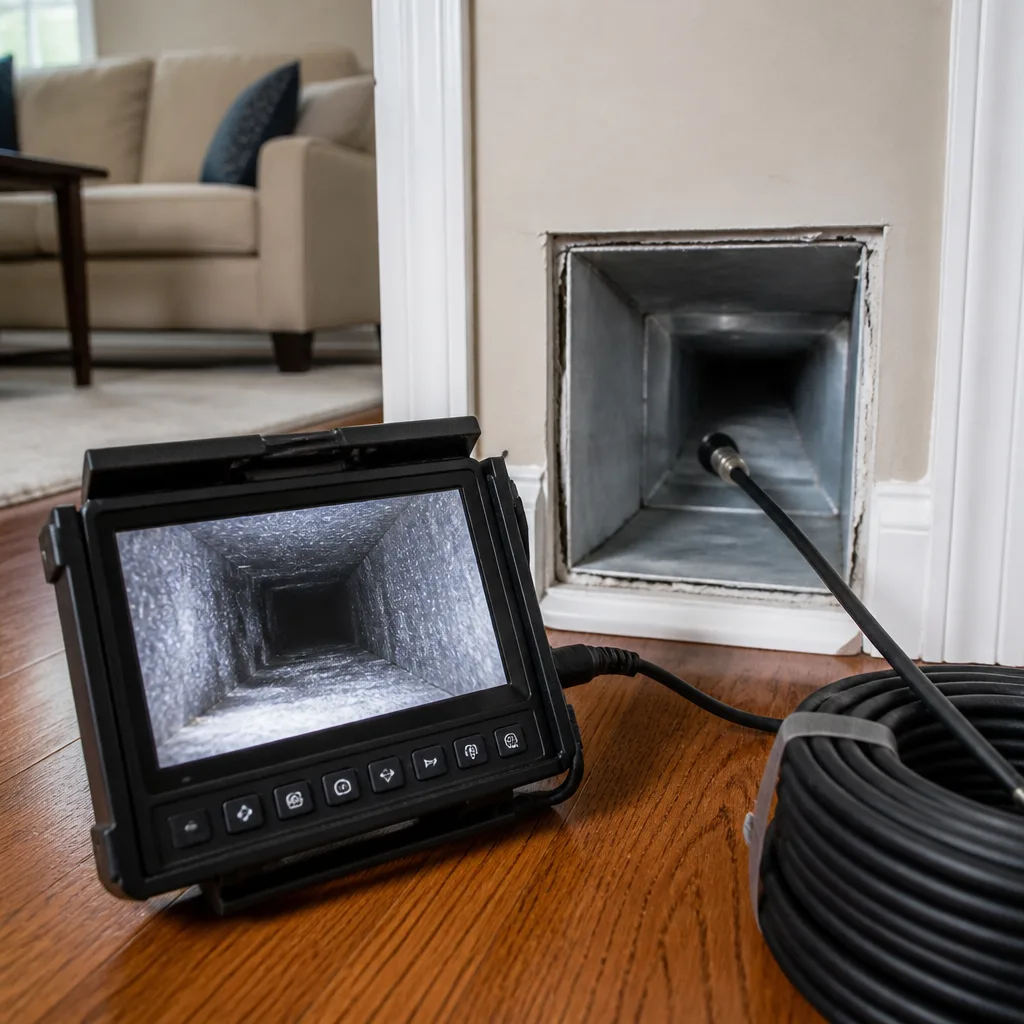 Camera inspection
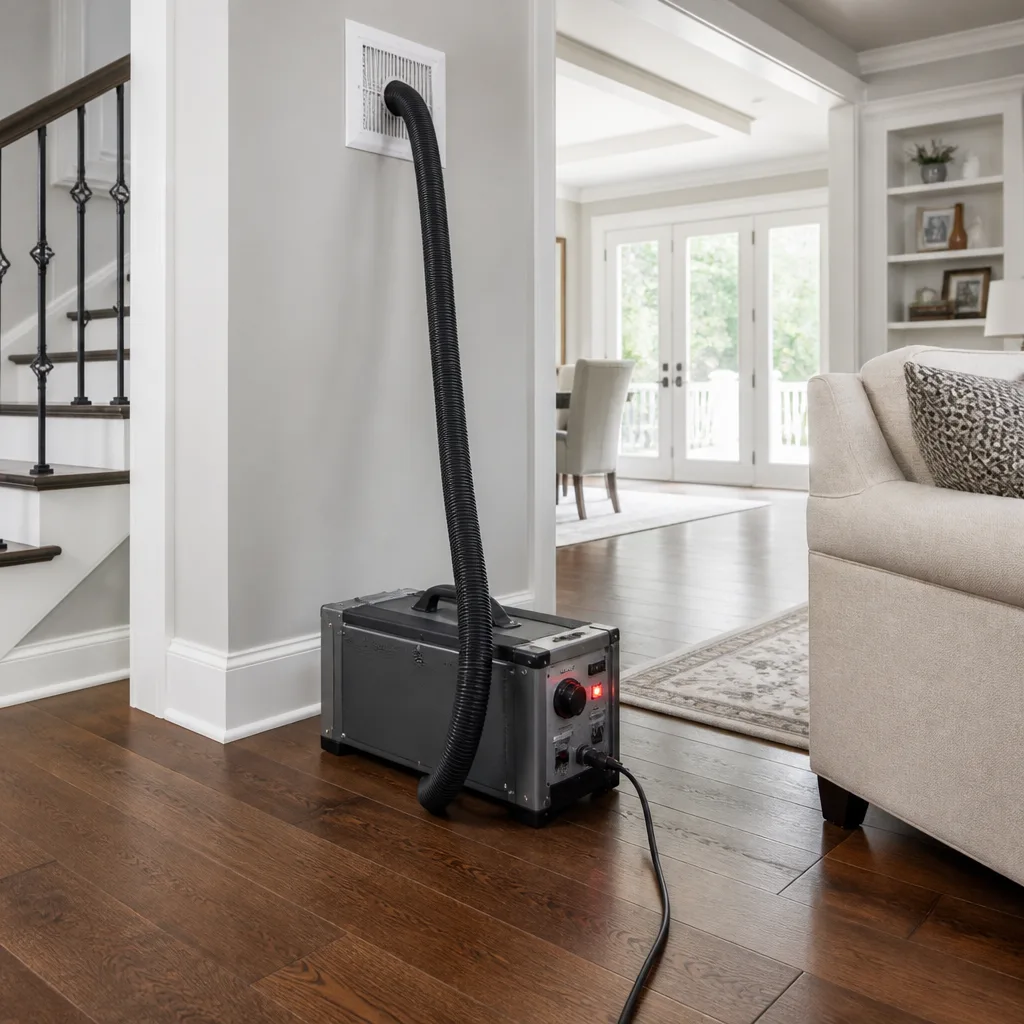 Sanitizing & deodorizing
Whole-system duct and dryer vent check with before-and-after photos - you see exactly what came out of your vents
That "$99 whole-house special" is a bait ad - the real number appears once they are in your hallway, or the "clean" is a shop-vac at the register. We photograph the inside of your ducts before and after instead.
Seasonal Air Duct Cleaning Care for Santee: Year-Round Homeowner’s Guide
Here’s the counterintuitive truth about Santee’s air quality: the season when most homeowners stop thinking about their ducts is the season when those ducts are taking the hardest beating. Santee’s Santa Ana wind season, running roughly October through March, pushes fine combustion particles and soil dust directly against your home’s exterior intake points. Your HVAC system becomes a particulate collection machine whether the air conditioner is running or not. This guide explains what actually happens inside Santee duct systems across all four seasons, when to act, and how to avoid paying twice for work that should have been done once.
Styles & brands we work with
- Whole-home duct cleaning
- Dryer vent cleaning
- Camera inspection
- Sanitizing & deodorizing
Quick Answer
Seasonal air duct care in Santee should follow the city’s particulate calendar, not a generic national seasonal template. The highest-priority window is late September through early October, before Santa Ana winds arrive, when Air Duct Cleaning services plus a filter upgrade to MERV 11 or higher delivers the strongest year-round indoor air quality protection. A second inspection in March, after wind season ends, catches ash residue and pollen that accumulated during the winter months.
Table of Contents
- Why Santee’s Climate Demands a Different Duct Care Calendar
- Summer (June to September): The Duct Connection Stress Test
- Fall and Santa Ana Season (October to January): The Particulate Siege
- Winter (December to February): Runtime Buildup in Disguise
- Spring (March to May): The Post-Wind Assessment Window
- Year-Round Dryer Vent Priority: Ember Risk Meets Lint Accumulation
- Santee Filter Guide: What MERV Ratings Actually Do During Fire Events
- Common Mistakes to Avoid
- When to Call a Professional
- Frequently Asked Questions
- The Bottom Line
Why Santee’s Climate Demands a Different Duct Care Calendar
National duct cleaning guides tell you to clean in spring and fall because that’s when temperature swings occur in most of the country. Santee doesn’t work that way. We sit in a hot, dry microclimate where the real contamination events are tied to wind patterns and fire season, not thermostat shifts. The Santa Ana winds that sweep through East County carry particulate matter from desert soil, chaparral brush, and on bad years, wildfire smoke from the backcountry. That particulate gets drawn into return air grilles, pushed through filter media, and deposited along duct walls. Meanwhile, the summer heat stresses the physical connections in your duct system, creating gaps that pull unfiltered attic air directly into the airstream. Understanding this pattern is the foundation of effective duct care in Santee.
What this means in practical terms: the best time to clean your ducts in Santee is not the same as the best time in San Diego coastal communities or in Riverside. Here, the pre-Santa Ana window in September and October matters more than any other date on the calendar. That’s when the system is about to face its heaviest particulate load, and a clean system with a strong filter handles that load far better than a dirty one. This guide walks through each season with the specific contamination mechanisms, what to inspect, and what actions deliver the most value for your dollar.
Summer (June to September): The Duct Connection Stress Test
Santee summers routinely push past 95°F, and those sustained high temperatures do something most homeowners never see: they stress the mechanical connections in flex duct runs. Flex duct, the insulated flexible tubing used in most Santee residential systems, relies on plastic zip ties or metal bands at every connection point. Those connections sit in attics where temperatures can exceed 140°F during a July heat wave. The plastic ties become brittle. The duct’s inner liner can separate from the outer insulation jacket. When that happens, your air conditioner is cooling the attic instead of your living room.
We’ve inspected systems in Santee homes where a single separated return duct was pulling 120-degree attic air directly into the system while the thermostat showed the AC running nonstop. The homeowner’s electric bill told the story, but the root cause was invisible without a visual inspection of the duct runs. This is why a pre-summer visual inspection of accessible duct connections matters more than a full cleaning during this season. If the connections are intact, the system can wait for its cleaning until the fall window. If they’re not, cleaning would be premature anyway. The repair comes first.
Here’s what a summer duct inspection in Santee should cover:
- Visual check of all accessible flex duct connections at the plenum, branch takeoffs, and register boots.
- Inspection of the duct insulation jacket for tears or gaps that expose the inner liner to attic heat.
- Verification that return air grilles are not obstructed by furniture, stored items, or closed doors that starve the system of airflow.
- Checking the condensate drain line for clogs, which become more common during continuous AC runtime and can lead to water damage near the air handler.
The summer season is also when homes with older duct systems start showing their age. A system installed 15 or 20 years ago may have original connections that have been through hundreds of heat cycles. Each cycle expands and contracts the metal and plastic components. Eventually, connections fail. Catching those failures before peak cooling season means lower electric bills and better indoor comfort during the hottest months. For Santee homeowners planning upgrades, we recommend addressing structural duct issues before investing in filtration improvements. A high-MERV filter can’t compensate for unfiltered air bypassing the system through a disconnected joint.
Fall and Santa Ana Season (October to January): The Particulate Siege
Santa Ana winds are the defining air quality event of Santee’s year. These offshore winds, blowing from the desert toward the coast, pick up fine soil particles, regional dust, and during fire events, smoke particulate from chaparral and grassland fires. The particulate sizes matter enormously for duct care decisions. PM10 particles, those 10 microns or smaller, are the larger fraction of wind-blown dust. They settle quickly and collect in visible layers on return grilles and duct surfaces. PM2.5 particles, at 2.5 microns or smaller, are the dangerous fraction during wildfire smoke events. They penetrate deep into lung tissue and pass through lower-rated HVAC filters without resistance.
The pre-Santa Ana window in late September and early October is the single most valuable time for a full air duct cleaning in Santee. Here’s the logic: your ducts are about to be the last line of defense for your indoor air during the windiest, dustiest months of the year. Starting that season with clean duct surfaces means the particulate that does enter the system has fewer places to accumulate and less existing contamination to re-entrain into your living space. Pairing the cleaning with a filter upgrade, moving from a basic MERV 8 fiberglass filter to a MERV 11 or MERV 13 pleated filter, gives the system real capture capability for the PM2.5 fraction that matters most during smoke events.
Here’s the preparation sequence we recommend for Santee homeowners before Santa Ana season begins:
- Schedule a professional Air Duct Cleaning in Santee in late September or early October, before the first sustained wind event.
- Upgrade to a MERV 11 or higher pleated filter, and verify the filter housing is properly sealed so air cannot bypass around the filter frame.
- Check exterior intake points and make sure vegetation, debris, or stored items are not within two feet of any fresh air intake.
- Seal any gaps in the return air pathway, including the filter slot cover and the cabinet around the air handler.
- Plan to replace the filter every 30 days during heavy wind months, even if the packaging claims 90-day life.
During active wind events, we recommend running the HVAC fan continuously, set to the “on” position rather than “auto.” This keeps air moving through the filter constantly, capturing more particulate than intermittent operation. It also helps equalize pressure in the home, reducing the force that pulls unfiltered air through wall penetrations and door gaps. After each major wind event, check the filter. If it looks loaded after two weeks, replace it. That’s a sign the system is doing its job, not a sign of a problem.
Winter (December to February): Runtime Buildup in Disguise
Santee winters are mild by national standards, but the city does get cold snaps that push furnace runtime up dramatically. A week of overnight lows in the 30s means the heating system runs for hours every evening, sometimes for the first time in months. That extended runtime stirs up everything that settled in the ducts during the fall wind season and pushes it through the registers into your living spaces. This is why many Santee homeowners notice dust accumulation on furniture during December and January, even though they’re not opening windows.
The winter months are the right time to complete a full duct cleaning if you missed the pre-Santa Ana window. Here’s the reasoning: the heating season is actively disturbing duct debris and carrying it into the home. Cleaning during this period directly addresses the contamination that’s affecting your indoor air right now, rather than waiting for a spring cleaning when the damage has already been done. A full professional cleaning, using equipment that physically agitates the duct walls and extracts the loosened debris under negative pressure, removes not just the dust but also the pollen, ash, and soil particulate that accumulated during the wind season. For a detailed look at what to expect, see our Air Duct Cleaning Cost Breakdown: The Santee Homeowner’s Reference for 2026.
Winter is also the season when Air Duct Repair in Santee issues become most apparent. A separated duct connection in the attic means heated air is being lost into unconditioned space before it reaches your living areas. The symptom is usually a room that stays cold despite the thermostat calling for heat, or a heating bill that’s noticeably higher than neighbors with similar homes. If you’re noticing uneven heating between rooms this winter, the problem is more likely structural than seasonal, and it won’t fix itself with a filter change.
Spring (March to May): The Post-Wind Assessment Window
By March, the Santa Ana season is winding down and Santee enters its shoulder season. This is the time for assessment, not immediate action, unless you skipped the fall cleaning entirely. The question to answer is: what did the wind season leave behind in your duct system? For many homes, the answer is a measurable layer of fine gray ash and soil particulate coating the plenum, the return air pathway, and the first few feet of supply ducting near the air handler. That material sits there until the next time the system runs, at which point it re-enters the airstream.
Spring is also pollen season in San Diego County, and Santee’s location at the edge of chaparral country means a heavy bloom from sagebrush, buckwheat, and coastal scrub species. That pollen gets tracked into homes on shoes and clothing, and it gets drawn into return air grilles when the system runs. For allergy sufferers in the household, a spring duct cleaning can deliver meaningful relief, removing the pollen reservoir that otherwise lingers in the system for months. This is one of the most common reasons Santee families call us in March and April.
The assessment steps for a post-wind-season check:
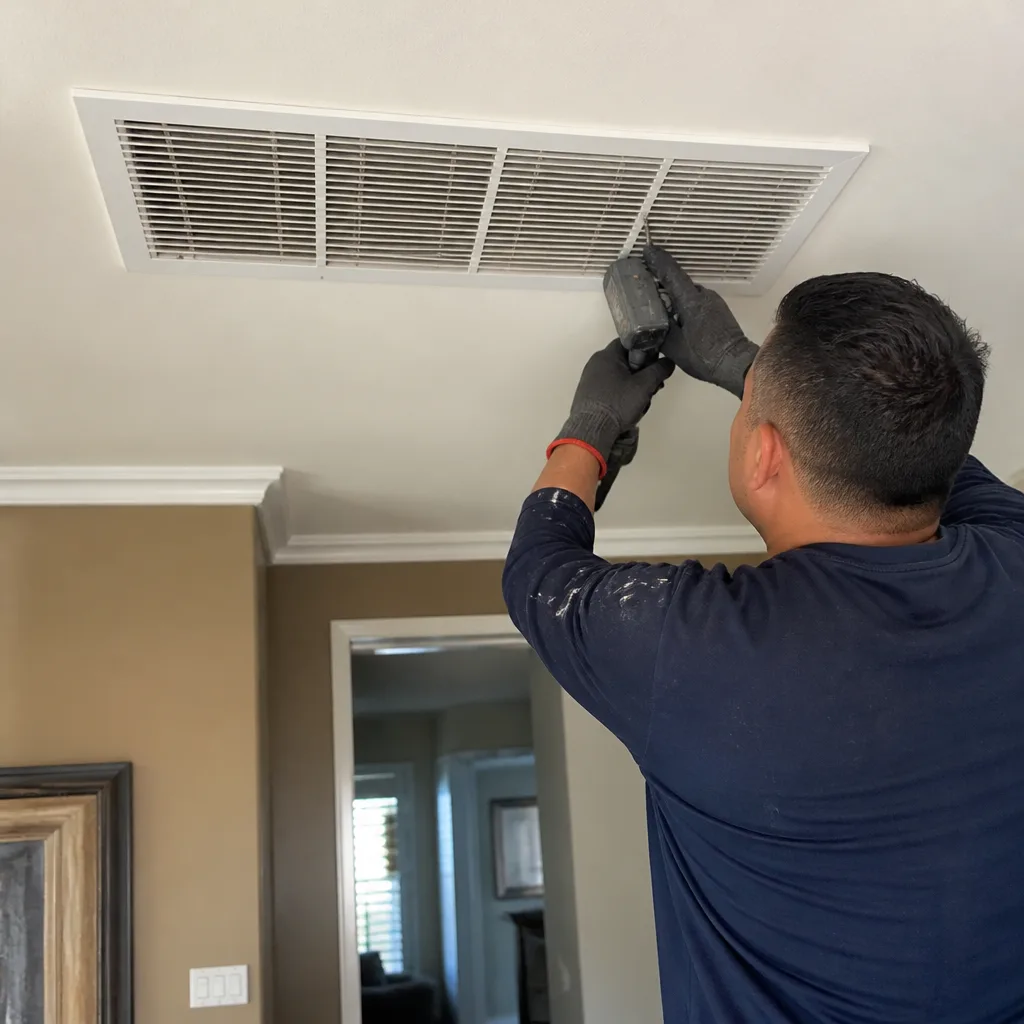
- Remove a supply register in a main living area and use a flashlight to inspect the visible duct interior for gray or dark residue.
- Check the return air grille and the filter for a fine powdery coating, which indicates the system captured significant particulate during the wind season.
- Inspect the area around the air handler for signs of dust accumulation on the cabinet exterior, which can indicate bypass around the filter.
- If anyone in the household experienced increased allergy symptoms, coughing, or sinus irritation during the winter months, treat that as a signal to schedule a professional assessment.
If the post-wind assessment shows significant accumulation, spring is an entirely appropriate time to clean the system before summer cooling season begins. The goal is to start the summer with clean duct surfaces, so that when the AC starts running daily, it’s not distributing months of accumulated wind debris through the house. Santee homeowners who follow the full seasonal cycle get two meaningful benefits: cleaner indoor air throughout the year, and a duct system that lasts longer because it’s not carrying the abrasive particulate load that accelerates wear on blower motors and duct liners.
Year-Round Dryer Vent Priority: Ember Risk Meets Lint Accumulation
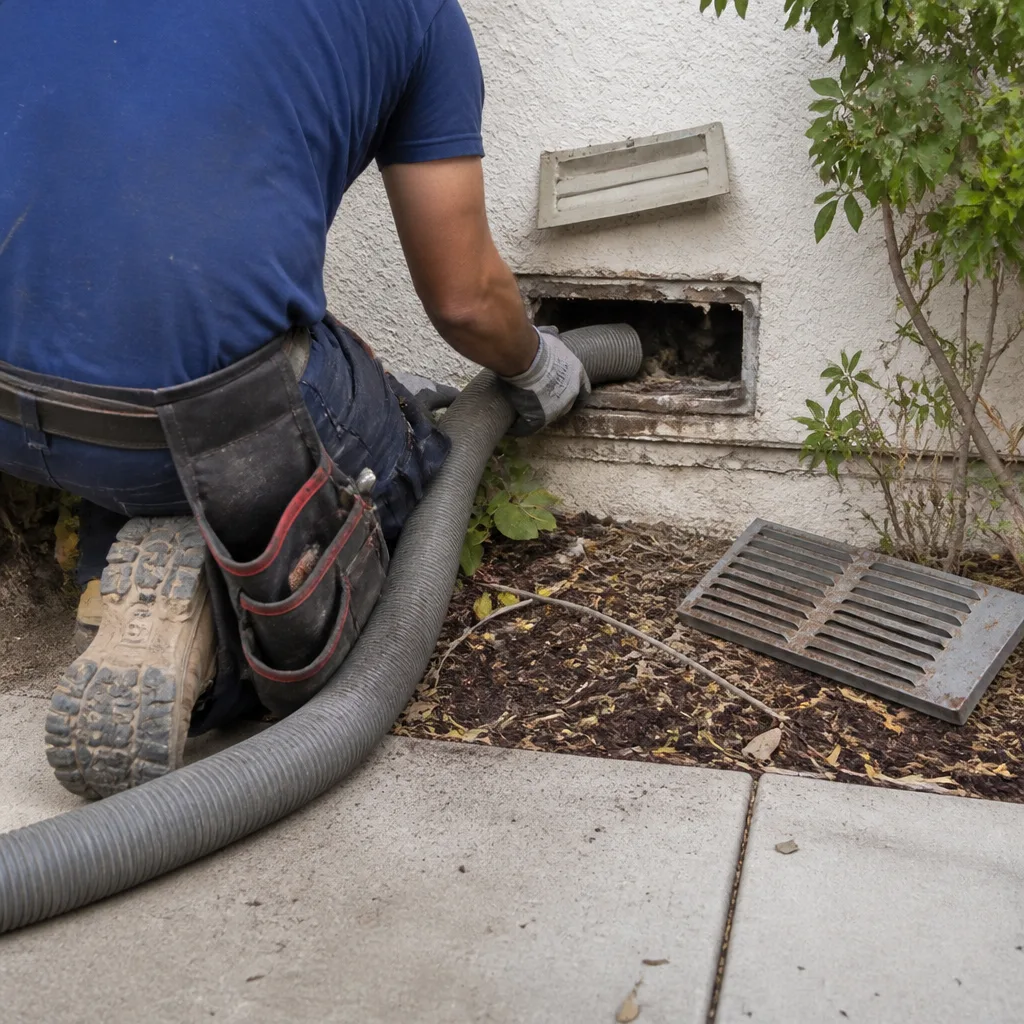
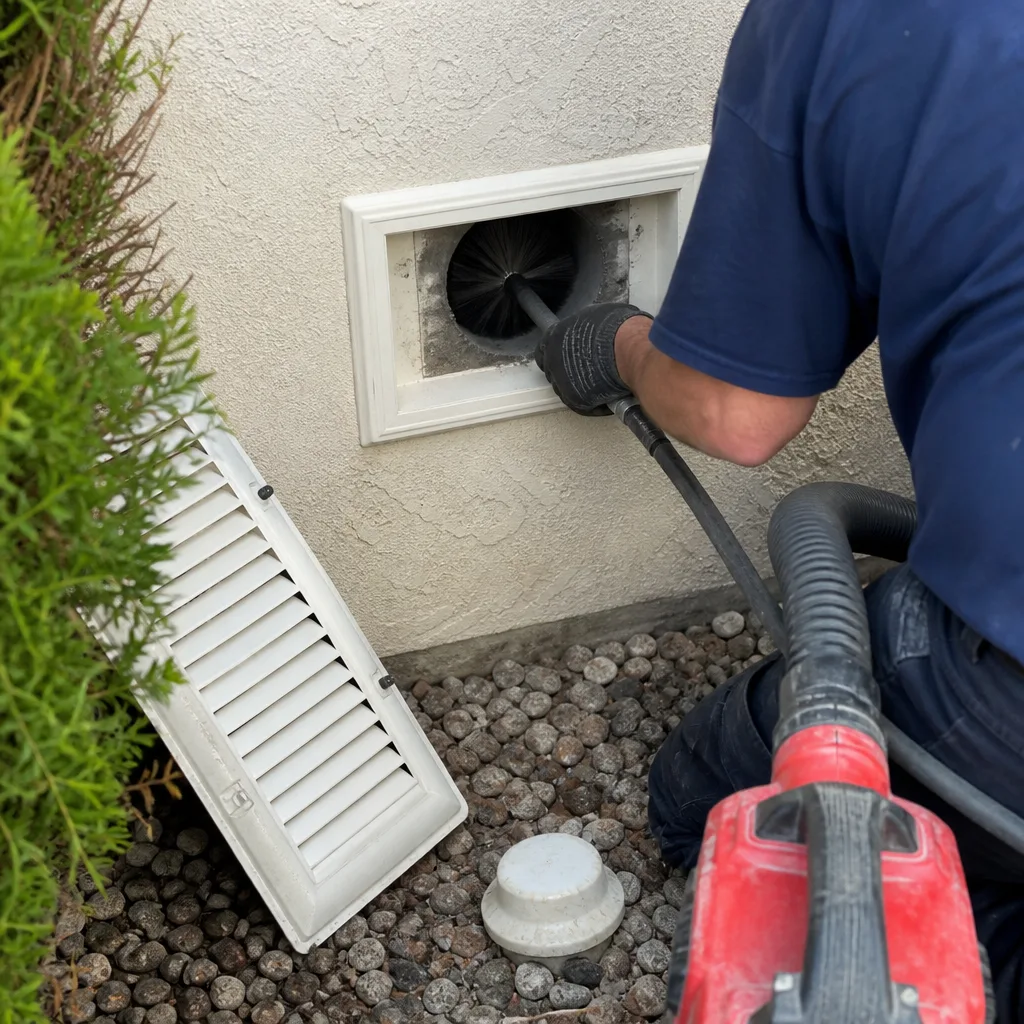
Dryer vent cleaning is often treated as an add-on service, but in Santee, it deserves independent attention. The reason is specific to our fire environment. The same Santa Ana winds that push particulate into your HVAC intakes also carry embers from wildfire activity across surprising distances. A clogged dryer vent, packed with lint and restricted to high internal temperatures, becomes a structure-fire ignition source even without an external ember landing on it. The lint inside the vent pipe is the fuel. The restricted airflow from the clog causes the dryer’s heating element to overheat. The combination is how dryer fires start.
This is why Dryer Vent Cleaning in Santee should be viewed as a fire-safety measure, not a comfort upgrade. The National Fire Protection Association identifies dryer vent restrictions as one of the leading causes of residential fires, and the risk factors are all present in Santee households: frequent dryer use, long vent runs, and a fire season that overlaps with the dusty months. A vent that takes 8 to 10 minutes to dry a load instead of 5 or 6 is sending a clear signal: the exhaust pathway is restricted and needs professional attention.
We recommend scheduling dryer vent cleaning on a fixed annual cycle, ideally during the same pre-Santa Ana window as your duct cleaning. For more on protecting your home, read our Air Duct Cleaning Emergency Preparedness Guide for Santee Homes. Pairing the two services makes practical sense. Both address airflow pathways. Both involve professional equipment that most homeowners don’t own. And both deliver their greatest value when completed before the season that stresses them most. If you can only schedule one service this year, and your dryer has been running slow, prioritize the dryer vent. The safety stakes are higher, and the problem compounds faster.
Santee Filter Guide: What MERV Ratings Actually Do During Fire Events
Filter selection is where many Santee homeowners make expensive mistakes without realizing it. The MERV rating system, from Minimum Efficiency Reporting Value, tells you what percentage of particles the filter captures at specific sizes. But the numbers mean different things depending on what’s in the air. During a wind event without fire, the dominant particles are PM10 and larger dust. A basic MERV 8 filter captures some of this, and a MERV 11 captures most. During a smoke event, the dominant particles are PM2.5 and smaller, the fraction that penetrates deep into lung tissue. A MERV 8 filter captures almost none of this. A MERV 13 captures the majority. A HEPA-grade MERV 16 captures nearly all, but at a cost: the pressure drop across the filter may be too high for a standard residential blower to handle.
Here’s the practical table for Santee homeowners:
- MERV 8: Minimum standard. Captures 70 to 85 percent of PM10 during wind events, less than 20 percent of PM2.5 during smoke. Not recommended for Santee homes during fire season.
- MERV 11: Good middle ground. Captures 85 percent or more of PM10 and 65 percent of PM2.5 during smoke. Works with most residential systems. Recommended for most Santee homes year-round.
- MERV 13: Strong smoke-season protection. Captures 90 percent or more of PM2.5. Verify that your system can handle the increased pressure drop before installing. Recommended for households with respiratory concerns during fire season.
One more point on filters: the filter’s efficiency only matters if air actually passes through it. A filter that doesn’t fit the slot properly, or a filter access door that doesn’t seal, allows unfiltered air to bypass the media entirely. During a Santa Ana dust event, that bypass pathway can deliver more particulate into your ducts than the filter captures. When we clean Santee duct systems, we routinely find filter slots that leak around the edges. Sealing that gap is a five-minute fix that costs almost nothing and delivers real filtration improvement. If you’re using a Honeywell or Aprilaire media cabinet, confirm the filter is seated correctly and the cabinet gasket is intact.
Common Mistakes to Avoid
- Cleaning on a national seasonal schedule instead of Santee’s particulate calendar. Spring and fall cleaning make sense in most U.S. climates, but Santee’s contamination peak happens during Santa Ana season. Missing the October window means your system faces the heaviest particulate load of the year at its dirtiest.
- Relying on a MERV 8 filter during fire season. A basic fiberglass filter provides almost no protection against PM2.5 smoke particles. Upgrading to MERV 11 or MERV 13 in September is one of the cheapest and most effective air quality improvements a Santee homeowner can make.
- Ignoring dryer vent cleaning until the dryer stops working. By the time a dryer trips a high-limit switch or takes 90 minutes to dry one load, the vent is already severely restricted. Annual cleaning is far cheaper than the repair bill or the fire risk.
- Treating a room that stays hot as an AC problem rather than a duct problem. Separated flex duct connections in the attic leak conditioned air into unconditioned space. The AC may be working perfectly while one room never cools. A visual duct inspection identifies this in minutes.
- Assuming a new home has clean ducts. Construction debris, drywall dust, and even food wrappers routinely end up in duct systems during the building process. New-construction Santee homes benefit from a professional cleaning just as much as older homes do.
- Replacing filters by the calendar instead of by the conditions. A Santee home downwind of open space during a wind event may load a filter in three weeks. Check the filter after each major Santa Ana event and replace it when it looks loaded, regardless of what the packaging says.
When to Call a Professional
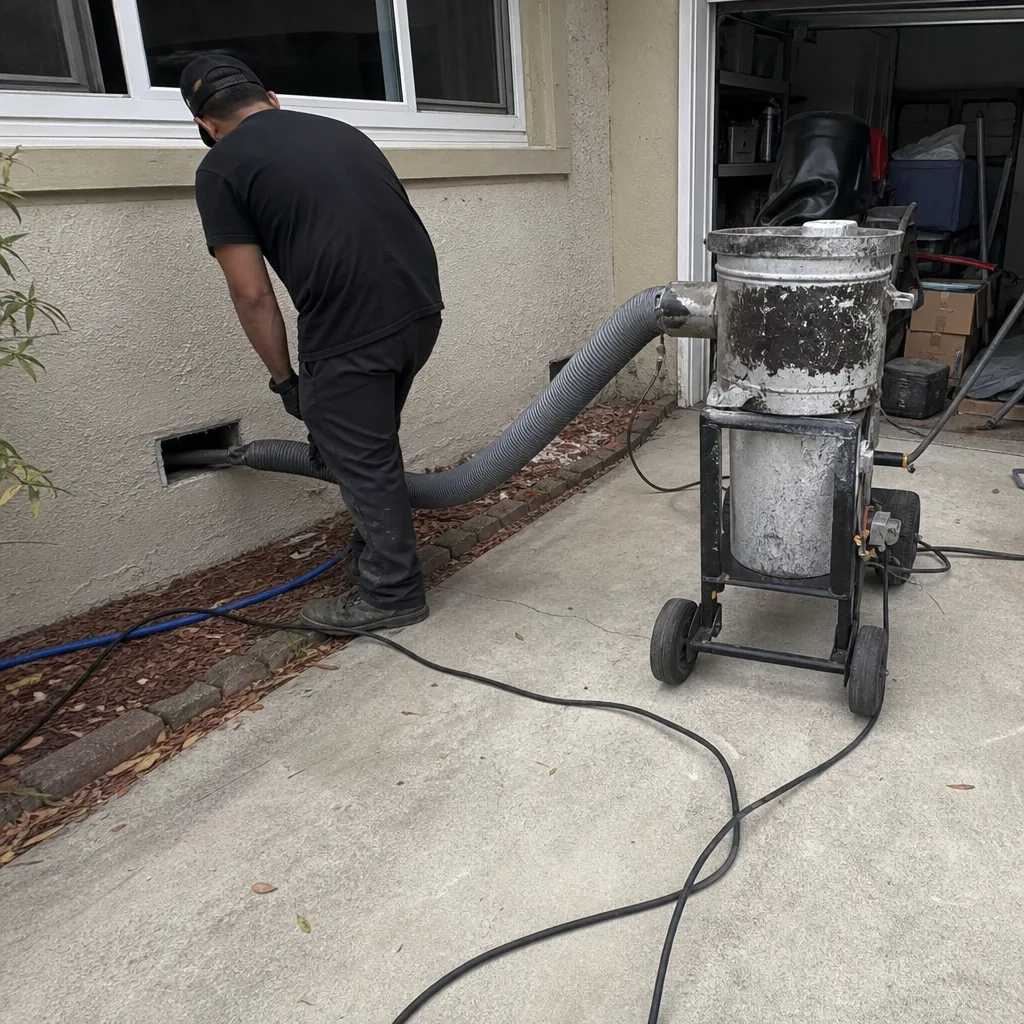
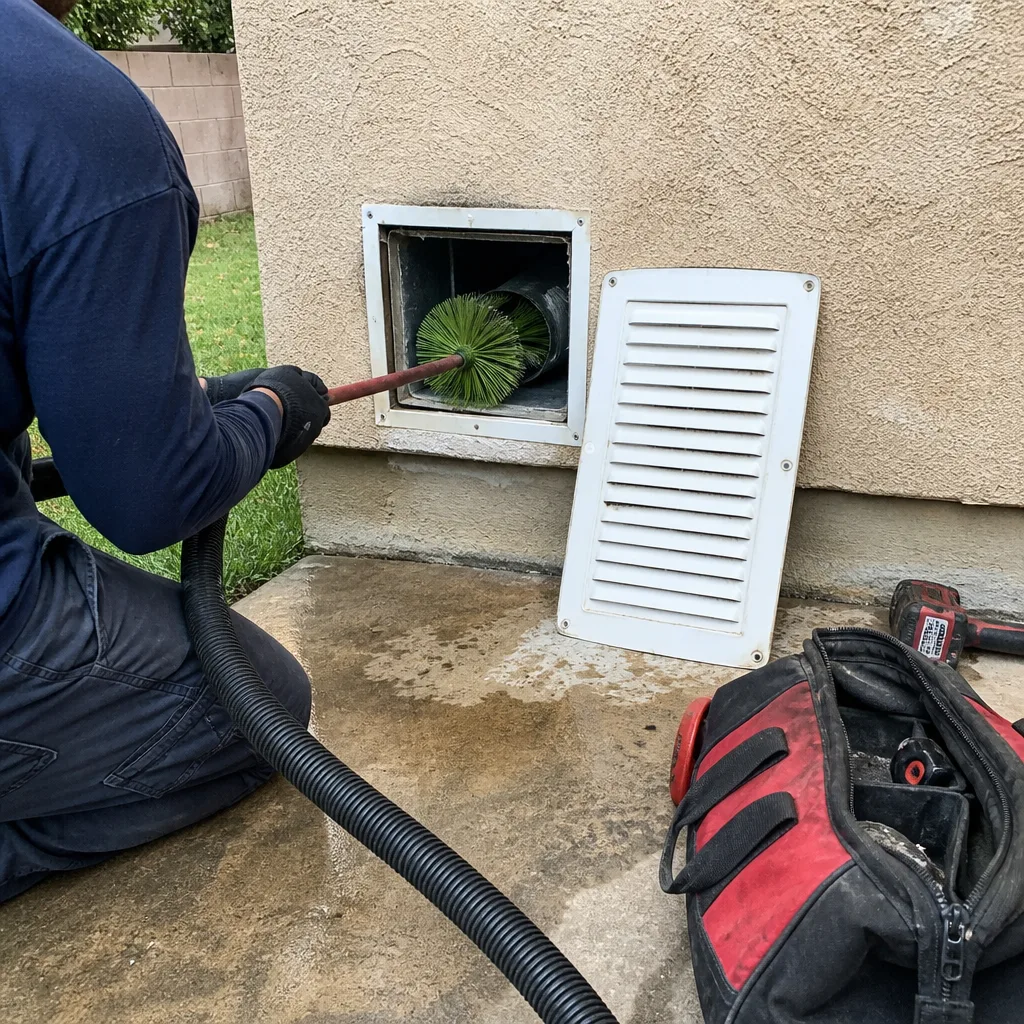
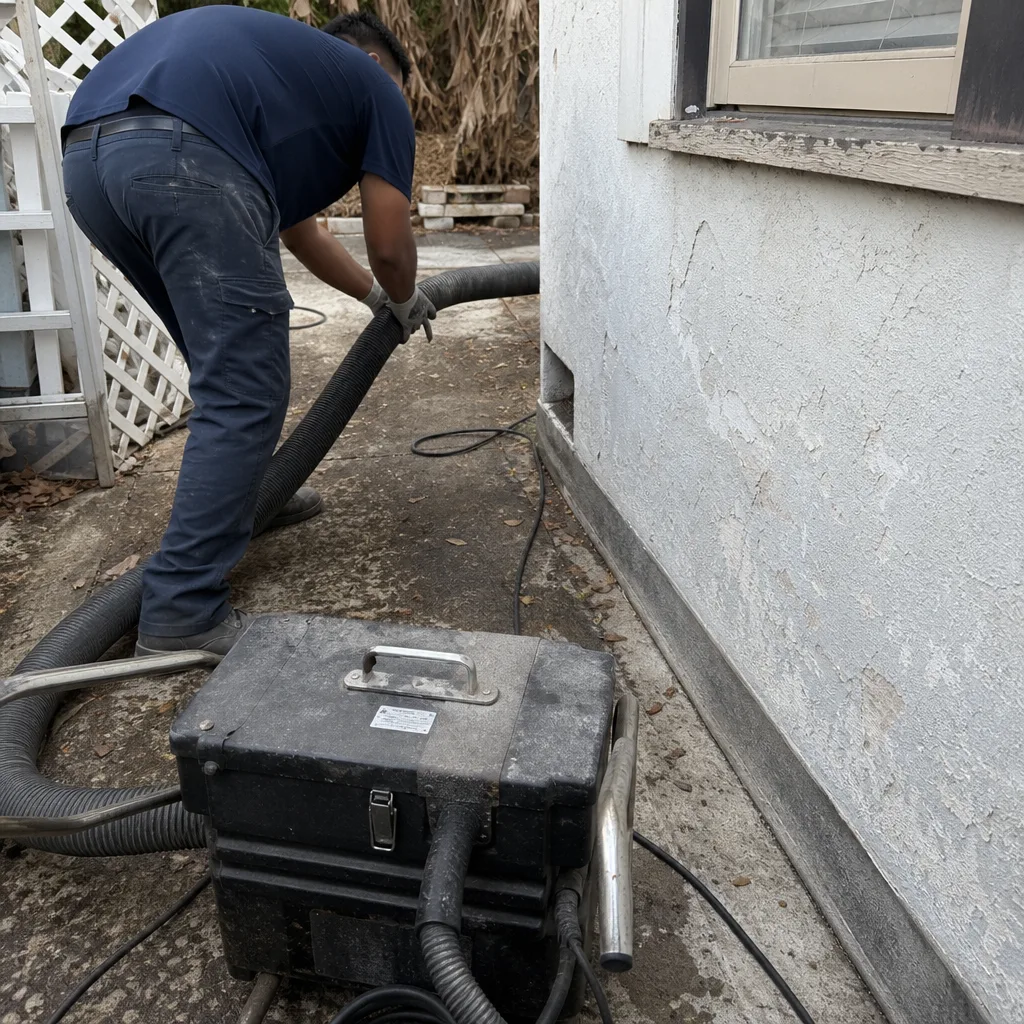
Some duct care tasks are appropriate for a motivated homeowner. Changing filters, inspecting visible duct connections in the attic, and keeping registers clear are all reasonable DIY work. But a full duct cleaning requires professional equipment and training. The process involves physically agitating the duct walls with powered brushes or compressed air tools, then extracting the loosened debris under negative pressure using a high-powered vacuum system. The consumer-grade shop vacuum approach leaves most of the contamination in place. Explore more guides & resources to understand why professional equipment matters. At Duct Cleaning Santee, we use Rotobrush and Nikro systems on every cleaning job, along with Abatement Technologies equipment when containment is required. These are the same tools used in commercial and restoration environments, not consumer substitutes. Duct Cleaning Santee offers free estimates in Santee, call (833) 542-0752.
Frequently Asked Questions
Most Santee homes benefit from a full professional air duct cleaning every 3 to 5 years, with the timing aligned to the pre-Santa Ana window in September or October. Homes with pets, allergy sufferers, recent construction, or close proximity to open chaparral may need cleaning more frequently. Call (833) 542-0752 to discuss your specific situation and get a free estimate.
Professional air duct cleaning in Santee typically ranges from $350 to $700 for a full system, depending on home size, number of registers, and the level of contamination present. Systems with significant debris or long duct runs fall on the higher end. Call (833) 542-0752 for a specific quote on your home. Estimates are free, and the price is confirmed before any work begins.
Low-priced quotes usually reflect smaller equipment and less thorough processes. A cleaning that takes 45 minutes with a portable vacuum cannot remove the same degree of contamination as a full cleaning with professional Rotobrush or Nikro agitation equipment and high-powered extraction. The difference shows up in the results, and in many cases, in whether the job actually addresses the problem you called about.
A legitimate professional duct cleaning includes before-and-after photos of the duct interior, taken at the same locations so you can see the difference. Ask for photographic documentation before you book. If a company won’t provide visual proof, that’s a red flag. Our process includes documented photos at each stage, so you can see exactly what was in your ducts and what the surfaces look like after cleaning.
Yes. Pollen, dust mite debris, pet dander, and mold spores accumulate in duct systems and re-enter the living space each time the HVAC system runs. For Santee residents with seasonal allergies, particularly during the spring chaparral bloom, a duct system carrying months of accumulated pollen acts as a persistent irritant. Cleaning removes that reservoir and provides noticeable relief for many allergy sufferers.
Yes. Lint accumulation in the dryer vent restricts airflow, causing the dryer’s heating element to run hotter than designed. That combination of fuel and heat is the mechanism behind thousands of residential dryer fires every year. Annual professional dryer vent cleaning removes the fuel source and restores proper airflow. Call (833) 542-0752 to schedule a dryer vent inspection.
The Bottom Line
Santee’s duct care calendar follows the wind, not the thermometer. The highest-value actions happen in September and October, before Santa Ana season arrives: a professional duct cleaning, a filter upgrade to MERV 11 or higher, and a dryer vent inspection. The second window comes in March, when a post-wind assessment determines what the season left behind and whether another cleaning is warranted before summer. Throughout the year, the dryer vent deserves independent attention as a fire-safety priority, and structural duct issues should be repaired as soon as they’re identified. Following this rhythm keeps indoor air cleaner, electric bills lower, and the duct system working efficiently for years. For a free estimate on any of these services in Santee, call Duct Cleaning Santee at (833) 542-0752. Visit the Duct Cleaning Santee home page to learn more about our full range of services.
Written by the team at Duct Cleaning Santee, serving Santee since 2017.
See the difference
 Before
 After
 Before
 After
 Before
 After