
Last updated November 2, 2026
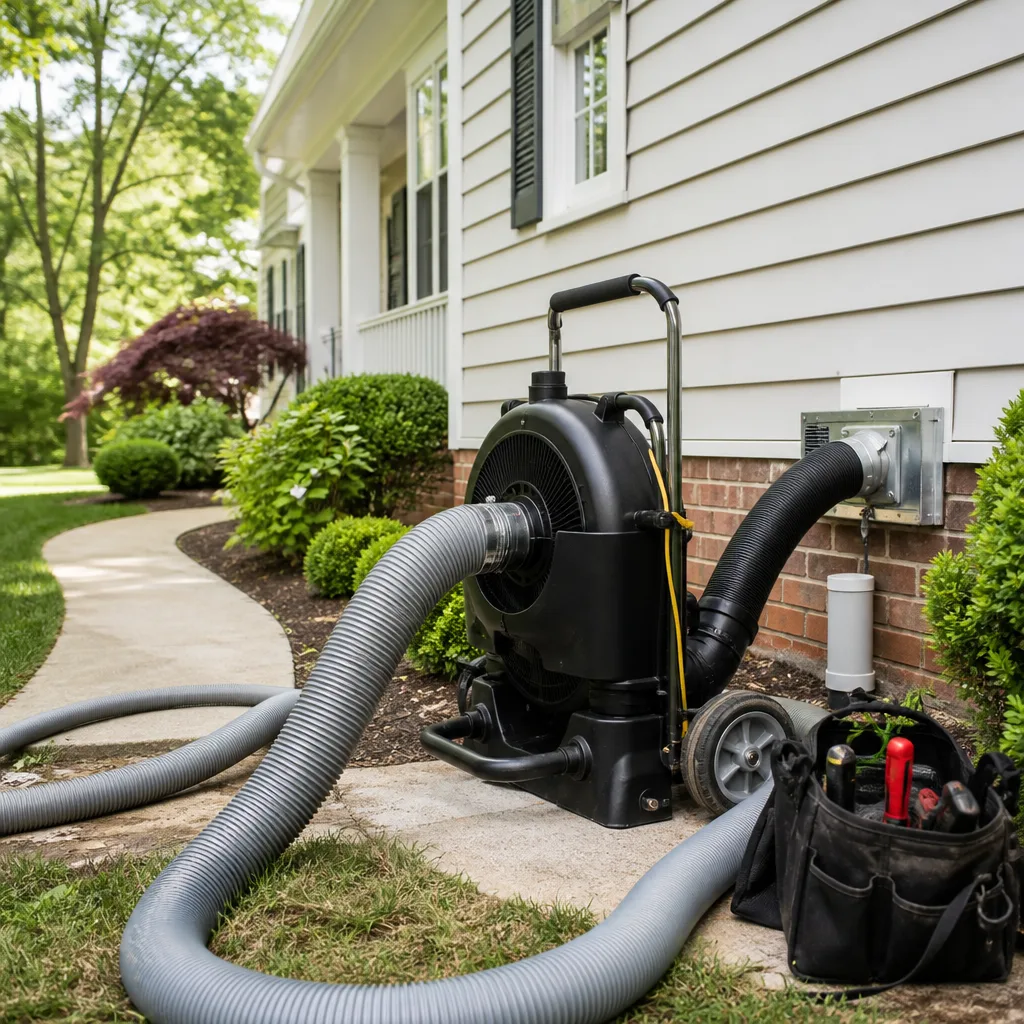 Whole-home duct cleaning
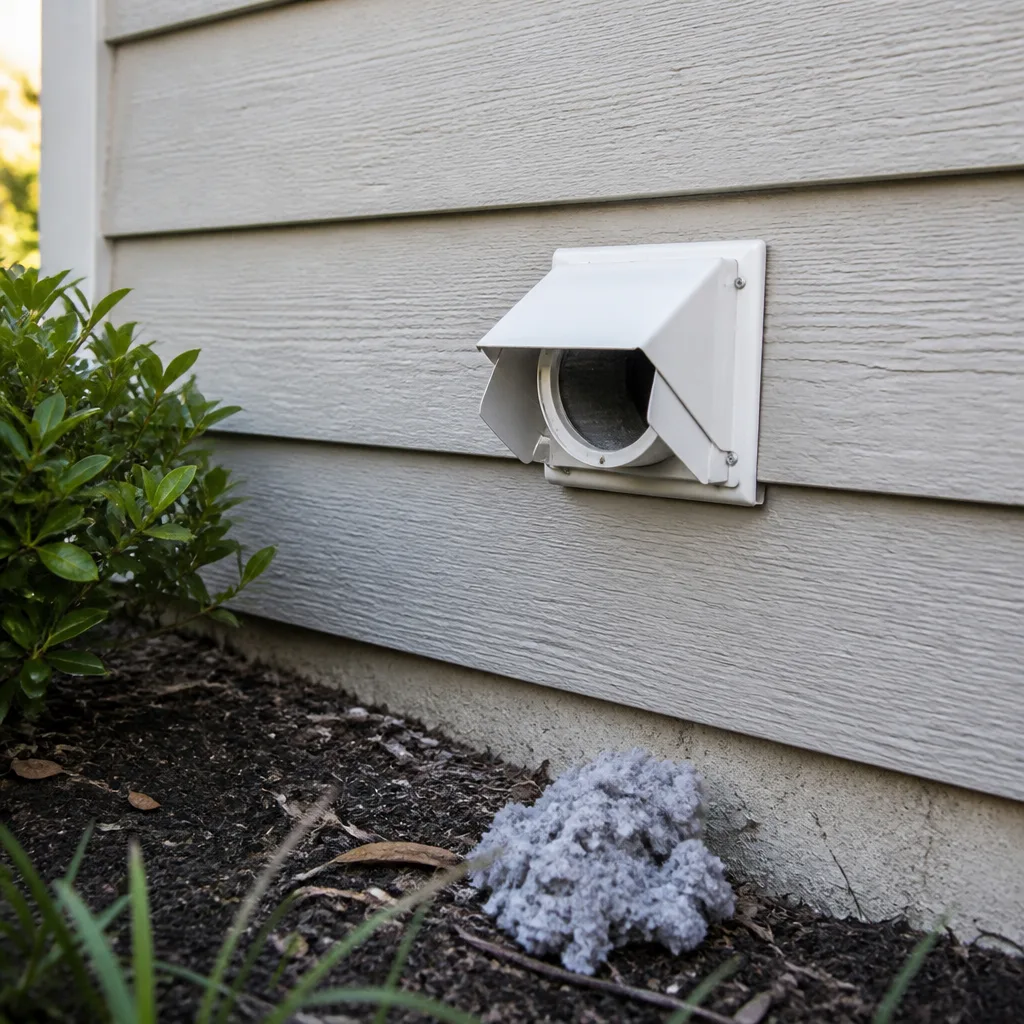 Dryer vent cleaning
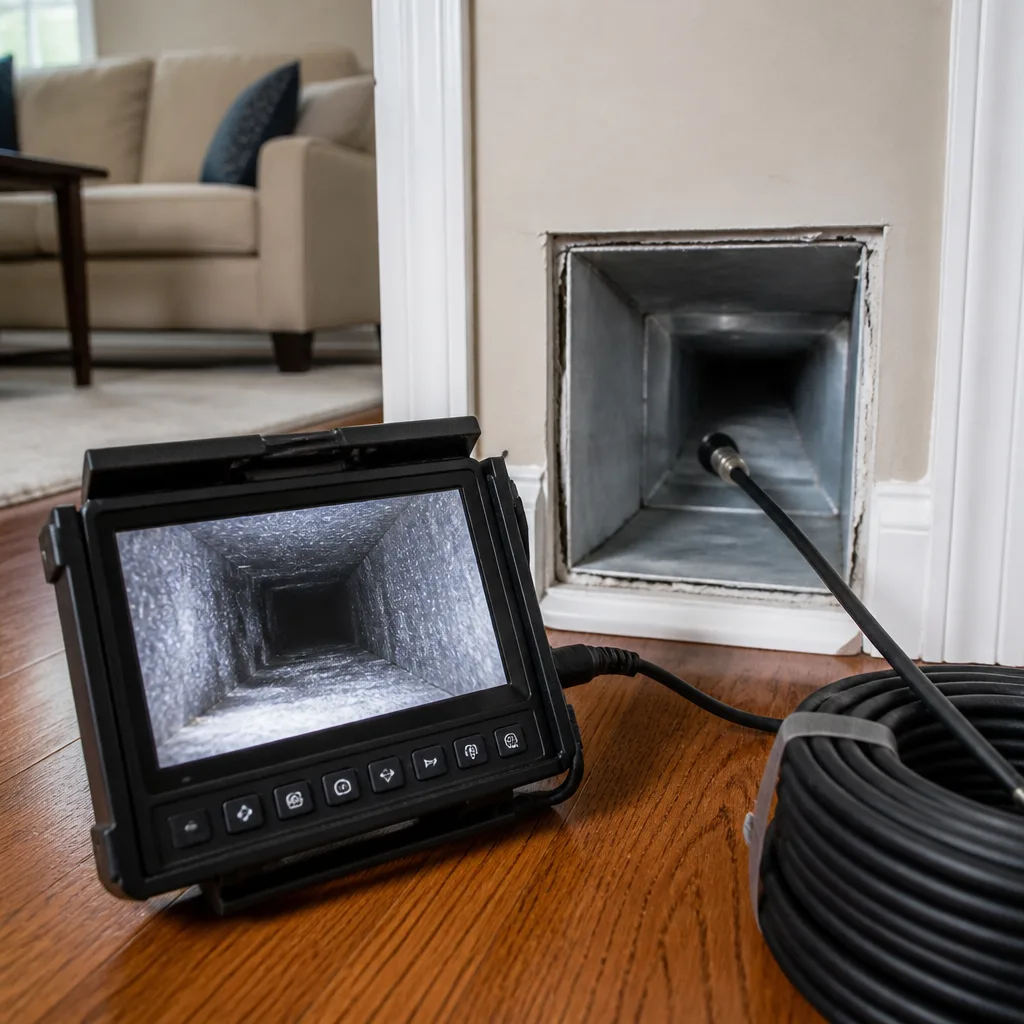 Camera inspection
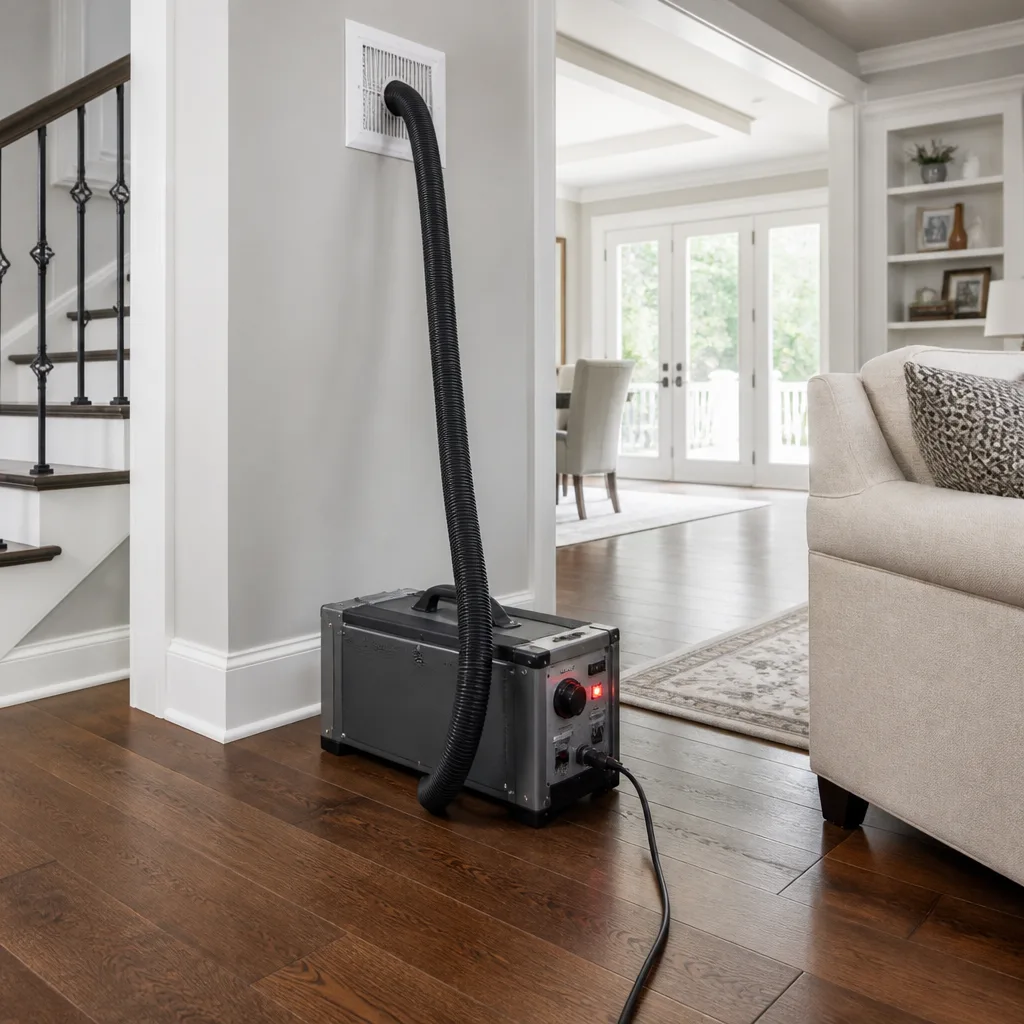 Sanitizing & deodorizing
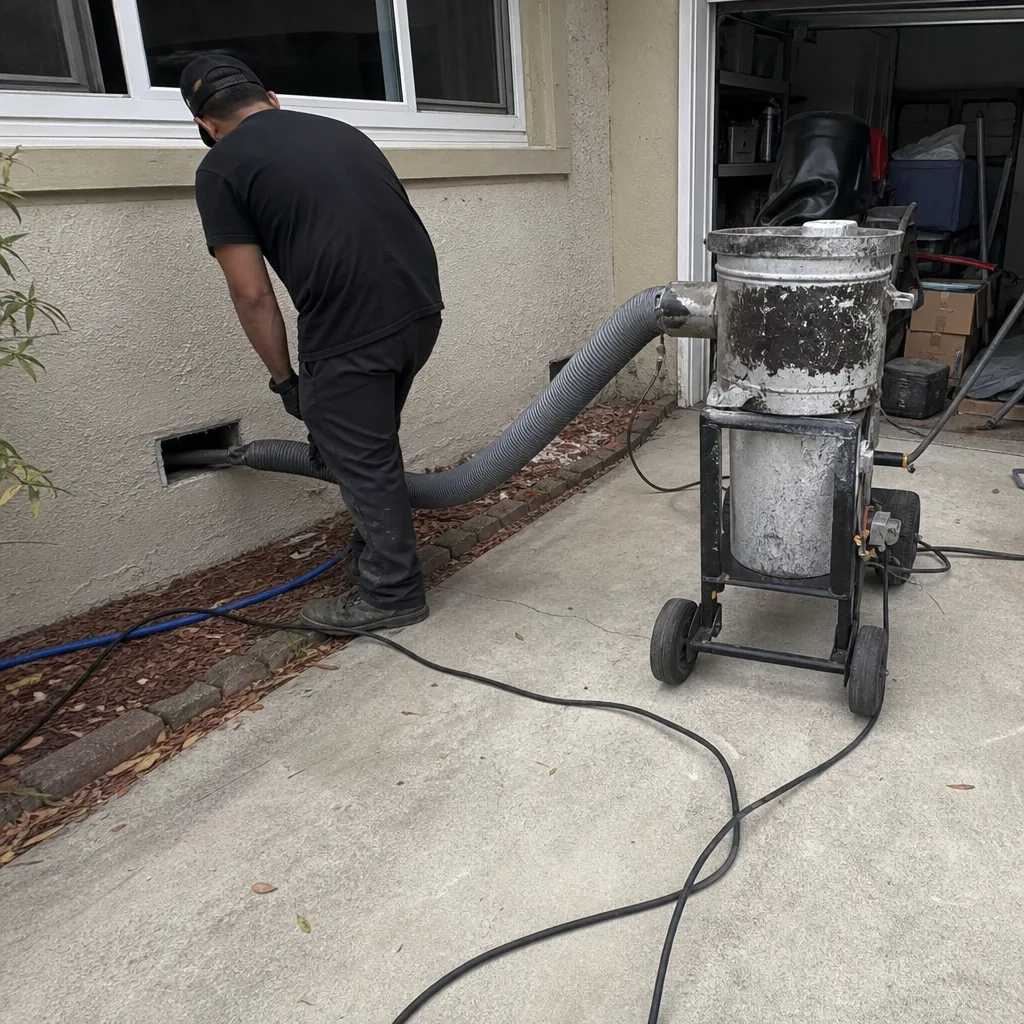
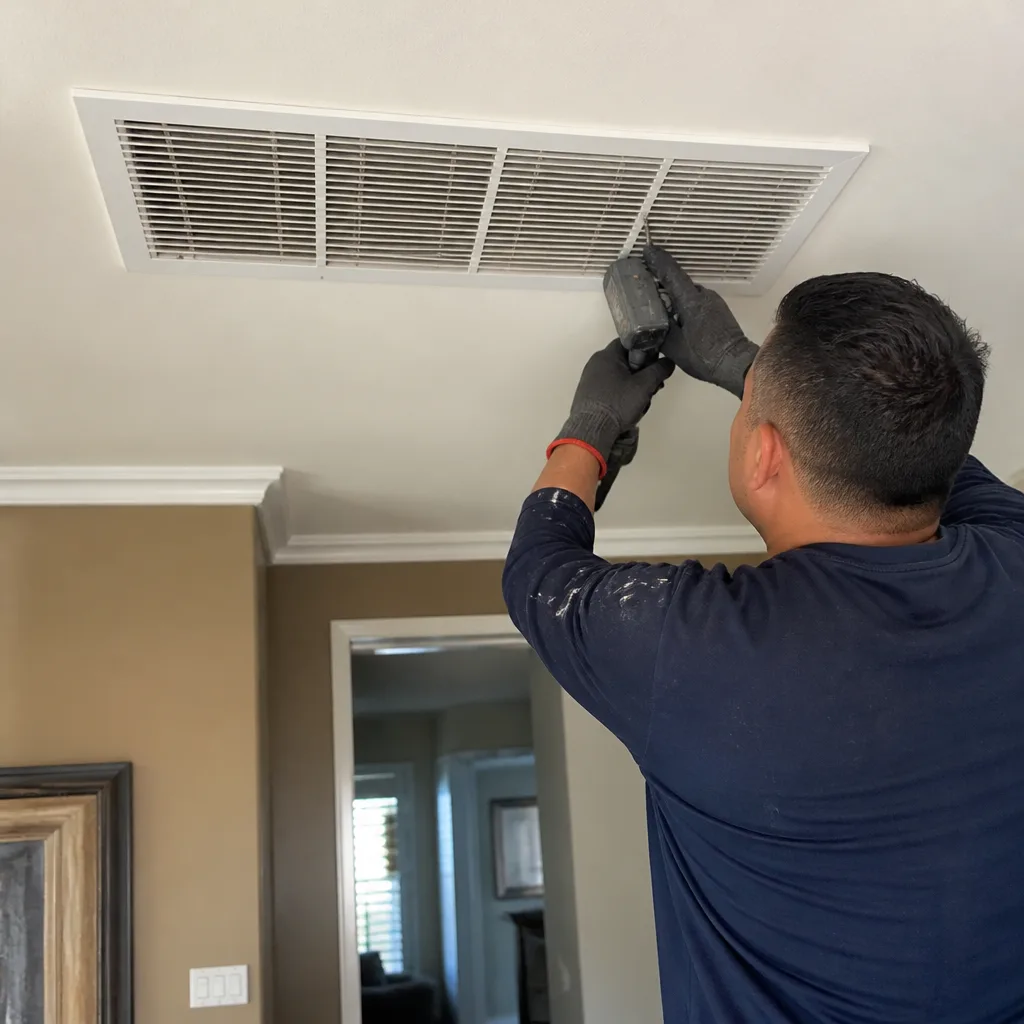
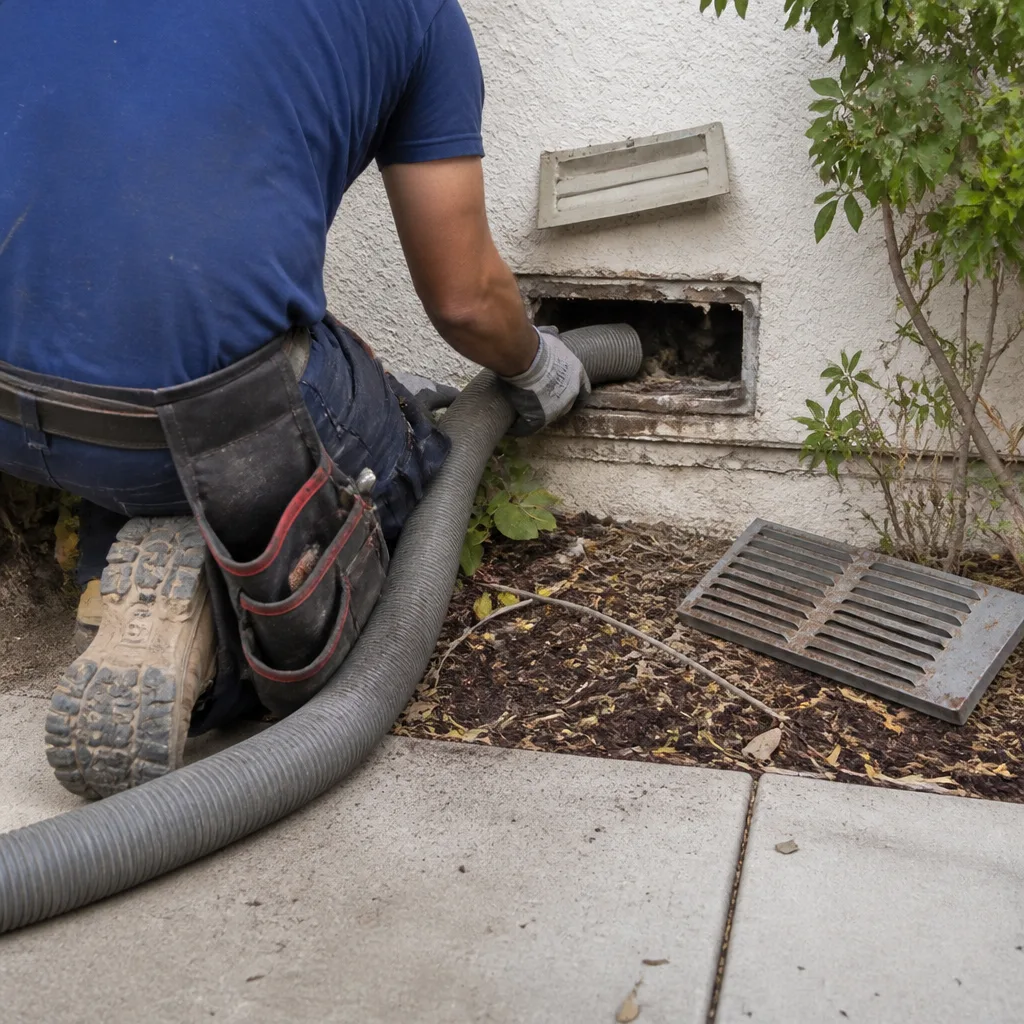
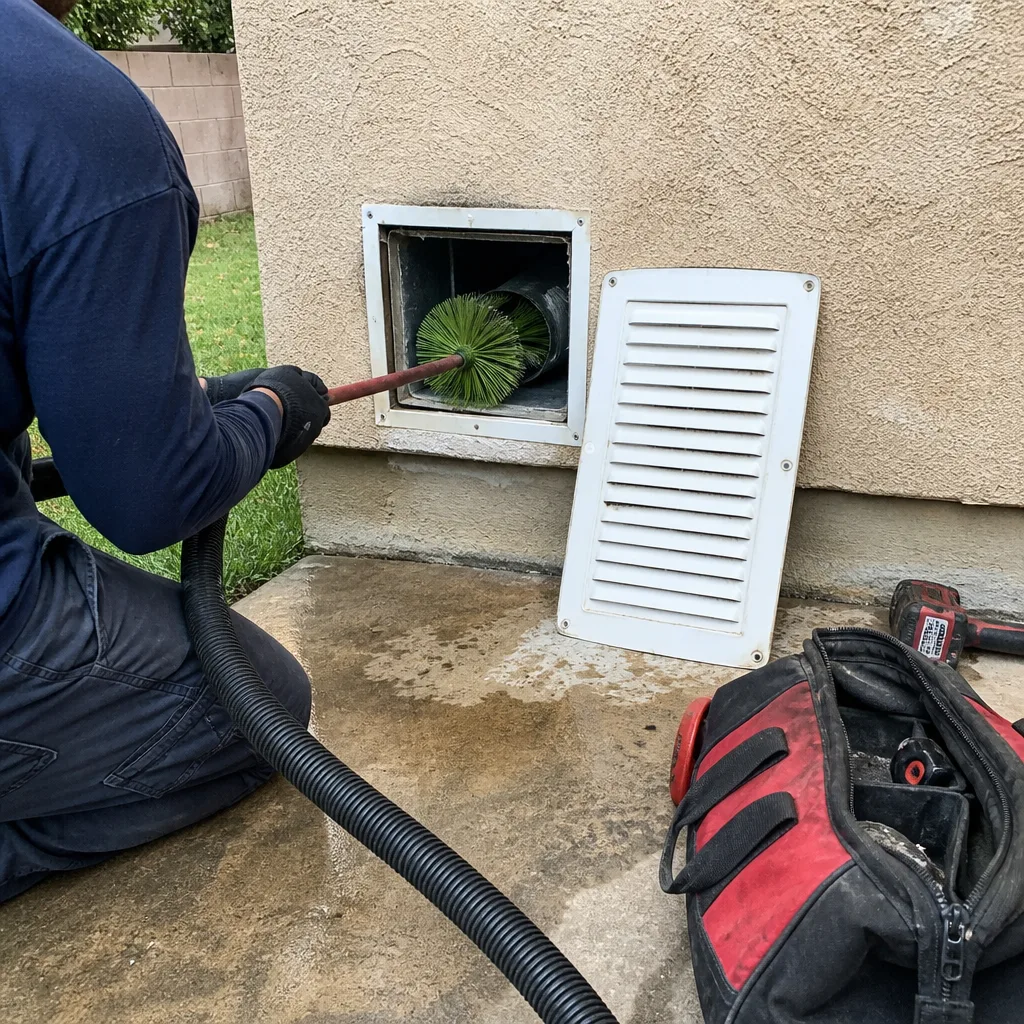
Whole-system duct and dryer vent check with before-and-after photos - you see exactly what came out of your vents
That "$99 whole-house special" is a bait ad - the real number appears once they are in your hallway, or the "clean" is a shop-vac at the register. We photograph the inside of your ducts before and after instead.
Air Duct Cleaning Emergency Preparedness Guide for Santee Homes
During the 2003 Cedar Fire and 2007 Witch Creek Fire, thousands of Santee-area homes ran their HVAC systems straight through active smoke events. Homeowners closed windows, cranked the air conditioning, and unknowingly pulled combustion particulate deep into duct systems that kept recirculating it for weeks after the skies cleared. The air outside recovered. The air inside didn’t. This guide covers what actually happens to a duct system during a wildfire smoke event in Santee, what to do in the first hours, how to assess contamination afterward, and the sequence that restores indoor air quality safely. You’ll also learn how to document damage for insurance and why standard duct cleaning isn’t enough after heavy smoke infiltration.
Styles & brands we work with
- Whole-home duct cleaning
- Dryer vent cleaning
- Camera inspection
- Sanitizing & deodorizing
Quick Answer
If wildfire smoke reaches your Santee home, shut the HVAC system off immediately, seal return vents with tape and plastic as a temporary measure, and run portable HEPA filtration until the outdoor Air Quality Index recovers. After the event, inspect for smoke odor and visible particulate inside vents, then schedule Air Duct Cleaning services for professional post-smoke duct remediation that includes HEPA-vacuuming of the plenum, HVAC cabinet, and evaporator coil. Replace all filters with MERV-13 or higher before resuming normal HVAC operation, and document everything with photos for insurance.
Table of Contents
- The Fire Season Reality for Santee Homes
- The Immediate Protocol: First 24 Hours of a Smoke Event
- Assessing Duct Contamination After Smoke Exposure
- The Post-Event Cleaning Sequence: Why Standard Cleaning Isn’t Enough
- Filter Strategy Before, During, and After Fire Season
- Documenting Duct Contamination for Insurance Claims
- Santee-Specific Considerations: Climate, Topography, and Fire Risk
- Common Mistakes to Avoid
- When to Call a Professional
- Frequently Asked Questions
- The Bottom Line
The Fire Season Reality for Santee Homes
Santee sits in a fire corridor that doesn’t really have an off-season anymore. East County San Diego’s chaparral-covered hills, the Santa Ana wind pattern that pushes dry air through the valley in September and October, and the city’s position between the Cleveland National Forest and the urban edge of El Cajon and Lakeside all converge to create conditions where smoke events aren’t a question of if, but when. The Cedar Fire burned more than 280,000 acres across San Diego County. The Witch Creek Fire followed four years later. More recently, localized vegetation fires in the hills around Santee Lakes and the Carlton Hills area have produced days of unhealthy air even when the burn zones were miles away.
The problem most homeowners don’t recognize is that a duct system is a particulate reservoir. Return vents pull air from living spaces, and that air carries whatever is floating in it. During a smoke event, that means fine combustion particles measuring 2.5 microns or smaller. These particles are small enough to pass through standard fiberglass filters, settle inside the return ductwork, and accumulate in the plenum and evaporator coil. Once the outdoor air clears and the system runs normally again, those particles re-entrain into the airstream. The HVAC system essentially becomes a smoke delivery mechanism.
We work on duct systems throughout Santee, and the pattern we see after every fire season is consistent. Homes in the Mast Park and north Santee areas, which sit closer to the hills, show heavier particulate loading than homes near the 52 corridor. But no part of the city is immune. Smoke travels. The fine particles that matter for indoor air quality are the ones that stay airborne for days after the visible plume dissipates.
The Immediate Protocol: First 24 Hours of a Smoke Event
What you do in the first hours of a smoke event determines how much contamination your duct system retains. The sequence matters, and it starts with one action: shutting the system down. Follow these steps in order.
- Turn the HVAC system off at the thermostat. Switch the fan setting from “Auto” to “Off” as well. You want zero air movement through the ductwork. Even “Fan On” mode pulls air across the filter and through the return ducts, which draws smoke particulate into the system.
- Seal return vents with painter’s tape and plastic sheeting. Return vents are the larger grilles that pull air in, not the smaller registers that push air out. Cover them with a layer of plastic sheeting secured by painter’s tape on all four edges. This creates a temporary barrier that prevents smoke from passively entering the duct system through the return side. Duct tape works in a pinch, but it can leave adhesive residue on wall surfaces. Painter’s tape is the better choice.
- Seal supply registers as well if you can. Supply registers are the smaller vents that deliver conditioned air. Sealing these prevents smoke from entering the ducts from the room side when the system is off. Focus on return vents first if time is limited.
- Run portable HEPA filtration units in occupied rooms. A standalone HEPA air purifier rated for the room’s square footage will capture smoke particles from the air you’re breathing while the HVAC system is offline. Position one unit per occupied bedroom and one in the main living area. If you don’t own dedicated HEPA units, do not run the HVAC fan as a substitute. That defeats the purpose of the shutdown.
- Keep windows and doors closed. This seems obvious during a smoke event, but it’s worth stating because the mechanics matter. Your home is not airtight, and a negative pressure situation caused by running bathroom exhaust fans or the kitchen range hood can pull outdoor smoke into the house. Minimize use of any exhaust fan during active smoke conditions.
- Monitor the Air Quality Index. Wait for the AQI in Santee to fall below 100, and ideally below 50, before removing vent covers and resuming normal HVAC operation. The San Diego Air Pollution Control District maintains real-time monitoring data for East County. Don’t rush this step. The system can stay offline for days without consequence.
These steps prevent the majority of preventable smoke infiltration. They don’t eliminate the need for post-event duct inspection and likely cleaning, but they dramatically reduce the particulate load your duct system will carry.
Assessing Duct Contamination After Smoke Exposure
Once the outdoor air has cleared and you’ve confirmed the AQI is back in the healthy range, the next step is determining whether your ducts need professional attention or whether a filter change and surface cleaning will suffice. The assessment falls into two categories: visual indicators and olfactory indicators. Neither requires specialized equipment, but both require you to look and smell in the right places.
Visual indicators of smoke contamination:
- Register staining. Remove a supply register (the smaller vents) and look at the inside surface of the metal boot beneath it. Smoke residue presents as a gray or brown film that doesn’t wipe off with a dry cloth. This is different from ordinary dust, which is lighter in color and lifts easily.
- Filter darkening. If the filter you had installed during the event shows gray or black streaking rather than the standard gray-brown of accumulated household dust, that’s smoke particulate. Take a photo before discarding it. That filter is evidence for your insurance claim.
- Visible particulate on the evaporator coil. If you can access the coil inside the air handler or furnace cabinet, smoke residue will appear as a dark, oily film. This is a strong indicator that fine particles have moved through the entire system.
- Dust accumulation on supply register faces. Within a week after the smoke event, watch for unusually rapid dust buildup on the plastic or metal faces of supply registers. Smoke particulate is finer and more adhesive than household dust, and it tends to deposit on surfaces directly in the airstream path.
Olfactory indicators:
- The first ten seconds of operation. After you’ve replaced the filter and run the system for the first time, stand near a supply register during the first ten seconds of airflow. A campfire or ash-like odor that fades after the air has been moving for a minute suggests particulate loaded in the ductwork that hasn’t fully re-suspended. This is different from a persistent odor, which points to deeper loading.
- Persistent smoke odor with the system off. If the rooms smell faintly of smoke even when the HVAC hasn’t run in hours, the particulate load in the duct system is high enough to off-gas passively. This requires professional remediation.
- Odor that intensifies when the fan runs. This is unambiguous. Smoke particles trapped in the ductwork, plenum, or coil are being pushed into living spaces. Call a professional.
One thing we’ve learned from post-fire assessments in Santee: surface-level smoke residue on walls, windowsills, and countertops often resolves with a thorough household cleaning. But if the HVAC system ran at any point during the smoke event, even for a few hours, the duct system almost always retains particulate. The filter is the only barrier, and standard filters don’t capture the fine particles that define wildfire smoke.
The Post-Event Cleaning Sequence: Why Standard Cleaning Isn’t Enough
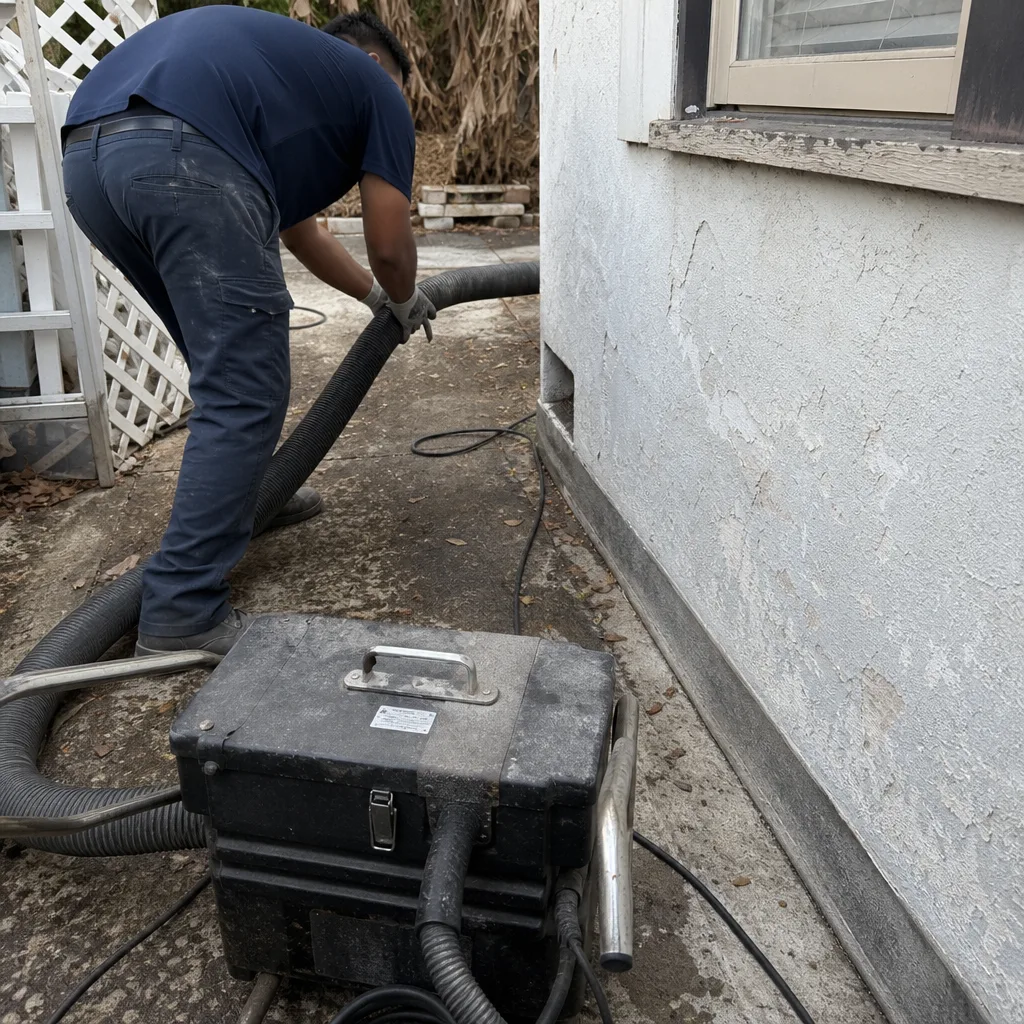
Our Air Duct Cleaning in Santee process is built around source removal, and a smoke event makes source removal the only acceptable standard. After wildfire infiltration, a standard duct cleaning that only addresses the interior surfaces of the duct run misses the places where smoke particulate concentrates most heavily: the plenum, the HVAC cabinet interior, the blower assembly, and the evaporator coil. The proper post-smoke remediation sequence covers the entire path from return register to supply register.
- System-wide negative air setup. Professional-grade equipment matters here. We use Abatement Technologies negative air machines to establish containment before cleaning begins. This prevents particulate from being pushed into living spaces during the agitation phase of cleaning. The air inside the duct system is pulled through HEPA filtration and exhausted clean.
- Return register and duct run cleaning. The return side is where smoke enters the system, so it’s typically the most heavily contaminated section. Each return drop is accessed, mechanically agitated, and vacuumed under negative pressure. We run Rotobrush and Nikro systems on this phase, which are the professional-grade tools used in commercial and restoration settings, not consumer-grade substitutes.
- Supply duct run cleaning. Supply ducts carry the filtered air back to the rooms, but after a smoke event, they carry re-entrained particulate instead. The supply runs get the same mechanical agitation and HEPA vacuuming as the returns.
- Plenum and HVAC cabinet HEPA-vacuuming. This step is where post-smoke remediation separates from standard cleaning. The plenum, the metal box that distributes air between the furnace and the duct runs, collects fine particulate that’s too heavy to stay in the airstream. The HVAC cabinet interior, including the blower housing, collects more. A HEPA vacuum removes this material at the source. Skipping this step means the system re-contaminates the ducts as soon as the fan runs.
- Evaporator coil cleaning. The coil is a magnet for smoke particulate. Its wet, cool surface during air conditioning operation causes particles to adhere, and the resulting film reduces both airflow and heat exchange efficiency. We clean the coil as part of the remediation, not as an optional add-on. A dirty coil after a smoke event will carry odor and particulate for months.
- Filter replacement and system restart. The final step is installing a fresh MERV-13 filter (or higher, if your system’s airflow design supports it) and returning the system to normal operation. The new filter captures any residual particulate that re-enters the airstream during the first several cycles.
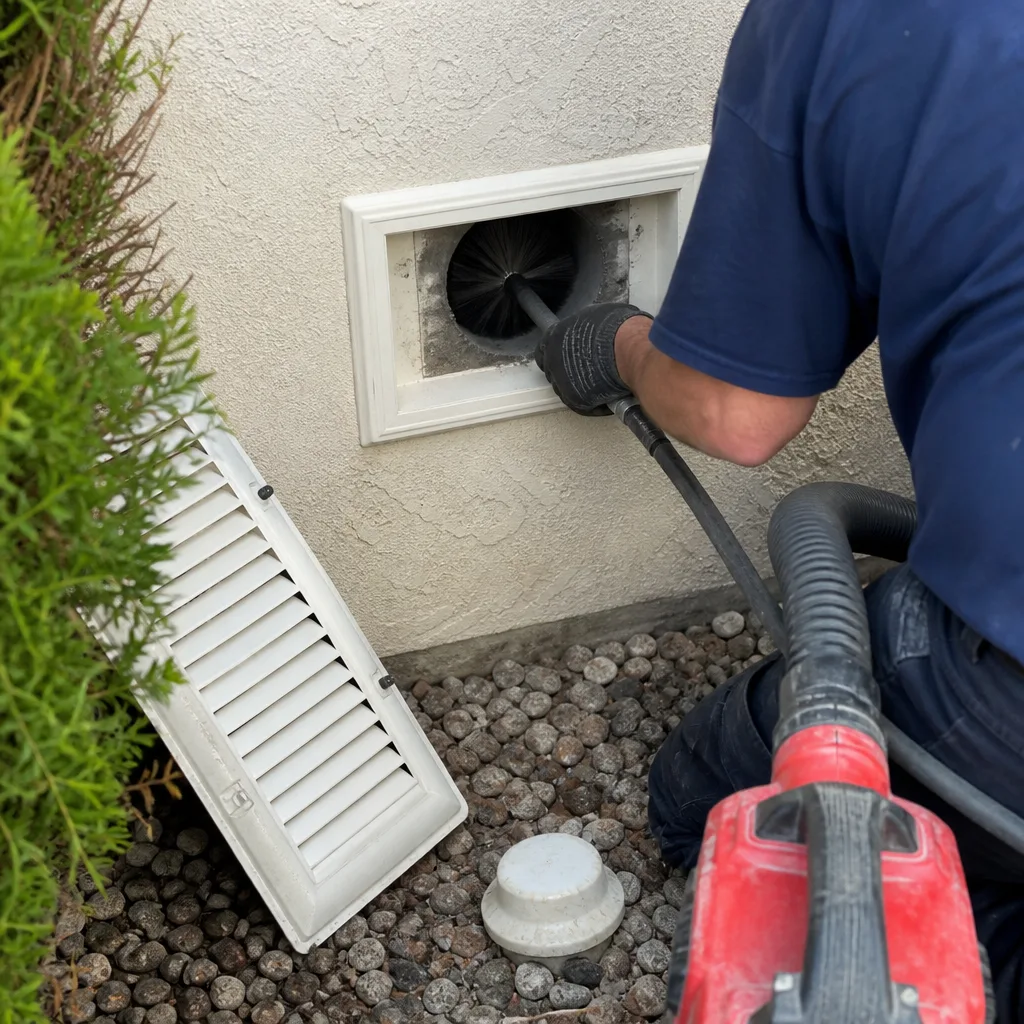
If the smoke event caused physical damage to the ductwork itself, such as fire-damaged segments, detached joints, or crushed runs, that’s a structural issue that requires Air Duct Repair in Santee. Cleaning won’t fix a duct system that’s physically compromised. Repair, not just clean, is the governing principle here. And if the dryer vent was exposed to the same smoke conditions, it’s worth scheduling a Dryer Vent Cleaning in Santee inspection as part of the same visit. Smoke particulate that settles in a dryer vent compounds the lint load that already makes dryer vents one of the leading causes of residential house fires.
Filter Strategy Before, During, and After Fire Season
The filter is the only line of defense between outdoor smoke and your duct system’s interior. Most Santee homes run a standard 1-inch fiberglass or basic pleated filter that captures particles in the 10-micron range and above. Wildfire smoke is dominated by particles in the 0.3 to 2.5-micron range. That means the filter is allowing the majority of smoke particulate to pass straight through and into the coil and ductwork.
Before fire season (April through July):
- Install a MERV-13 filter if your system’s blower can handle the additional static pressure. MERV-13 is the minimum efficiency that captures smoke particulate effectively, rated to remove at least 50% of particles in the 0.3 to 1.0-micron range and 90% of particles in the 1.0 to 3.0-micron range. Most modern residential systems can accommodate MERV-13 without meaningful airflow loss, but older or undersized systems may struggle.
- If MERV-13 causes noticeable airflow reduction or a whistling sound from the return, step down to MERV-11 and compensate with portable HEPA filtration during smoke events. MERV-11 captures some of the larger smoke particles but won’t handle the fine fraction.
- Confirm the filter fits properly. A filter that doesn’t seal against the filter rack allows air, and smoke, to bypass it entirely. The filter should fill the rack edge to edge.
During a smoke event:
- If the system is running with a MERV-13 filter and outdoor smoke is moderate, the filter will load quickly. Check it weekly. Replace it when it shows visible discoloration, which may be after just a few days of continuous smoke exposure.
- If the system is shut down per the immediate protocol, leave the filter in place until after remediation. Removing it exposes the downstream components to passive particulate settling.
- Don’t attempt to clean and reuse a disposable filter. Smoke particulate is small enough to embed in the filter media, and washing doesn’t restore efficiency. A smoked filter goes in the trash, photographed first if insurance documentation is needed.
After the event:
- Replace the filter immediately upon resuming operation, regardless of how recently it was installed. The filter that ran during the smoke event is loaded with particulate and will continue to pass fine particles as the media saturates.
- Keep MERV-13 in place through the end of fire season. Santa Ana winds can return rapidly, and smoke conditions can shift within hours in the Santee valley.
- For homes where indoor air quality is a persistent concern beyond fire season, Honeywell and Aprilaire media systems offer whole-house filtration options that capture more fine particulate than standard 1-inch filters. We stock and service both brands, which gives us the ability to assess the entire indoor air quality picture in one visit, not just the duct surfaces.
Documenting Duct Contamination for Insurance Claims
Wildfire smoke damage to a duct system is often a covered peril under California homeowners policies, but claims succeed or fail on documentation. Before filing, review Air Duct Cleaning Permits, Codes & Inspections in CA: What You Need to Know to understand regulatory requirements. Insurance adjusters are trained to look for direct physical damage, and smoke particulate in ductwork is a legitimate form of it. The challenge is proving the contamination originated from a specific event and wasn’t pre-existing household dust, which is considered a maintenance issue. Here’s what to record.
- Photograph the filter before disposing of it. Place the filter on a clean, light-colored surface and take photos in natural light. The photo should show the filter’s installation date if written on the frame, along with the darkening pattern. This establishes that the event occurred while the filter was in place.
- Photograph the interior of return boots. Remove a return register, shine a flashlight into the metal boot beneath it, and photograph the interior surfaces. Smoke film is visually distinct from the loose, fluffy dust of normal household accumulation. The photo should capture the difference clearly.
- Photograph the evaporator coil if accessible. Access panels vary by system, but if you can safely open the air handler or furnace cabinet without disturbing wiring or refrigerant lines, photograph the coil face. A darkened, oily-looking coil is evidence of particulate loading from the event.
- Record the dates of the smoke event and any HVAC operation during that window. Write down the specific days the system ran during the smoke event, the AQI readings on those days if you can retrieve them, and the date you shut the system down. This timeline helps an adjuster connect contamination to the event rather than to routine operation.
- Obtain a professional cleaning report with before-and-after camera images. This is the most powerful evidence you can provide. A professional duct remediation report that includes camera images from inside the duct runs before cleaning, then matching images after cleaning, demonstrates both the existence of contamination and the steps taken to address it. For insurance purposes, the before images prove the claim. The after images prove the remediation was completed.
We provide camera-documented reports for every post-smoke remediation we perform in Santee. The before images show exactly what was inside the duct system, from the return register to the coil. The after images show the same locations with clean metal surfaces. When an adjuster reviews a claim with that level of documentation, the path to approval is substantially clearer.
Santee-Specific Considerations: Climate, Topography, and Fire Risk
Santee’s geography shapes how wildfire smoke behaves here in ways that differ from coastal San Diego. The city sits in a valley with the San Diego River corridor running through it, and the surrounding hills create a basin effect that traps smoke under inversion layers. When Santa Ana winds push smoke from the east, it funnels down through the Mission Trails area and settles across the valley floor. When the winds shift, the marine layer can push smoke back from the coast. The result is that smoke events in Santee often last longer and reach higher particulate concentrations than in communities just a few miles west.
The housing stock also matters. Santee has a high concentration of single-family homes built in the 1960s through the 1990s, and many of those homes have original or lightly modified duct systems. Metal ductwork from that era holds up structurally, but the internal surfaces accumulate particulate over decades. The fiberglass insulation liners common in that period are especially problematic after smoke exposure, because fine particulate embeds in the fibrous surface and resists standard cleaning methods.
Neighborhoods closer to the river, including the areas around Town Center and along Mast Boulevard, tend to accumulate ambient dust more quickly than hillside homes, which means pre-existing particulate loads are higher before a smoke event ever starts. Homeowners in those areas who notice dust on furniture within days of cleaning, even outside of fire season, are seeing the signal that their duct systems are already carrying a particulate load. A smoke event on top of that load is the difference between a system that tolerates the exposure and one that needs full remediation.
For Santee homeowners, the practical takeaway is that fire season preparedness for your duct system isn’t a one-time action. It’s an annual cycle. The homes throughout this city benefit from a pre-season filter upgrade, a post-season duct assessment, and professional remediation when the visual or olfactory indicators say the system has been compromised.
Common Mistakes to Avoid
- Running the HVAC fan continuously during a smoke event to “filter the air.” This is the most common mistake we see in Santee after fire events. A standard filter doesn’t capture smoke particulate, and the fan pulls those particles into the duct system and circulates them through every room. Shut the system down.
- Waiting to assess duct contamination until the house smells normal again. Fine smoke particulate doesn’t produce a strong odor on its own. The absence of smell doesn’t mean the duct system is clean. Visual inspection and professional camera inspection are the only reliable assessments.
- Assuming a standard duct cleaning will resolve heavy smoke infiltration. A cleaning that doesn’t include the plenum, blower cabinet, and evaporator coil leaves the highest-concentration reservoirs untouched. The system re-contaminates within weeks. Post-smoke remediation is a different service than routine duct cleaning.
- Replacing the filter after a smoke event and calling it done. The filter captures airborne particles moving through it. It does nothing for the particulate that already settled inside the ductwork, plenum, or coil during the event. Those particles stay until they’re physically removed.
- Not documenting the contamination before cleaning begins. Once the ducts are cleaned, the evidence is gone. If you’re planning to file an insurance claim, the before images are your case. Professional cleaning reports with camera documentation serve this purpose.
- Sealing return vents with the HVAC system still running. Sealing returns while the fan is running creates a negative pressure situation inside the duct system that can pull smoke in from other access points. Shut the system down first, then seal.
- Using the HVAC system after a smoke event before replacing the filter. The filter that ran during the event is loaded. Running the system through a saturated filter pushes captured particulate downstream and re-contaminates the supply ducts. Replace the filter before the first post-event startup.
When to Call a Professional
You should call a duct remediation professional after a smoke event if any of these conditions apply: the HVAC system ran at any point during the smoke event, a smoke odor persists in the ducts after filter replacement, visible gray or brown film is present inside return boots, or your home is in a Santee neighborhood that experienced heavy smoke concentration for more than 48 hours. Homes with young children, allergy sufferers, or anyone with respiratory conditions should err toward professional assessment even when indicators are borderline. Duct Cleaning Santee offers free estimates in Santee. Call (833) 542-0752 to schedule a post-smoke duct assessment, and if you’re unsure whether your system needs remediation, a camera inspection answers the question definitively.
Frequently Asked Questions
Inspect the filter for gray or black streaking, remove a return register and look for a brown or gray film on the inside of the metal boot, and smell the air during the first ten seconds of system operation after installing a fresh filter. Any of these indicators suggests smoke particulate entered the duct system and professional inspection is warranted.
Post-smoke duct remediation in the Santee area typically ranges from $500 to $1,500 depending on the home’s square footage, the number of duct runs, the extent of smoke infiltration, and whether the evaporator coil and blower cabinet require cleaning. Every system is different, and the only way to get an accurate number is a professional assessment. Call (833) 542-0752 for a free estimate from Duct Cleaning Santee.
No. Duct systems require negative air containment, mechanical agitation, and HEPA vacuuming to properly remove smoke particulate. Consumer vacuums and brushes can’t reach the full length of a duct run, can’t clean the plenum or coil, and can actually dislodge particulate that then re-settles deeper in the system. The safety risk of working inside a furnace cabinet also argues for professional equipment and training. Duct Cleaning Santee runs Rotobrush and Nikro systems with Abatement Technologies negative air machines on every job.
In many cases, yes. California homeowners policies typically cover smoke damage, and duct contamination from a documented wildfire event falls under that coverage. Claims succeed when the homeowner can provide before-cleaning documentation, including filter photos, interior boot photos, and a professional inspection report with camera images. Contact your insurer before scheduling remediation to understand your policy’s specific requirements.
Wait until the AQI in Santee has been below 100 for at least 24 hours, and preferably below 50. Then remove the vent sealing, replace the filter, and run the system on fan-only mode for 30 minutes before switching to heating or cooling. If you smell smoke during that 30-minute window, shut the system down and schedule professional remediation.
MERV-13 is the minimum efficient level for wildfire smoke particulate, which is dominated by particles in the 0.3 to 2.5-micron range. If your system can’t handle the airflow restriction of MERV-13, use the highest MERV rating your system supports and supplement with portable HEPA filtration during active smoke events. Replace the filter immediately after any smoke exposure regardless of how recently it was installed.
The Bottom Line
Wildfire smoke in Santee isn’t a coastal nuisance. It’s a persistent air quality threat defined by the city’s valley geography and surrounding fire-prone terrain. Homes throughout this city have HVAC systems that are vulnerable to smoke infiltration the moment they run during a fire event. The prevention protocol is straightforward: shut the system down, seal the vents, run portable HEPA, and wait for clean air. The remediation protocol is equally clear: document the contamination, clean the full system from return register to supply register including the plenum and coil, and replace the filter before restart. Duct Cleaning Santee home is focused on one trade, and that focus matters when the air your family breathes has been compromised. Call (833) 542-0752 for a free estimate.
Written by the team at Duct Cleaning Santee, serving Santee since 2017.
See the difference
 Before
 After
 Before
 After
 Before
 After