
Last updated November 2, 2026
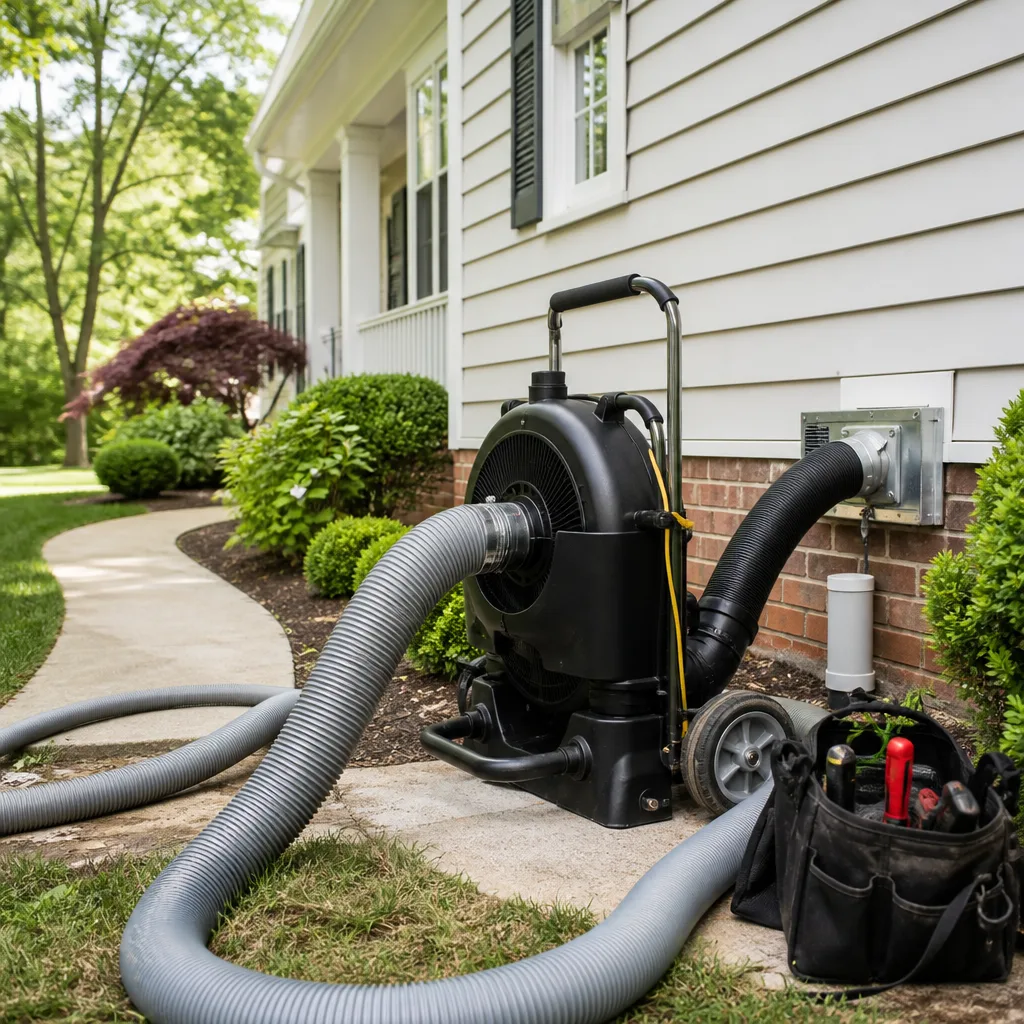 Whole-home duct cleaning
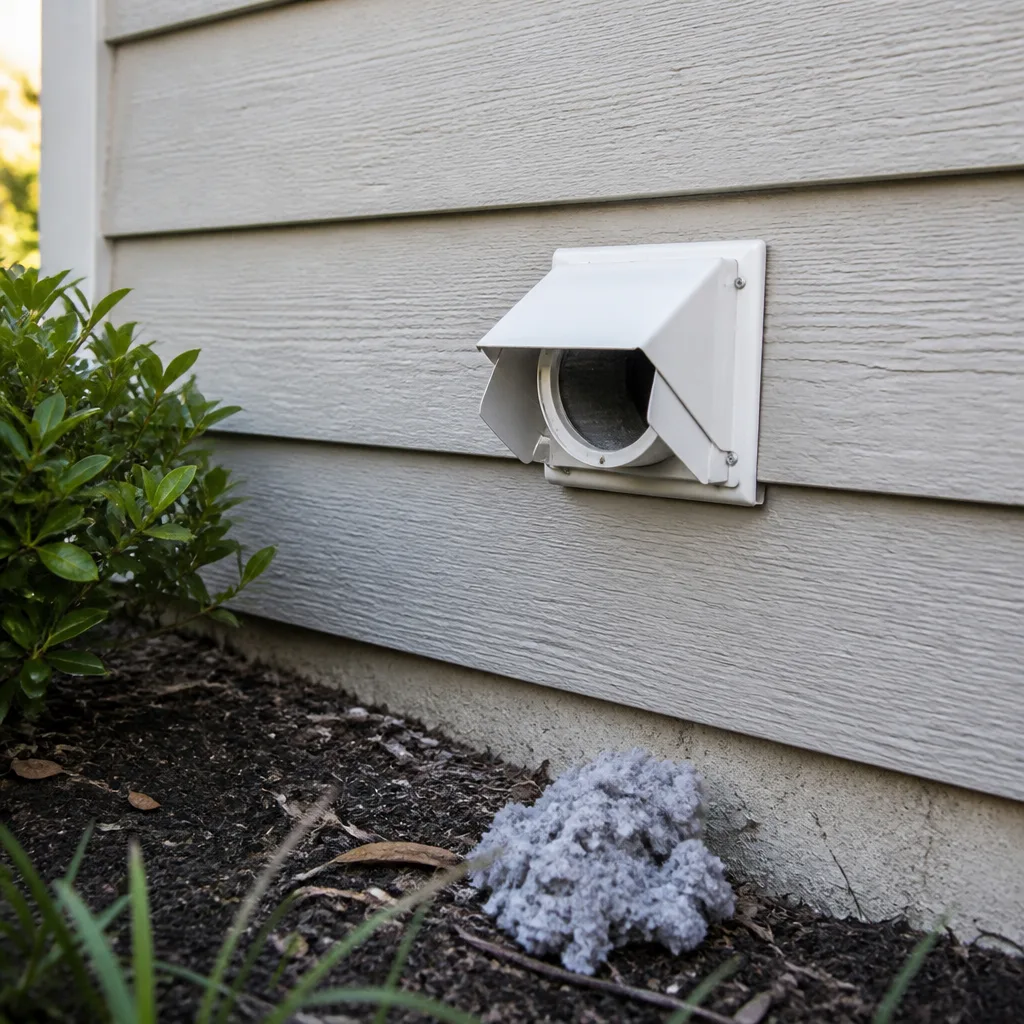 Dryer vent cleaning
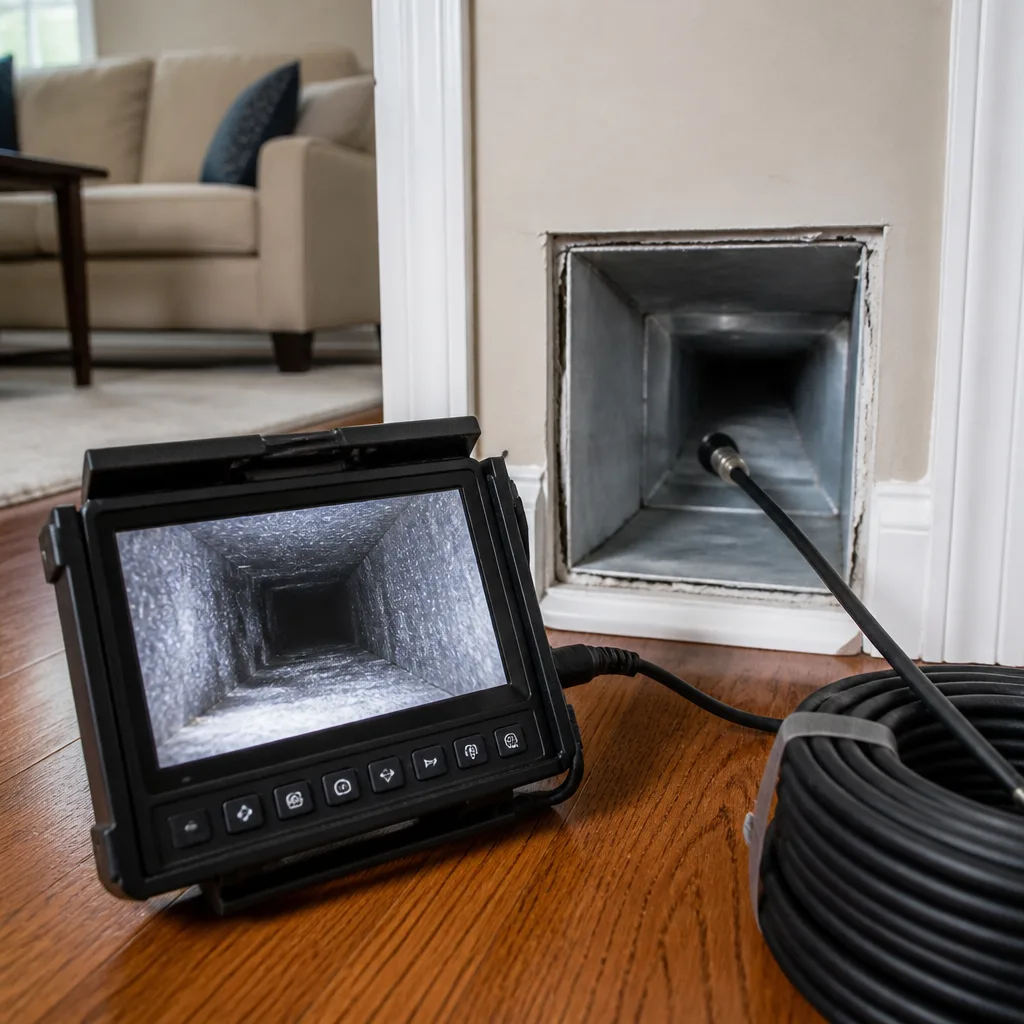 Camera inspection
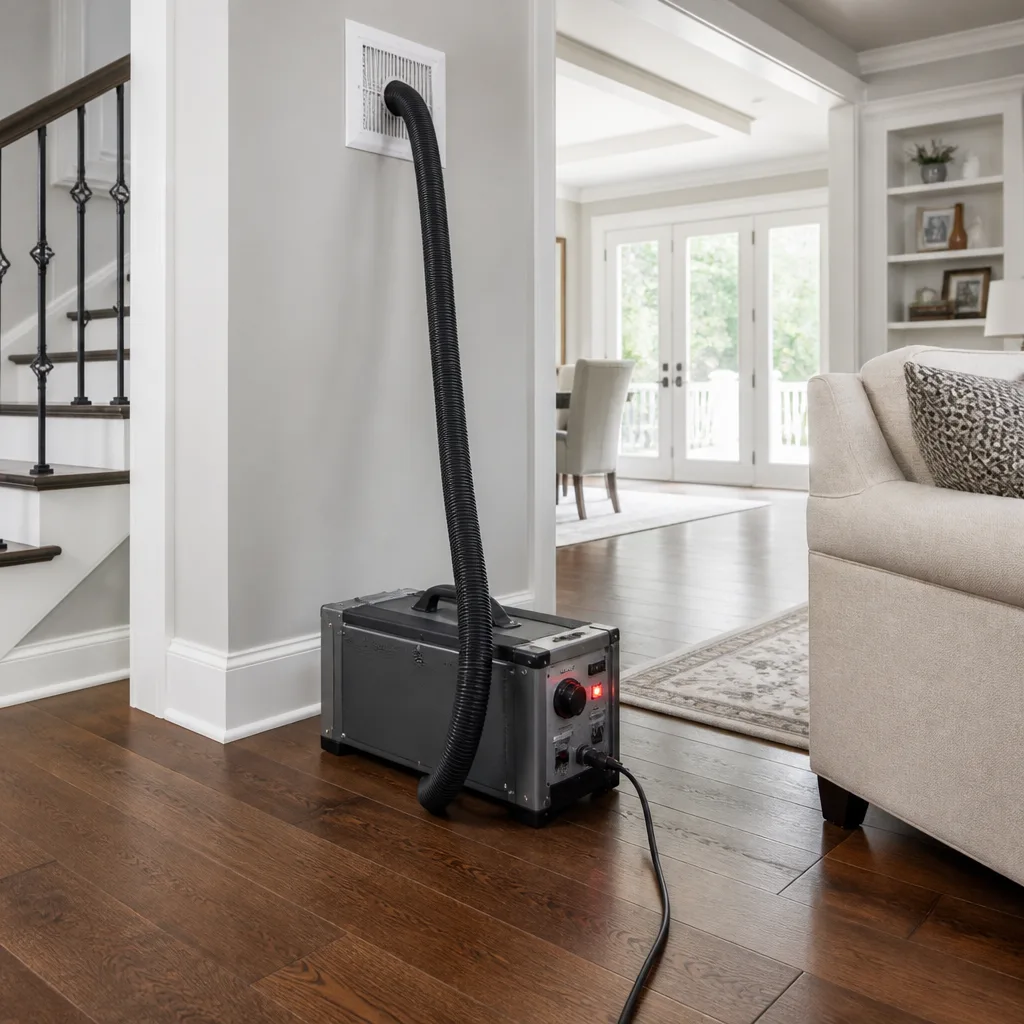 Sanitizing & deodorizing
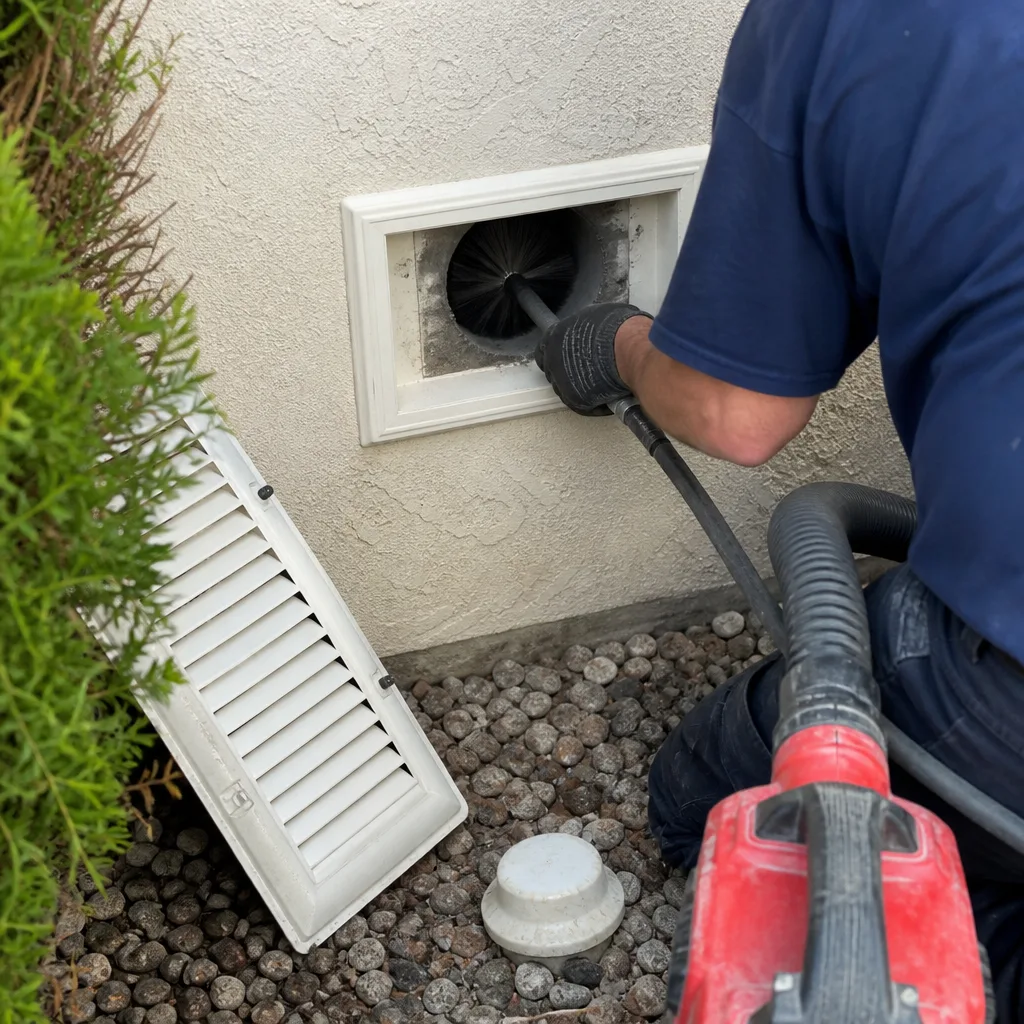
Whole-system duct and dryer vent check with before-and-after photos - you see exactly what came out of your vents
That "$99 whole-house special" is a bait ad - the real number appears once they are in your hallway, or the "clean" is a shop-vac at the register. We photograph the inside of your ducts before and after instead.
Choosing the Right Air Duct Cleaning Brand: A Buyer’s Guide for Santee
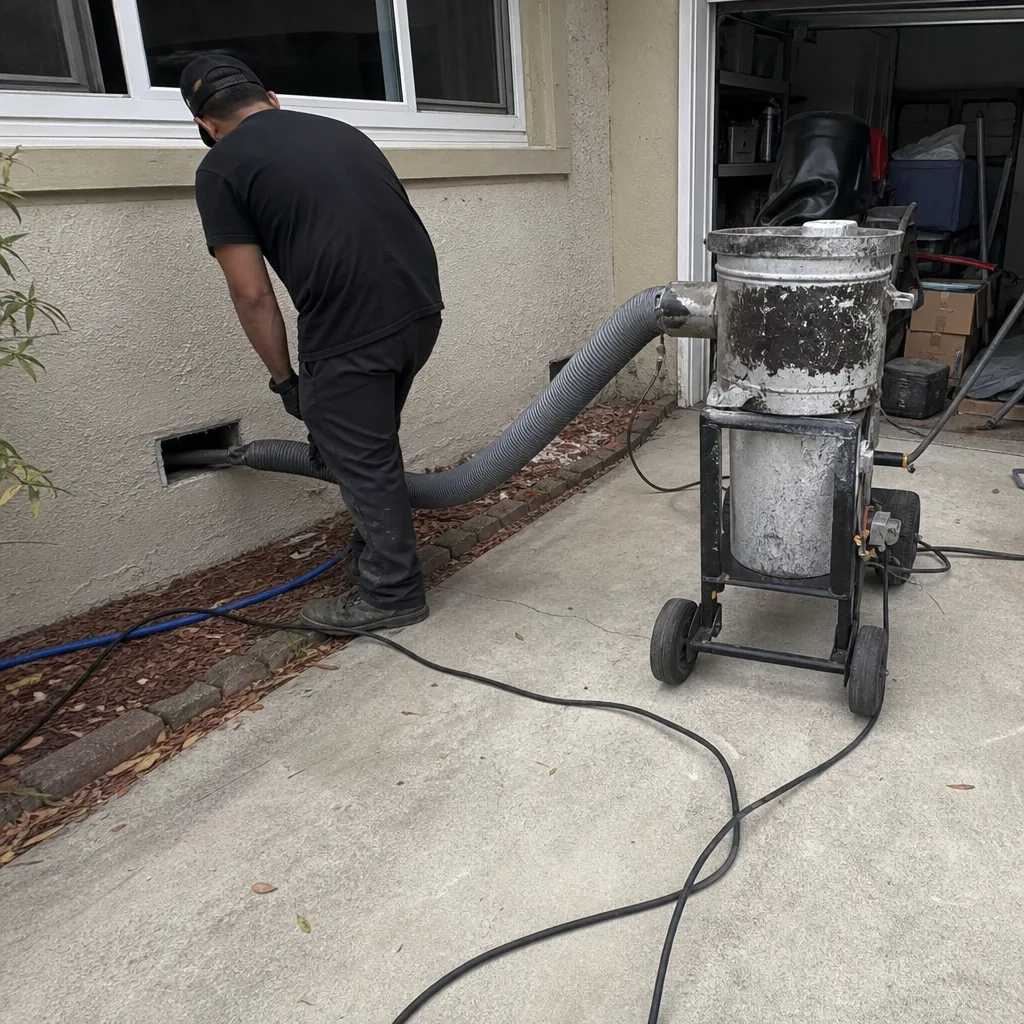
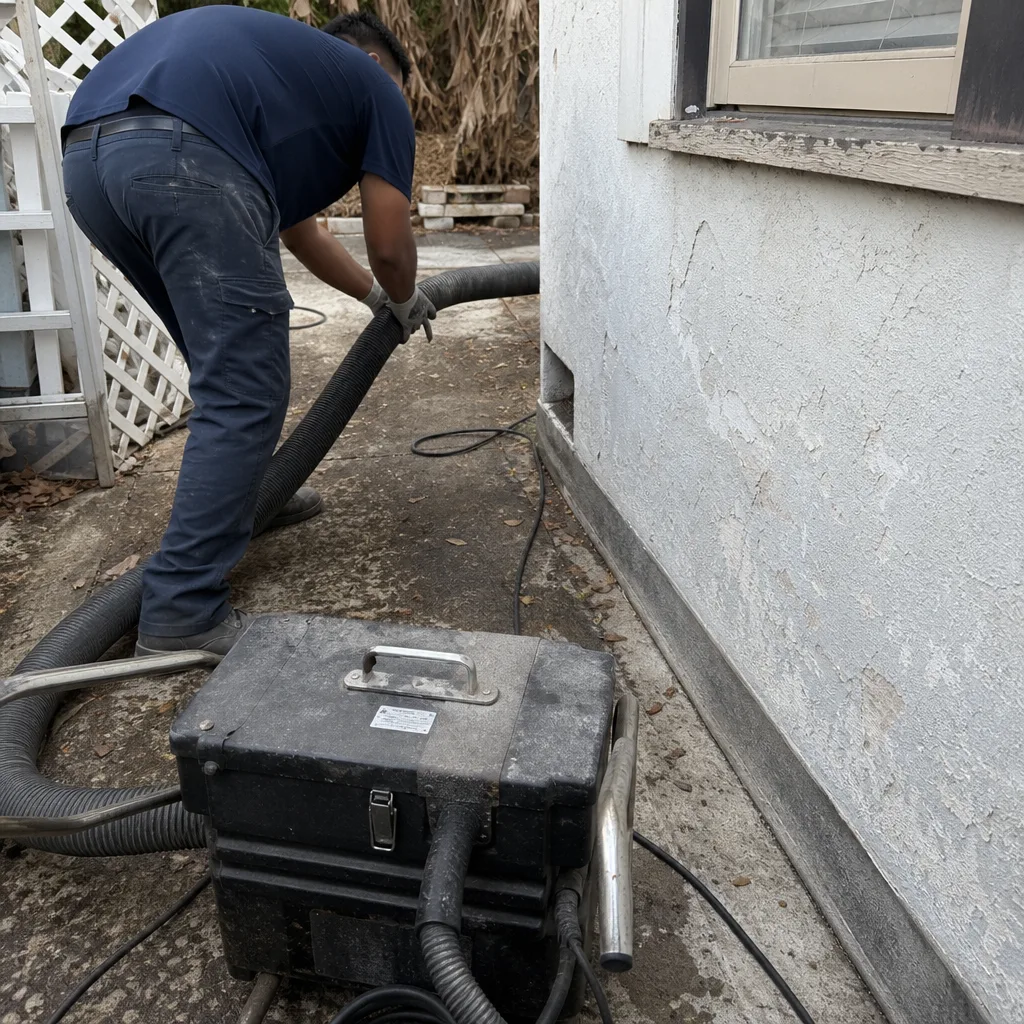
The most important brand name in any air duct cleaning job isn’t the company doing the work. It’s the vacuum system manufacturer, because that determines whether the machine pulling debris out of your duct system is a commercial-grade tool or a glorified shop vac with a company logo on it. In Santee, where dry inland air and Santa Ana winds push dust through homes year-round, the equipment question matters more than most homeowners realize. Our Complete Air Duct Cleaning Guide for Santee Homeowners will teach you how to evaluate air duct cleaning companies by the one thing that actually determines job quality: the machinery they bring to your driveway.
Styles & brands we work with
- Whole-home duct cleaning
- Dryer vent cleaning
- Camera inspection
- Sanitizing & deodorizing
Quick Answer
The right Air Duct Cleaning services brand for a Santee home is one backed by professional-grade equipment from manufacturers like Rotobrush, Nikro, Abatement Technologies, or Pullman-Holt, not consumer-grade substitutes. Specifically, you want a company running a truck-mounted or high-CFM portable HEPA-filtered collection unit paired with appropriate agitation tools, and a technician who can show you before-and-after camera footage of your actual ducts. Equipment brand is the single most reliable proxy for service quality in an industry where anyone can print a logo on a truck.
Table of Contents
- Why Equipment Brand Matters More Than Company Brand
- The Major Professional Equipment Brands, Explained
- Questions That Separate Specialists from Generalists
- Camera Inspection: The Verification You Should Demand
- Agitation Tools: Rotary Brushes vs. Skipper Balls
- What Equipment Investment Says About a Company
- What Santee Homeowners Should Know About Local Duct Conditions
- Common Mistakes to Avoid
- When to Call a Professional
- Frequently Asked Questions
Why Equipment Brand Matters More Than Company Brand
Here’s a truth most Santee homeowners never hear: the air duct cleaning industry has no meaningful barrier to entry. A person can buy a portable vacuum unit for under $2,000, print business cards, and be “in business” by Friday. No special license is required in California beyond a standard business registration. That means the company name on the truck tells you almost nothing. The equipment inside the truck tells you everything.
Professional duct cleaning depends on two things working together: suction power and agitation. Suction power, measured in cubic feet per minute of airflow, or CFM, determines whether debris actually leaves your duct system or just gets stirred around. Agitation tools, whether rotary brushes or compressed air systems, determine whether dirt stuck to duct walls releases in the first place. Consumer-grade equipment fails at one or both of these jobs. Professional equipment manufacturers like Rotobrush and Nikro design their systems specifically to deliver both. When a company invests in that equipment, they’re investing in the ability to actually do the job they’re charging you for.
We’ve walked into Santee homes where a previous cleaning left visible dust caked on duct walls six inches past the register. That’s not a cleaning. That’s a dust redistribution service. The difference was always the same: the previous operator ran underpowered equipment and couldn’t verify the work afterward. Equipment brand is the filter that separates companies capable of doing the job from companies hoping you won’t check.
For a deeper look at how professional equipment translates to cleaner air in your specific home, see our guide to Air Duct Cleaning in Santee.
The Major Professional Equipment Brands, Explained
If you’re going to ask about equipment, you should know what the names mean. These are the manufacturers whose machines show up on serious duct cleaning jobs, and each has a specific strength.
Rotobrush
Rotobrush is the most recognizable name in residential duct cleaning, and for good reason. Their systems combine a powerful vacuum with a rotating brush that spins on the end of a flexible shaft, scrubbing duct walls while simultaneously pulling loosened debris into the collection unit. The advantage is efficiency: one tool does both jobs at once. Rotobrush systems are commonly used in residential settings because they’re maneuverable enough for tight attic runs and flexible ductwork, yet powerful enough to remove years of accumulated dust, pet hair, and construction debris. A company running a late-model Rotobrush system is typically a duct-cleaning specialist, not a generalist HVAC shop adding duct cleaning as a side service.
Abatement Technologies
Abatement Technologies comes from the environmental remediation world. Their equipment is what you’d see on a mold abatement or lead dust containment job, because their HEPA filtration systems are built to standards that exceed what typical residential cleaning demands. A duct cleaning company that runs Abatement Technologies equipment signals containment-level seriousness. This matters if anyone in your Santee home has allergies, asthma, or respiratory sensitivity, because HEPA filtration on the collection unit means the dust pulled from your ducts isn’t being exhausted back into your living space.
Nikro
Nikro builds industrial-grade air duct cleaning and indoor air quality equipment used in commercial buildings, hospitals, and restoration projects. Their collection units are known for consistently high CFM output and durable construction that survives daily commercial use. When a residential company runs Nikro equipment, they’re running tools built for harder duty cycles than the average home job requires. That translates to predictable performance on Santee homes with heavily soiled ducts or long horizontal runs that challenge weaker machines.
Pullman-Holt
Pullman-Holt has been building industrial vacuums since before most duct cleaning companies existed. Their truck-mounted and portable HEPA units appear in both commercial maintenance and residential duct cleaning. The brand is less flashy than Rotobrush, but it’s respected in the restoration industry. A Pullman-Holt unit with genuine HEPA filtration is a legitimate professional tool, though you’ll want to confirm the specific model’s CFM rating, since their product line spans a range of capabilities.
Any of these brands, properly deployed, will outperform the unbranded or obscure equipment you’ll find on budget operators. The brand matters because these manufacturers stake their reputation on measurable performance: CFM output, filtration efficiency, and build quality that survives daily use.
Questions That Separate Specialists from Generalists
You don’t need to become an equipment expert to evaluate a duct cleaning company in Santee. You just need to ask the right questions and listen for specific answers. Here’s how to do it:
- Ask: “What is the CFM rating of your collection unit?” Professional truck-mounted and high-end portable units typically deliver 2,000-4,000 CFM or more at the point of contact. Underpowered portable units often fall below 1,000 CFM. If the person can’t answer this question immediately, they don’t know their own equipment, which tells you everything you need to know.
- Ask: “Is your vacuum HEPA-filtered?” Genuine HEPA filtration captures 99.97% of particles at 0.3 microns. This matters because a non-HEPA unit can exhaust fine dust right back into your home during cleaning. Companies using Abatement Technologies or high-end Rotobrush or Nikro systems will answer yes without hesitation.
- Ask: “Do you use a camera inspection before and after?” The correct answer is yes, with a dedicated duct inspection camera like a Ridgid SeeSnake or FLIR unit. If they say they don’t need one, or they’ll “show you the debris,” that’s a red flag. You can’t verify what you can’t see.
- Ask: “What agitation method do you use, and is it appropriate for my duct type?” A specialist will ask about your home’s age and duct material before recommending an approach. A generalist will apply whatever they have, whether or not it’s appropriate.
- Ask: “Do you do air duct repair as well as cleaning?” This question reveals whether the company can address what the camera might find. Companies that only clean will sometimes avoid looking too closely, because if they find damage, they can’t fix it. A company that offers both can afford to be honest with you. Our Air Duct Repair in Santee service exists for exactly that reason.
When you ask these questions, pay attention to how the person answers. A specialist who runs professional equipment will answer with specifics. A generalist will answer with vagueness: “Oh, our equipment is really powerful” or “We’ve been doing this for years.” Specificity is the tell.
Camera Inspection: The Verification You Should Demand
The single biggest difference between a verified clean and a verbal assurance is a camera pushed through your actual ductwork before and after the job. This is not a luxury add-on. It’s the only way to know the work was actually done.
The equipment tier matters here too. Professional duct inspection cameras, like the Ridgid SeeSnake series or FLIR inspection cameras, are push-fed units mounted on semi-rigid cables that can navigate bends and drops in residential duct systems. They deliver clear footage of duct walls, connections, and interior surfaces. Consumer-grade inspection cameras, the kind you might buy at a hardware store, have limited reach and poor low-light performance, which makes them mostly useless for verifying work in a 20-foot duct run.
Here’s what a proper before-and-after process looks like: Before cleaning begins, the technician runs the camera through representative sections of your supply and return ducts, showing you the actual buildup. This isn’t a scare tactic. It’s establishing baseline reality. After cleaning, the same sections are re-shot. You should be able to see clean metal or clean flex duct interior, not a thin film of dust left behind.
If a company doesn’t offer camera verification, or says it’s an extra charge, that should give you pause. The equipment exists, it’s not prohibitively expensive, and every serious operator uses it. Companies that skip this step are betting you won’t ask. In Santee, where construction from the 1970s and 1980s means decades of accumulated dust in many homes, verification isn’t optional. It’s the proof that you got what you paid for.
Agitation Tools: Rotary Brushes vs. Skipper Balls
Suction alone doesn’t clean ducts. Dust, pet hair, and debris bond to duct surfaces over time, and they need mechanical agitation to break loose before the vacuum can remove them. Two agitation methods dominate professional residential duct cleaning, and each has appropriate applications.
Rotary Brush Systems
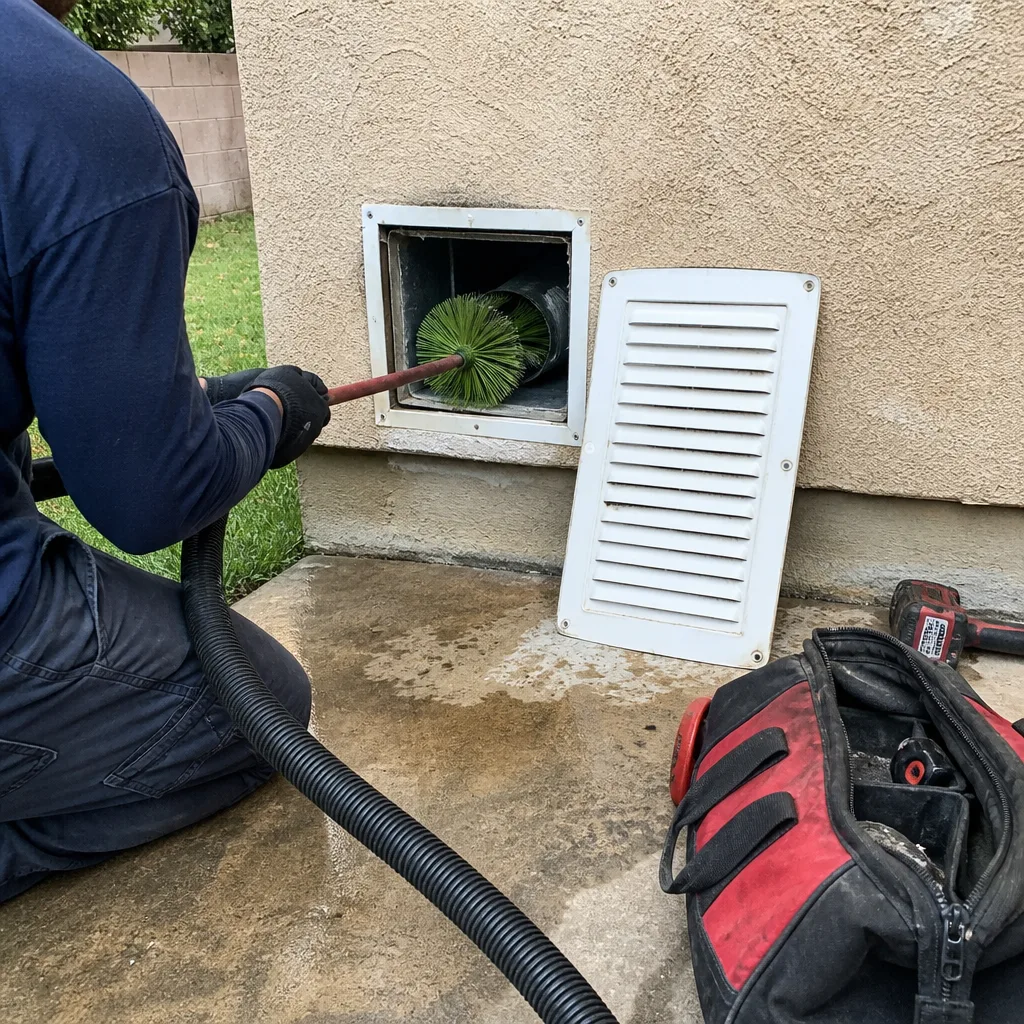
Rotary brush systems, like those integrated into Rotobrush units or deployed as standalone pneumatic tools, use a spinning brush head traveling through the duct. The brush physically scrubs the interior surface, loosening adhered debris while the vacuum simultaneously removes it. This method is highly effective on sheet metal ducts, which are common in older Santee homes built before flex duct became standard in the 1980s and 1990s. Sheet metal can handle direct brush contact without damage, and the mechanical scrubbing removes years of baked-on dust.
Compressed Air Skipper Balls
Skipper balls, also called whip systems or air whips, use compressed air to propel a flexible agitator through the duct on a hose. The rapid air pulses vibrate the duct walls, dislodging debris without direct mechanical contact. This method is better suited for aging flex duct or ducts with questionable integrity, where a rotary brush could potentially tear material that’s already degraded. The tradeoff is that air agitation is generally less aggressive than direct brushing, so heavily soiled systems may require more passes.
The key is matching the method to the ductwork. A technician who insists on rotary brushing through fragile 30-year-old flex duct is creating a repair problem. A technician who uses skipper balls on heavily caked sheet metal is leaving debris behind. A specialist evaluates the system first, then chooses the tool. That’s the level of thoughtfulness you’re paying for, and it’s part of what the Duct Cleaning Santee home service approach is built around.
What Equipment Investment Says About a Company
Here’s a number that reframes the entire duct cleaning market: a proper truck-mounted commercial duct cleaning system costs between $15,000 and $40,000 to buy and install. A portable consumer-grade vacuum setup can be had for $1,500 to $4,000. That gap isn’t about profit margin. It’s about capability.
A company that invests $25,000 in a HEPA-filtered collection unit is making a statement about their commitment to the work. They’re not dabbling in duct cleaning. They’re building a business around it. They can’t afford to do bad work, because their equipment investment requires repeat customers, referrals, and a reputation that justifies their pricing. A company running a $2,000 portable rig has almost no sunk cost, which means they can walk away from bad reviews, change their business name, and re-enter the market with minimal consequence.
This is why equipment brand functions as a signaling mechanism. A Rotobrush or Nikro system sitting in your driveway represents tens of thousands of dollars in professional equipment, maintained and operated by someone trained to use it. That’s what you’re actually paying for when you hire a duct cleaning professional. Not the time the technician spends in your attic, but the accumulated investment that makes that time productive.
It also signals specialization. Companies that run professional duct cleaning equipment are typically duct-focused businesses. They don’t split their attention between HVAC installation, plumbing, and a dozen other trades. Their technicians train on one thing and their tools serve one purpose. That’s the Air Duct Cleaning in Santee model, and it’s why equipment-serious operators consistently deliver better results than generalist shops.
What Santee Homeowners Should Know About Local Duct Conditions
Santee’s specific climate and housing stock create predictable duct conditions that affect equipment choices. Understanding these local factors helps you evaluate whether a company’s approach fits your actual home.
First, Santee’s inland location means dry air and frequent wind events. The Santa Ana winds push fine particulate through the region, and homes east of Magnolia Avenue and up toward the hills see more of it. This dust is extremely fine, which means it penetrates duct systems through small gaps and settles in layers. Fine dust responds well to high-CFM suction paired with HEPA filtration, because you need both the airflow to lift it and the filtration to contain it. Underpowered systems leave this dust in place, and it recirculates as soon as your HVAC blower kicks on.
Second, much of Santee’s housing stock dates from the 1970s through the 1990s, which means a mix of original sheet metal ducts and flex duct that’s now 30 to 50 years old. That aging flex duct is a specific concern. It’s often brittle, occasionally disconnected at seams, and sometimes torn. Aggressive rotary brushing through compromised flex duct causes damage. A company that understands Santee homes will assess duct condition before choosing agitation methods, and will have repair capability if the camera finds structural issues during inspection.
Third, the same dry conditions that create dust also create static. Fine particles cling to duct surfaces through static adhesion, which is why agitation matters so much in this market. Suction-only cleaning simply doesn’t work well here. You need the mechanical release that rotary brushes or air agitation provides.
Finally, Santee’s proximity to open space and its network of trails means homes pick up both household dust and outdoor particulate. Pet owners in particular should note that the combination of pet dander and fine desert dust creates a dense, matted layer inside ducts that requires professional-grade agitation to remove. If you’re also dealing with dryer exhaust concerns, our Dryer Vent Cleaning in Santee service addresses the related fire-safety risk that accumulates in a different part of your ventilation system.
Common Mistakes to Avoid
- Choosing based on price alone. The $99 whole-house duct cleaning special exists in every market, including Santee. It’s nearly always a bait-and-switch where the technician arrives with underpowered equipment and discovers “additional contamination” requiring expensive add-ons. Professional equipment and honest pricing don’t support $99 duct cleanings.
- Not asking about filtration. A vacuum without HEPA filtration pulls dust from your ducts and exhausts the finest particles back into your living space. In Santee, where fine particulate is already elevated by wind events, this makes indoor air worse, not better.
- Skipping camera verification. If you don’t see inside your ducts before and after, you’re taking the technician’s word for it. Insist on camera footage. Any company running professional equipment will have inspection cameras as standard gear.
- Hiring a generalist for a specialist’s job. HVAC contractors install furnaces. Plumbers fix pipes. Duct cleaning is its own trade with its own equipment. A company that does everything probably doesn’t do ducts especially well.
- Ignoring duct damage found during inspection. A clean duct with a gaping tear is still leaking conditioned air and pulling attic dust. If the camera finds damage, address it. Companies that offer repair alongside cleaning can handle this in a single appointment.
- Waiting until ducts are visibly dirty. By the time you see dust blowing from registers or dark staining around vent covers, the buildup inside the system is already significant. Annual or biannual cleaning based on household factors, not visual cues, keeps systems healthy.
When to Call a Professional
Some signals indicate your Santee home needs professional attention sooner rather than later. If you see visible dust accumulation on vent covers or dust blowing from registers when the system starts, the duct interior is already coated. If household members experience allergy symptoms that worsen when the HVAC runs, duct contamination is a likely contributor. If your energy bills have crept upward without an obvious cause, restricted airflow from duct buildup could be restricting your system’s efficiency. If you’ve completed remodeling or construction work, drywall dust and debris have entered the duct system and need professional removal. And if you smell musty odors from vents, that’s a sign of contamination that requires more than surface cleaning. Duct Cleaning Santee offers free estimates in Santee. Call (833) 542-0752 to schedule an assessment and get a straight answer about what your ducts actually need.
Frequently Asked Questions
Professional air duct cleaning in Santee typically ranges from $350 to $700 for a whole-home system, depending on home size, number of systems, duct configuration, and the level of contamination. Companies running professional equipment and offering camera verification generally fall in this range. Quotes significantly below $300 should raise questions about equipment quality and what the job actually includes. Call (833) 542-0752 for an exact quote based on your home.
Cheaper duct cleaning quotes almost always reflect cheaper equipment and less thorough process. An operator running a $2,000 portable unit can afford to charge less than a specialist running a $25,000 HEPA-filtered system with camera verification included. The cheaper quote isn’t the same job at a better price. It’s a different job entirely, with less suction power, potentially no HEPA filtration, and no proof the work was done.
You should see it. Request before-and-after camera footage of your actual duct interior, shot with professional inspection equipment during the appointment. Duct walls that were coated with gray dust should appear clean afterward. If a company can’t or won’t provide this verification, that’s a signal to hire someone who will.
Most Santee homes benefit from professional duct cleaning every 2 to 4 years, more frequently if the household includes pets, smokers, or residents with allergies or respiratory conditions. Homes near open space or construction areas may need more frequent cleaning due to elevated fine particulate from wind and dust. A camera inspection can tell you definitively whether your system is due.
Yes, when the agitation method matches the duct material. Aging flex duct responds better to compressed air agitation like skipper balls than to aggressive rotary brushing, which can tear brittle material. A qualified technician will assess your duct type and condition before choosing an approach. This is one more reason to work with a specialist who understands the different tool options.
Duct cleaning can meaningfully reduce the recirculation of accumulated dust, pollen, pet dander, and other allergens through your HVAC system. In Santee, where dry conditions and wind events keep fine particulate in constant circulation, removing the interior duct buildup eliminates a reservoir of allergens that gets redistributed every time the blower runs. Pairing clean ducts with HEPA filtration on your HVAC system compounds the benefit.
The Bottom Line
The company you hire matters less than the equipment they bring. Santee homeowners who ask about CFM ratings, HEPA filtration, agitation methods, and camera verification will consistently find better service than those who shop on price alone. The brands worth knowing, Rotobrush, Abatement Technologies, Nikro, and Pullman-Holt, represent professional-grade performance you can verify by asking the right questions. For more guides & resources on maintaining your home’s air quality, explore our blog. Your ducts are the lungs of your home. What your family breathes depends on how well they’re maintained. Choose a specialist who brings serious equipment, verifies their work with cameras, and can address duct damage if they find it. That’s what separates a real cleaning from a dust redistribution service.
Written by the team at Duct Cleaning Santee, serving Santee since 2017.
See the difference
 Before
 After
 Before
 After
 Before
 After