
Last updated November 2, 2026
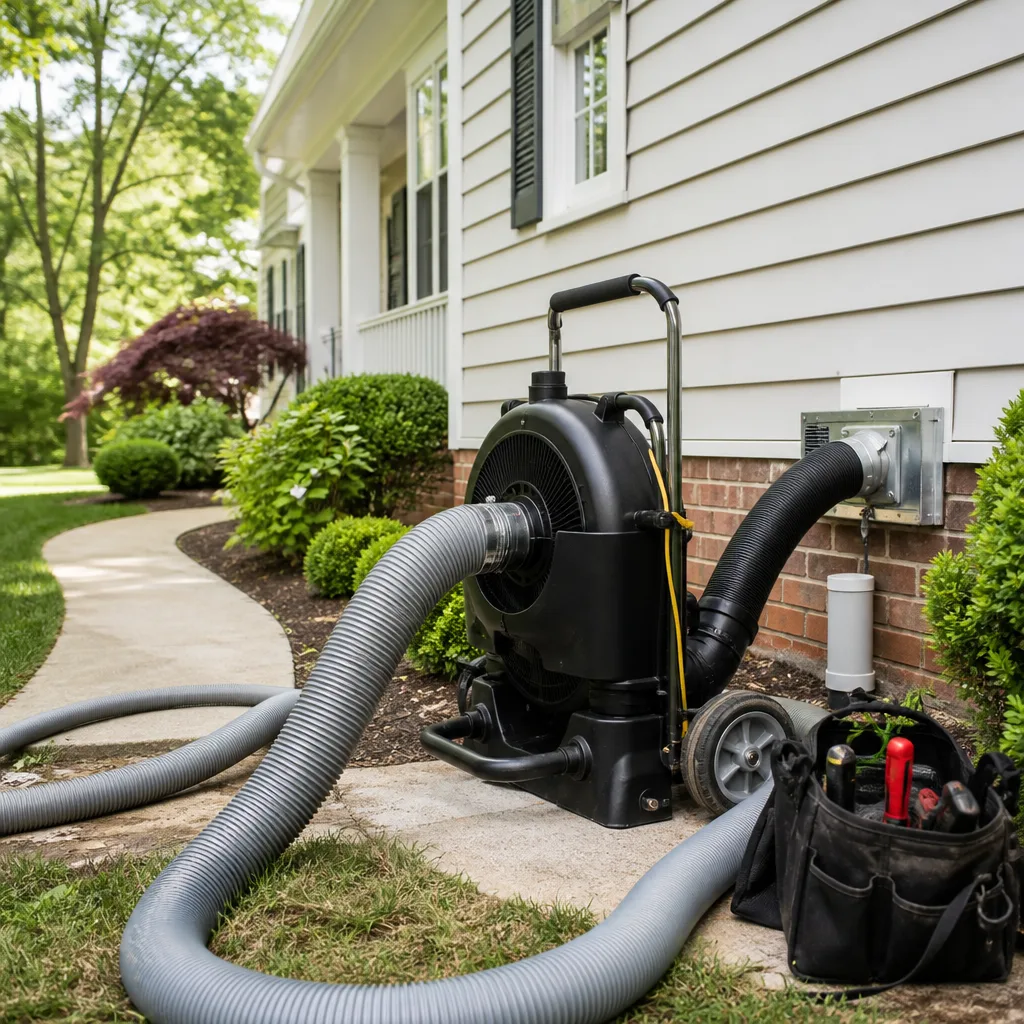 Whole-home duct cleaning
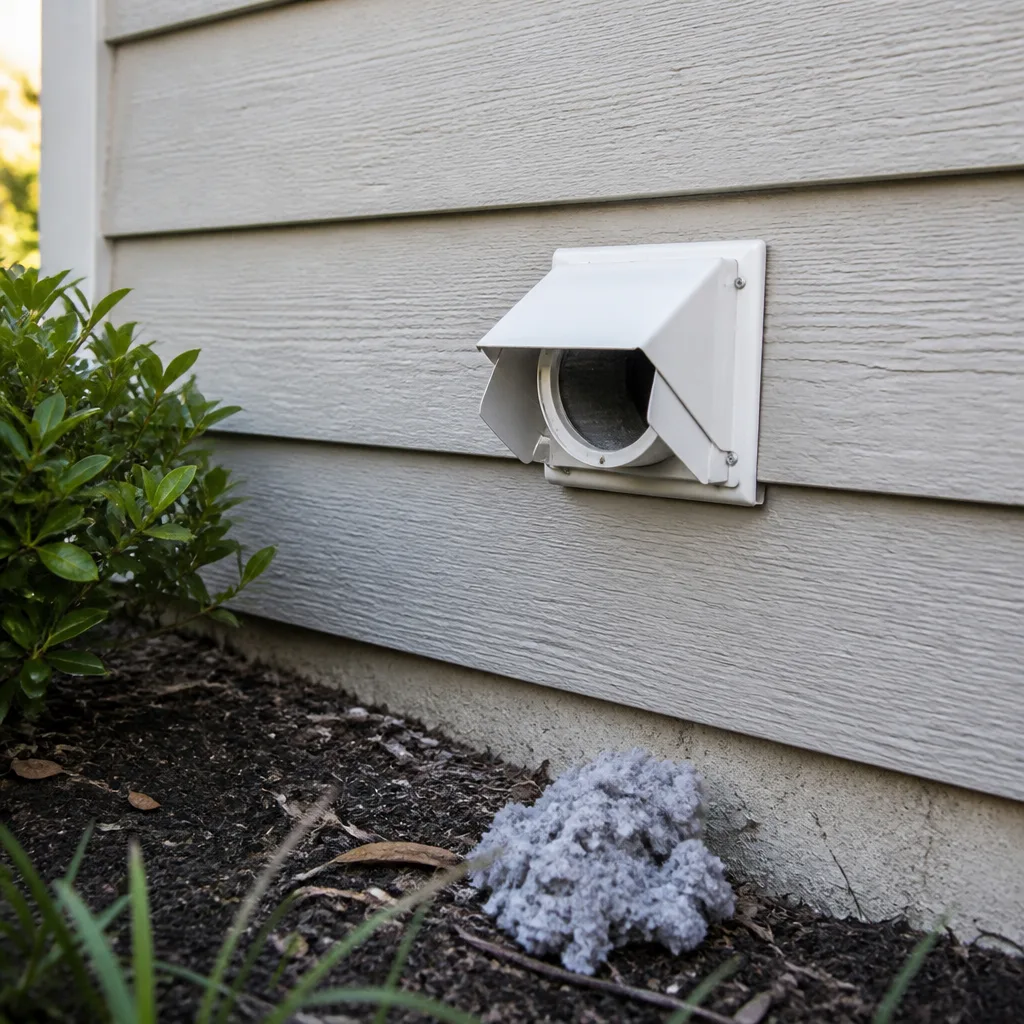 Dryer vent cleaning
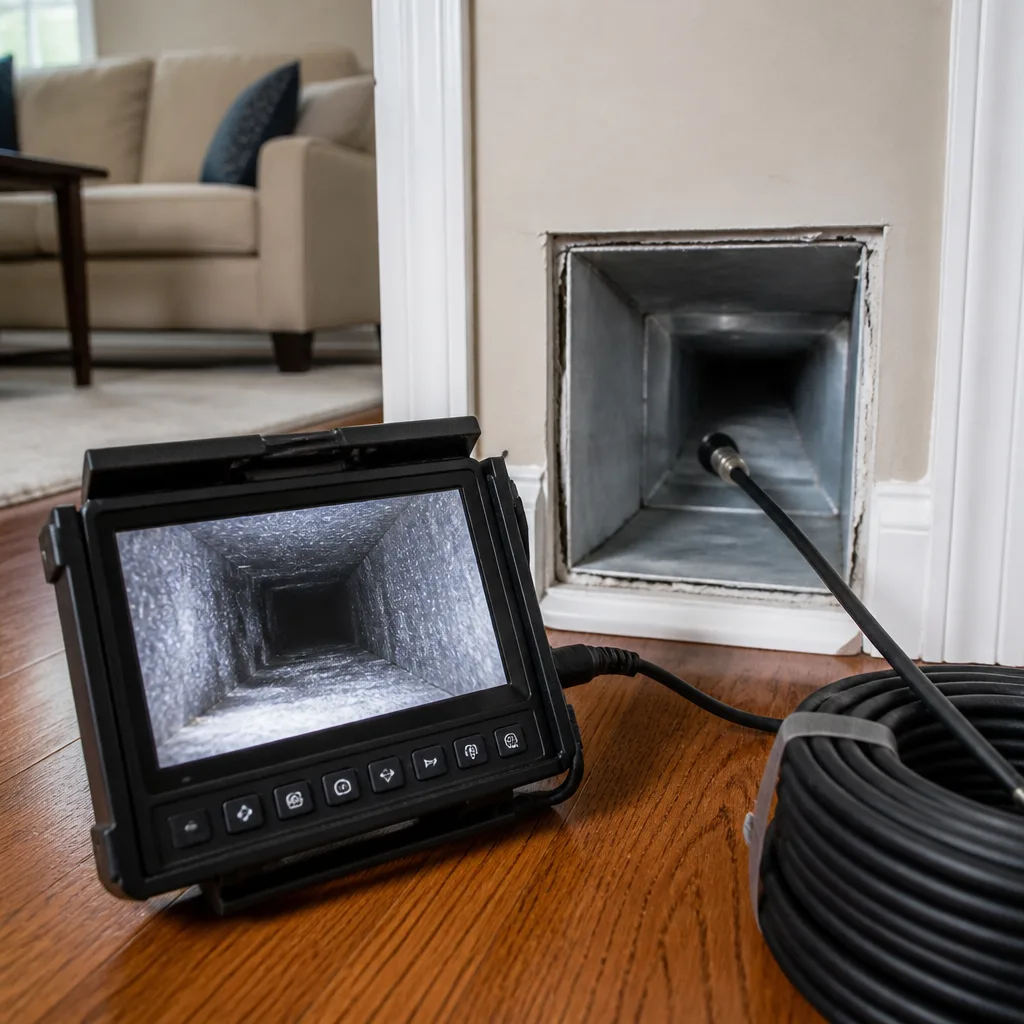 Camera inspection
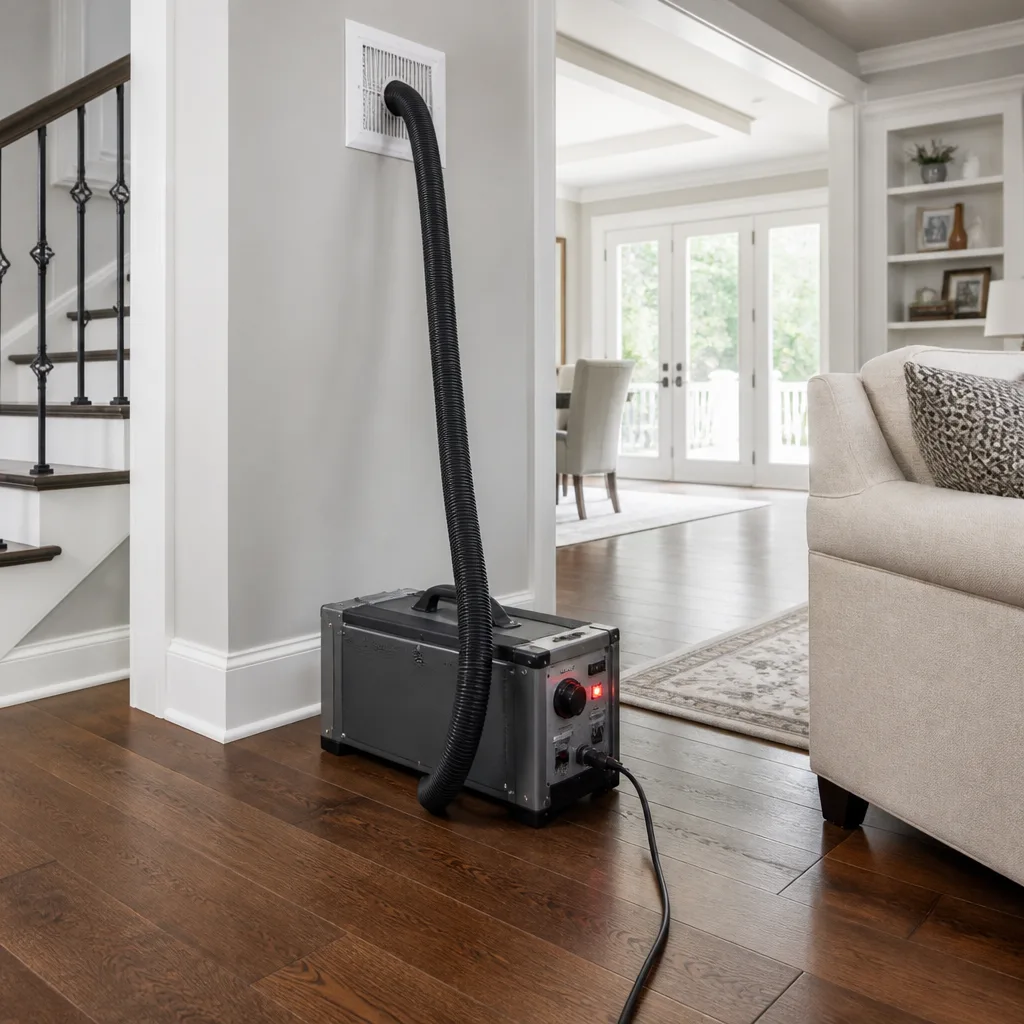 Sanitizing & deodorizing
Whole-system duct and dryer vent check with before-and-after photos - you see exactly what came out of your vents
That "$99 whole-house special" is a bait ad - the real number appears once they are in your hallway, or the "clean" is a shop-vac at the register. We photograph the inside of your ducts before and after instead.
DIY vs Professional Air Duct Cleaning: The Santee Homeowner’s Decision Guide
A standard shop vac generates roughly 100 to 150 cubic feet per minute of suction. A professional duct cleaning system generates 4,000 to 10,000 CFM. That difference isn’t brand preference. It’s the threshold at which compacted debris actually breaks free from a duct trunk and gets evacuated from your home rather than simply stirred around inside it. This guide explains where that line sits for Santee homes, what you can legitimately handle yourself, and which jobs require Air Duct Cleaning equipment that most homeowners will never own.
Quick Answer
DIY duct maintenance works for accessible surfaces: return grilles, register covers, and filter swaps. But actual trunk line cleaning requires airflow velocity between 4,000 and 10,000 CFM that only professional truck-mounted or high-output portable systems generate. In Santee homes, where fine dust from the hills and occasional wildfire ash settle deep in duct runs, we recommend a hybrid approach: do the simple surface maintenance yourself, and leave the trunk lines to equipment built for that specific job.
Styles & brands we work with
- Whole-home duct cleaning
- Dryer vent cleaning
- Camera inspection
- Sanitizing & deodorizing
Table of Contents
- The Physics Problem: Why CFM Dictates the Entire Debate
- What DIY Can Realistically Accomplish
- What Professional Equipment Actually Does Differently
- The Hidden Risk of Partial DIY Cleaning
- Santee-Specific Limit Cases Where DIY Cannot Work
- A Hybrid Approach: Extending the Interval Between Professional Cleanings
- Common Mistakes to Avoid
- When to Call a Professional
The Physics Problem: Why CFM Dictates the Entire Debate
Duct cleaning is not a matter of scrubbing. It’s a matter of transport. Debris inside a duct system sits in two forms: loose particulate resting on the bottom of trunk lines, and adhered material caked onto duct walls from years of moisture, static cling, and compaction. To remove either, you need air moving fast enough to overcome the static friction holding the material in place. That threshold, for most residential duct debris, sits somewhere above 2,500 CFM. A shop vac tops out around 150 CFM. A consumer-grade leaf blower might push 400 CFM at the nozzle, but it doesn’t create sustained negative pressure through a sealed duct run.
What this means in practical terms: when a homeowner inserts a shop vac hose into a duct register, the vacuum can only influence air within a few inches of the hose opening. The rest of the trunk line remains untouched. Any debris beyond that immediate reach stays exactly where it was. The homeowner may pull some visible material from the first foot of duct, conclude the job worked, and never know that 90 percent of the system’s internal surface area wasn’t affected at all.
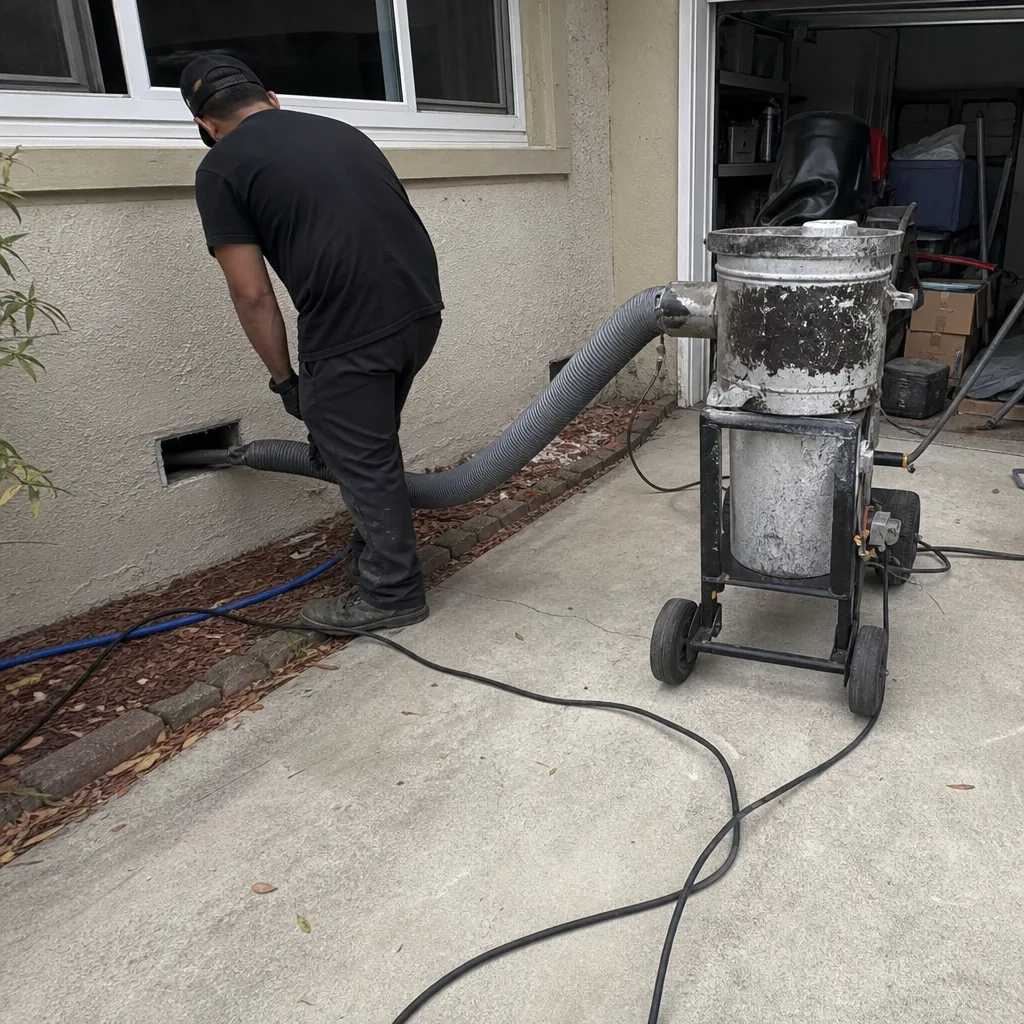
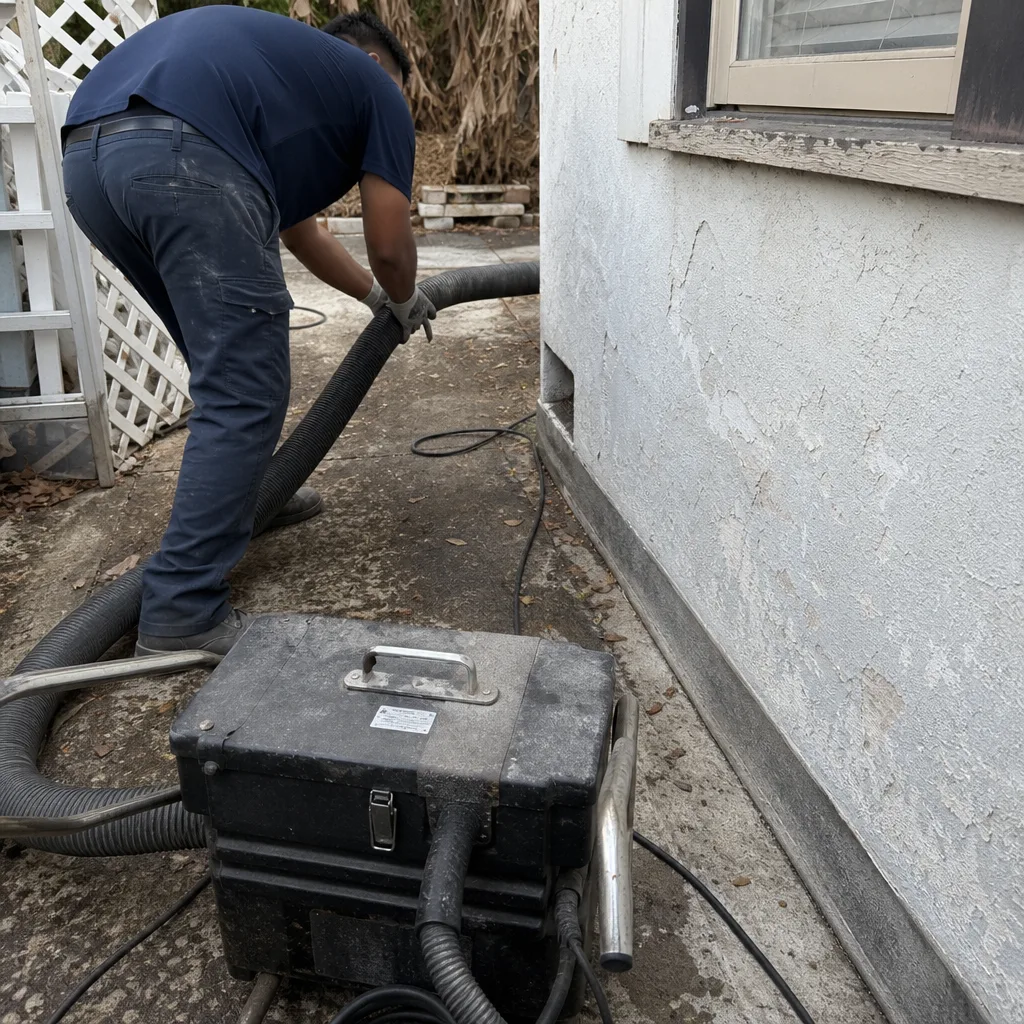
Professional systems solve this with sealed negative-air machines. Equipment brands like Rotobrush and Nikro build systems designed to connect to the duct network itself, pulling air through the entire trunk line at high velocity while agitation tools dislodge adhered material. The system doesn’t reach into the duct. It moves the entire air column inside the duct. That’s a distinction with physical consequences.
In Santee, this matters more than in coastal San Diego neighborhoods. Our air carries fine particulate from the foothills, especially during Santa Ana winds and after fire season. That particulate is lighter than household dust but tends to pack more densely when combined with normal indoor humidity. It settles into trunk lines, coats the walls, and resists low-velocity attempts at removal. Homes that have gone five or more years without a professional air duct cleaning in Santee often show visible gray film inside the ducts on camera inspection, a film that no consumer tool can dislodge.
What DIY Can Realistically Accomplish
The honest answer: more than nothing, less than most YouTube videos claim. Homeowners can meaningfully reduce the dust load entering their system and remove surface debris from accessible points. Those tasks have real value between professional cleanings. But they are maintenance, not cleaning. Understanding the difference prevents both wasted effort and false confidence.
Here are the DIY tasks worth doing, with what they actually achieve:
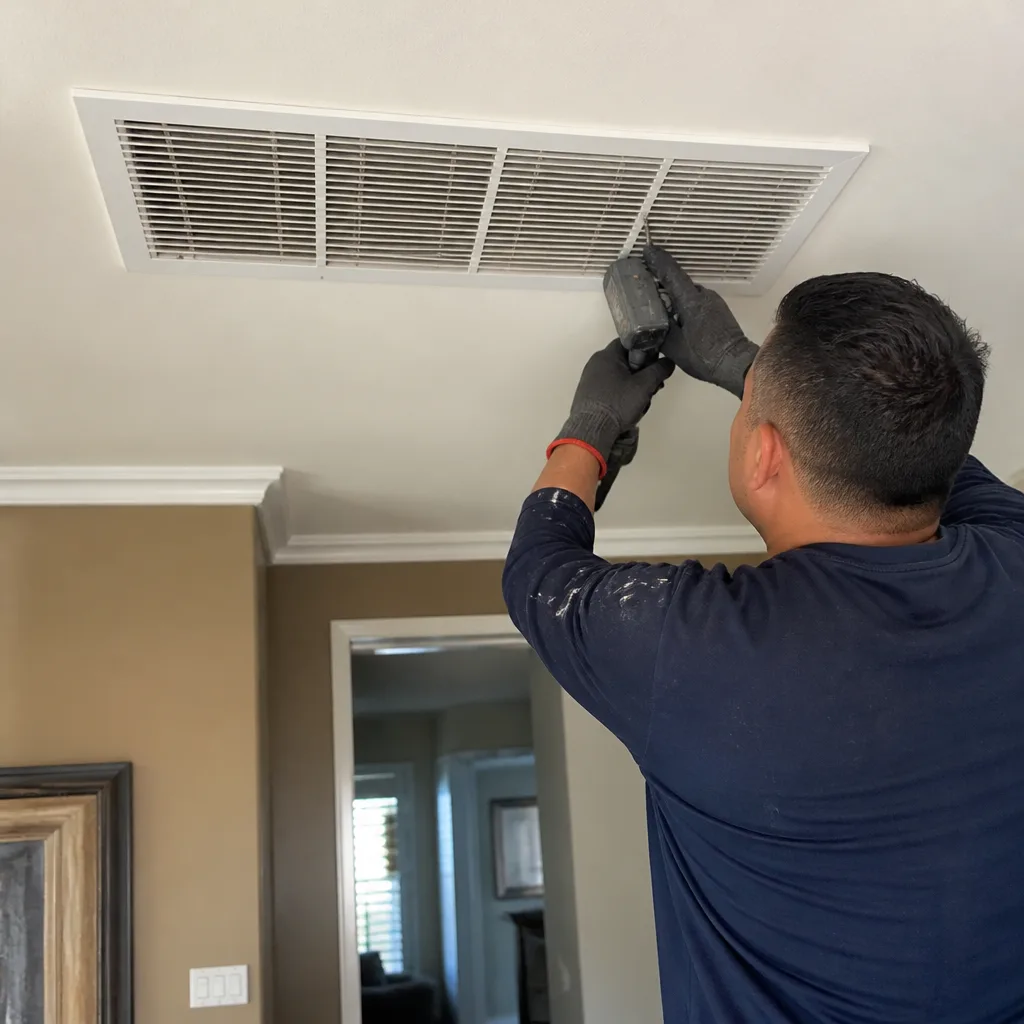
- Register and grille vacuuming (monthly): Remove cover plates from supply registers and return grilles. Vacuum the visible duct opening as far as your hose reaches. Wipe the covers down before reinstalling. This removes loose surface dust that would otherwise recirculate into rooms. Realistic impact: modest reduction in visible dust on furniture, especially in rooms closest to returns.
- Return filter replacement (every 60 to 90 days, or monthly during fire season): This is the single most impactful DIY task for system health. A clean filter protects the system and the blower motor. A clogged filter increases static pressure and reduces airflow through every register in the house. Use a MERV 8 or MERV 11 filter for most Santee homes; MERV 13 helps during smoke events but adds airflow resistance.
- Supply register wipe-down (quarterly): Supply registers accumulate dust on the louvers from air movement. Wiping them prevents that material from re-entering the airstream. This takes five minutes per room and requires no tools beyond a damp cloth.
- Return grille deep clean (twice a year): The return grille sees the highest particulate volume of any single component. Dust, pet hair, and skin cells collect on the grille face and just inside the cavity. A small brush attachment on a household vacuum removes visible buildup. On older Santee homes with single large central returns, this task matters more because the entire home’s airflow passes through one opening.
What these tasks do not do: clean trunk lines, remove debris from plenum boxes, address microbial growth, or shift compacted material anywhere in the system. They control what enters the ductwork. They don’t address what’s already inside it.
What Professional Equipment Actually Does Differently
Professional duct cleaning differs from DIY in four specific ways, and each one is rooted in equipment capability rather than technique. A conscientious homeowner with a shop vac and a good brush is not lazy or uninformed. They are under-equipped, because the tools that make duct cleaning effective are not sold at hardware stores.
1. Air volume that moves the entire air column. Truck-mounted systems and the larger portable units used by Duct Cleaning Santee generate 4,000 to 10,000 CFM. That’s enough to create sustained airflow through a full duct trunk, not just turbulence near an access hole. The air itself becomes the scrubbing mechanism, carrying loosened debris to a collection point outside the home.
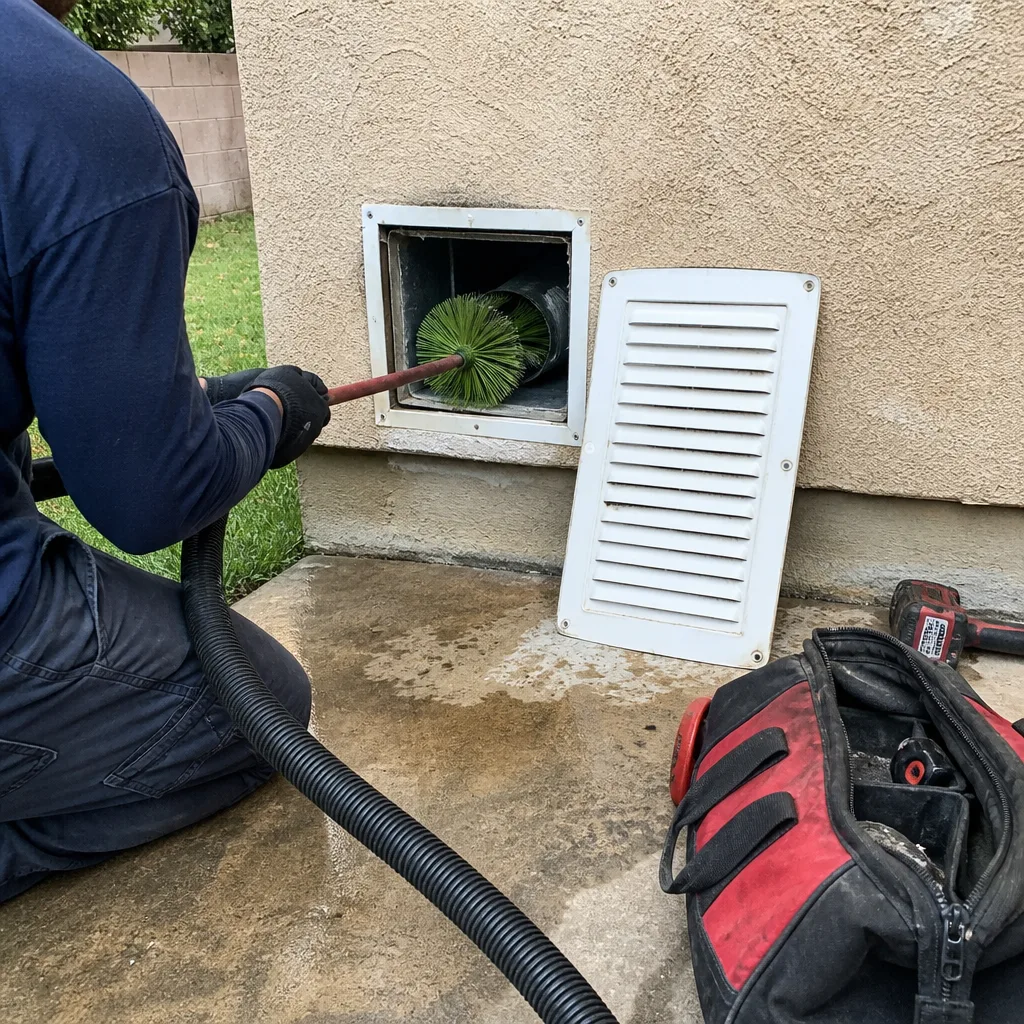
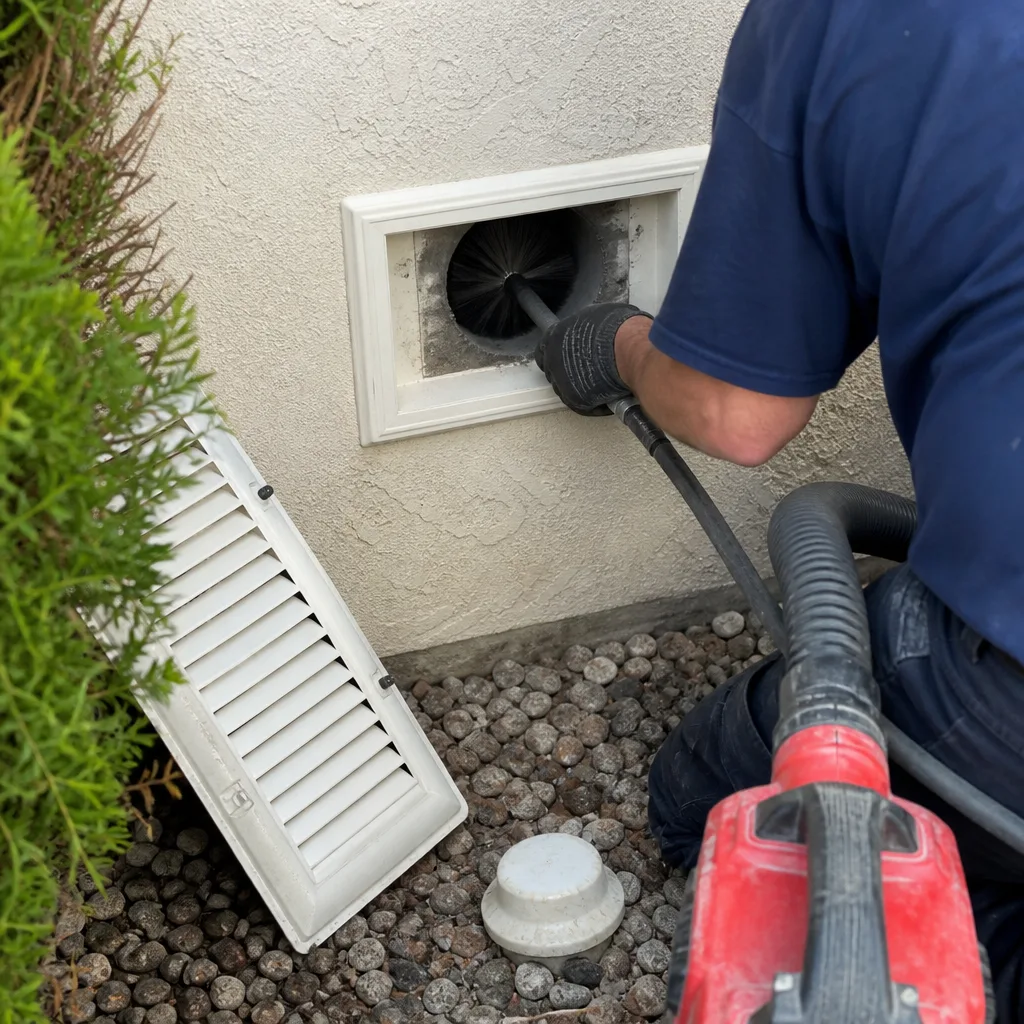
2. Mechanical agitation paired with containment. A rotating brush or air whip striking the duct walls dislodges the film and compacted debris that vacuuming alone cannot move. But agitation without sufficient concurrent airflow simply resuspends that debris into the living space. Professional systems agitate only inside a sealed, negatively pressurized duct environment, so dislodged material has one path: out of the system.
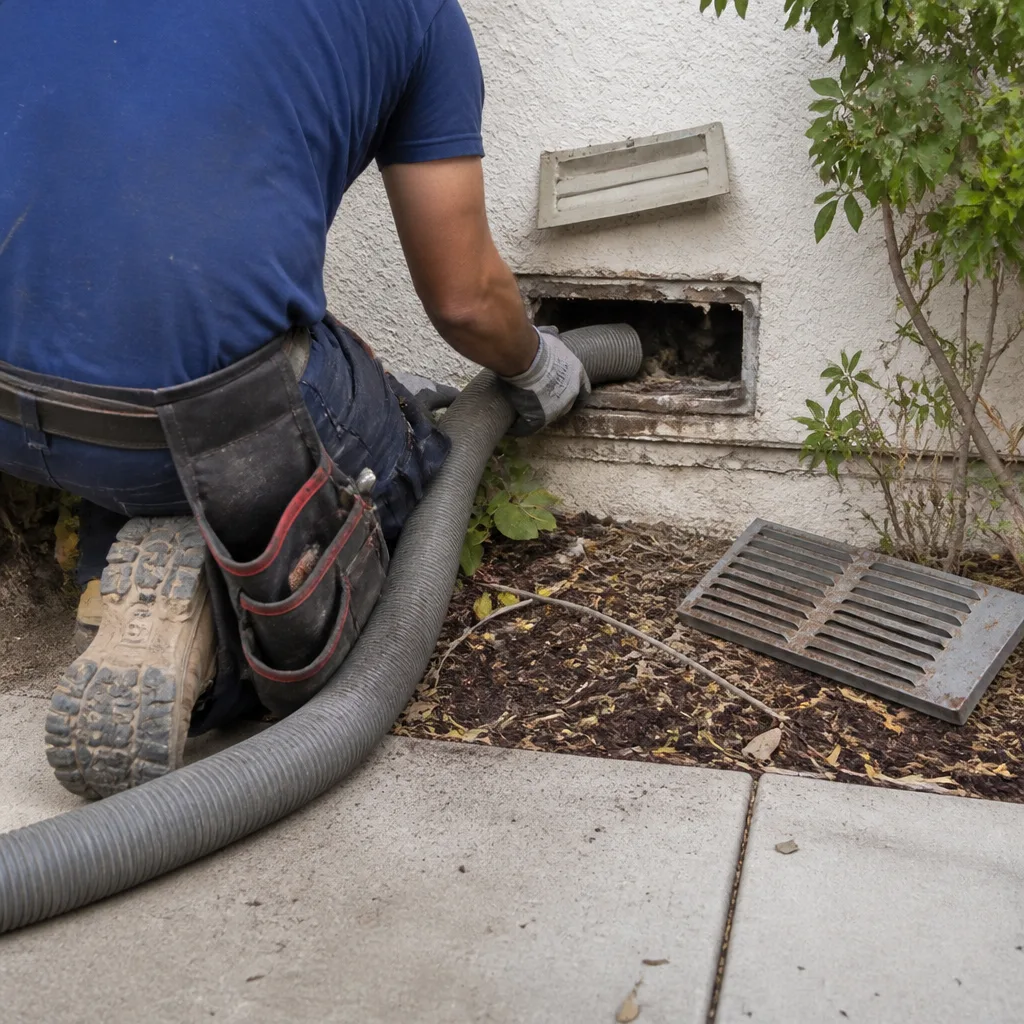
3. Access points beyond register openings. Professional cleaning typically involves cutting or opening access ports in the trunk line near the plenum and at strategic points along long runs. This allows tools to reach the full length of the duct, including the plenum box itself, where homeowner tools can’t reach at all. Camera inspection then verifies the result rather than assuming it.
4. Verification through visual evidence. No reputable pro cleans a duct system blind. Before-and-after camera footage shows what the duct looked like and what it looks like after. This is the difference between someone claiming the job was done and you knowing it was done. It also identifies structural problems inside the duct that cleaning alone won’t fix: separated joints, crushed flex runs, inner liner collapse, and pest intrusion. Duct Cleaning Santee equipment includes Abatement Technologies systems, a brand built for containment-level work in remediation settings, not residential shortcuts.
We’ve found that approximately 2 out of every 10 Santee homes we inspect have a structural duct issue that no amount of cleaning will resolve. The cleaning reveals it. The repair then fixes it. For that reason alone, the professional process carries value beyond the cleaning itself. You can learn more about air duct repair in Santee when inspection turns up damage.
The Hidden Risk of Partial DIY Cleaning
There’s a failure mode in DIY duct work that gets almost no attention in online discussions, and it’s one we encounter regularly in Santee homes. It goes like this: a homeowner runs a shop vac hose into a duct, dislodges a layer of loose surface dust, but lacks the airflow to actually capture and remove that dust. The vacuum pulls some of it. The rest becomes airborne inside the duct cavity, then settles deeper into the system or re-enters living spaces through nearby registers.
The result is worse than doing nothing. The homeowner has taken dust that was resting in a stable, low-impact location and redistributed it into areas of higher circulation. They’ve converted settled debris into breathable particulate. And they’ve given themselves false confidence: “I cleaned the ducts, so that dust problem must be something else.”
This problem compounds when homeowners attempt to use improvised agitation tools: a leaf blower pointed into a register, a long flexible rod with a brush on the end, a dryer vent cleaning kit pushed into a duct line. All of these dislodge material. None of them capture it effectively. The physics are unforgiving: you cannot agitate faster than you evacuate and call that cleaning.
For this reason, we tell Santee homeowners the following, plainly: if your duct cleaning tool of choice is a shop vac, restrict your work to the register and grille faces only. Do not insert hoses, rods, or blowers into the duct runs themselves. The first inch is maintenance. Beyond that, you’re performing an uncontrolled experiment on the air your family breathes.
Santee-Specific Limit Cases Where DIY Cannot Work
Certain conditions in Santee homes make DIY approaches not just ineffective but actively counterproductive. These aren’t hypothetical edge cases. We see them in specific homes throughout the city, from the older ranch-style houses off Mission Gorge Road to the newer developments near Mast Boulevard and Sky Ranch.
- Wildfire ash in the return air pathway. After a fire season with heavy smoke settling into Santee, return ducts and filter cabinets show fine gray ash. This material is extremely fine, easily resuspended, and irritating to airways even in small concentrations. Attempting to vacuum it with household equipment pushes it back into the home. Only sealed, negative-pressure extraction removes it safely.
- Collapsed flex duct inner liner. Many Santee homes use flexible insulated duct for branch runs, especially in attic spaces. When the inner plastic liner separates from the insulation and collapses inward, it blocks airflow and traps debris. No amount of suction fixes this. The duct section must be replaced. A camera inspection makes this visible; without one, the homeowner chases airflow problems that cleaning can’t solve.
- Systems not cleaned in 10+ years. Compacted debris in a duct that hasn’t seen professional equipment in a decade has the consistency of felt. It adheres to the duct walls and requires both mechanical agitation and high-CFM extraction to remove. A shop vac hose touching this material does essentially nothing, like trying to remove a carpet stain by tapping it with a damp sponge.
- Rodent or pest intrusion in the ducts. If evidence of pest activity exists, including droppings or nesting material, the situation is a sanitation hazard, not a cleaning project. Protective practices, containment, and post-removal sanitization fall outside DIY scope entirely.
In each of these cases, calling a professional isn’t a matter of preference or convenience. It’s the difference between a functional outcome and an expensive failure. For homeowners facing these conditions, dryer vent cleaning in Santee often surfaces adjacent issues, since dryer exhaust ducts in the same attics frequently show the same neglect.
A Hybrid Approach: Extending the Interval Between Professional Cleanings
The most honest guidance we give Santee homeowners is not “never DIY” or “always hire a pro.” It’s a sequencing recommendation. Professional cleaning establishes a known-clean baseline. DIY maintenance then extends the useful life of that cleaning by reducing the rate at which new debris enters the system. For deeper insight, see our Seasonal Air Duct Cleaning Care for Santee: Year-Round Homeowner’s Guide.
Here’s what that sequence looks like in practice:
- Step one: professional cleaning with camera documentation. Get the system actually clean, and verify it with before-and-after footage. This also surfaces any structural issues that need repair, which you can address in the same service window.
- Step two: establish a filter discipline. Choose a filter grade appropriate for your household, set a replacement cadence, and stick to it. For Santee homes, we suggest checking the filter monthly during wildfire season regardless of stated filter life. Dirty air coming into the system accelerates everything downstream.
- Step three: monthly surface maintenance. Vacuum registers and return grilles. Wipe supply louvers. This takes ten to fifteen minutes and keeps loose debris from entering circulation.
- Step four: annual professional assessment. Every 12 to 24 months depending on household factors like pets, occupants, and proximity to open space, have the system re-inspected. Some homes go five years between cleanings without issue. Others, especially those with dogs, kids, and older duct systems, need attention every two to three years. The inspection tells you which category you fall into.
This sequence respects both physics and economics. The professional cleaning happens when it’s needed, not on a fixed schedule driven by marketing. The DIY work happens continuously, reducing how quickly the system re-soils, and making each professional visit more effective.
Common Mistakes to Avoid
- Inserting a shop vac hose deep into a duct run. This is the most common DIY duct mistake in Santee homes. The vacuum doesn’t have the airflow to capture dislodged debris, and the homeowner effectively redistributes dust deeper into the system while believing they cleaned something.
- Using a leaf blower at a register opening. Blowing air into one register pushes debris toward other registers and the plenum. It pressurizes the duct cavity and forces particulate through gaps into wall spaces and living areas. This is strictly worse than doing nothing.
- Skipping filter replacement because the cleaning “should have fixed the dust.” Duct cleaning removes existing contamination. It does not stop new particulate from entering through the return. A clean duct with a dirty filter re-soils quickly, and the homeowner concludes the professional service failed.
- Trusting per-vent pricing from bait-and-switch operations. The national duct cleaning industry has a well-earned reputation problem. Ads quoting absurdly low per-vent prices are designed to get a technician in the door, after which the invoice grows. Santee homeowners should expect whole-system pricing agreed before work begins. Companies like Duct Cleaning Santee price per job, not per vent, precisely to avoid this model.
- Treating visible dust on registers as evidence the ducts are clean. Register dust is surface-level. The inside of a trunk line can look dramatically different from the register face. Camera inspection is the only way to know what the system actually contains.
- Ignoring dryer vent maintenance while focusing on HVAC ducts. The dryer exhaust duct is part of the same ventilation ecosystem, and it carries a fire risk the HVAC ducts don’t. A clogged dryer vent in a Santee home can ignite accumulated lint. This is a safety issue that deserves the same attention as the heating and cooling ducts.
When to Call a Professional
Call a professional when the problem involves anything beyond the register face and filter box. That includes visible dust buildup inside the ducts, airflow that’s dropped noticeably from some rooms, signs of pest activity, any water or moisture event near the duct system, or a home that hasn’t had a professional cleaning in the past five years. If you’ve recently completed renovation work in Santee, construction dust in the ducts is another trigger for professional attention, because that fine gypsum and wood particulate travels deep into trunk lines and resists all consumer-grade removal methods. Duct Cleaning Santee offers free estimates in Santee; call (833) 542-0752 to schedule an inspection and get a clear picture of what’s actually in your ducts before committing to any cleaning.
See the difference
 Before
 After
 Before
 After
 Before
 After
Frequently Asked Questions
Yes, but only for the surface-level tasks: register vacuuming, grille wiping, and filter maintenance. These reduce new debris entering the system and extend the interval between professional cleanings. They do not clean the trunk lines or plenum, and no consumer tool can generate the 4,000 to 10,000 CFM needed for that work.
Whole-system professional duct cleaning in the San Diego East County market typically ranges from $350 to $700 for an average single-family home, depending on the number of zones, contamination level, and whether repairs are needed. The key is getting a flat whole-system price before work starts, not a teaser per-vent rate that grows once a technician arrives. Call (833) 542-0752 for a specific quote on your Santee home.
A shop vac can remove visible debris from the first few inches of a duct opening. What it cannot do is move air through the full length of a trunk line with enough velocity to lift and carry compacted dust. The videos that show “successful” DIY cleaning typically show access points only, not the condition of the full system before and after.
Ask for before-and-after camera footage from inside the duct system. Any reputable professional company runs a camera inspection before cleaning and again after, showing the actual condition of the trunk lines and plenum. If a company won’t provide this, that’s a red flag. At Duct Cleaning Santee, camera documentation is standard on every job.
Most Santee homes do well with professional cleaning every three to five years. Homes with pets, young children, recent renovation work, or proximity to open hillside and fire-prone areas may need attention more frequently. The best approach is to have a camera inspection done every couple of years and let the condition of the ducts determine the schedule.
After significant smoke exposure in Santee, particularly smoke that persisted for multiple days, an inspection is prudent. Smoke particulate can penetrate duct systems even with good filtration, and it settles where normal household dust does not. A camera inspection will show whether the cleaning is necessary or whether filter replacement and surface cleaning are sufficient. Call (833) 542-0752 to arrange an inspection.
The Bottom Line
DIY duct maintenance has a real role: it controls what enters the system and keeps surface-level components clean. But the title question resolves cleanly on physics, not effort. Consumer tools cannot generate the airflow required to clean trunk lines, and attempting that work with underpowered equipment redistributes debris rather than removing it. Professional equipment exists for a reason: it moves the entire air column through the duct system, agitates the adhered material, and verifies the result with camera documentation. The practical path for Santee homeowners is simple. Do your own maintenance monthly. Let professionals handle the cleaning itself, on a schedule your actual duct condition dictates.
Written by the team at Duct Cleaning Santee, serving Santee since 2017. Explore more guides & resources on our blog.